



Explore the design system behind the EVOS.
The New Design Partner: AI That Thinks With You
Imagine opening your design tool and instead of staring at a blank canvas, you simply type:
“Create a modern fintech dashboard for young users who want simplicity and speed.”
Within seconds, the system responds, not with a rough sketch, but with a fully structured interface. You see a complete layout with spacing rules, typography hierarchy, color psychology choices, component alignment, and even accessibility improvements already applied. What once took hours of wireframing and iteration now appears almost instantly as a working design foundation.
This is no longer a future concept.
In 2026, AI-driven design systems are deeply embedded into tools like Figma-style environments, Adobe’s intelligent creative suites, and next-generation generative UI platforms. But the real breakthrough is not speed, it is understanding. These systems no longer treat design as a set of static commands. They interpret intent, context, and user goals to generate meaningful starting points.
Instead of asking only “what do you want to build?”, they now challenge and refine the thinking process by asking “who is this for, what problem are we solving, and what emotional experience should it create?” This subtle shift changes the entire nature of design work, from execution-first thinking to intent-first thinking.
That alone has transformed UI/UX from a manual crafting process into a collaborative dialogue between human creativity and machine intelligence.
UI Design is Now Generated, Then Refined
Earlier, designers built interfaces entirely from scratch, carefully crafting every layout, component, and interaction step by step. Today, that process has shifted, most interfaces are generated first by AI and then refined by human designers.
AI can now:
- Generate complete design systems instantly with consistent typography, spacing, and components
- Suggest UI layouts based on user behavior patterns and psychological principles
- Auto-adapt designs across different screen sizes, devices, and accessibility needs
- Predict usability issues and friction points even before real users interact with the product
But here’s the key point: AI doesn’t finish the design, it only starts it.
Think of it like this: AI creates a strong foundation, almost like a rough sketch that is already 70% complete. It gives structure, speed, and logic. But the designer steps in to complete the remaining 30%, and that part is where real impact happens.
That final layer is not about structure, but about meaning. It includes emotion, storytelling, brand personality, cultural context, and subtle human decisions that machines cannot fully understand. It is the difference between a usable interface and a memorable experience.
Because in the end, users don’t remember perfect grids or optimized layouts, they remember how the product made them feel.

Explore the UX design process behind the Maverick AI.
UX Research Has Become Real-Time and Continuous
Traditionally, UX research relied on structured methods like surveys, user interviews, usability testing, A/B experiments, and long analysis cycles that often took days or weeks to turn into actionable insights. The process was valuable, but it was also slow and reactive, design teams usually learned about problems only after users had already struggled with the product.
In 2026, UX research has become continuous, real-time, and deeply embedded into the product itself.
AI systems now:
- Track user behavior instantly, capturing clicks, scroll patterns, hesitation points, and navigation paths
- Detect confusion signals such as repeated clicks, rage taps, or sudden exits from key flows
- Predict drop-off moments before they happen by analyzing behavioral trends across users
- Simulate entire user journeys even before launch to identify friction points in advance
Instead of relying on what users say in feedback, AI focuses on what users actually do, and interprets that behavior immediately.
For example, if users repeatedly fail to find a checkout button, AI doesn’t wait for weekly reports or post-launch analytics. It responds in real time with actionable suggestions like:
“Move checkout button above the fold, increase visual contrast, and simplify form fields to reduce cognitive load.”
As a result, design decisions that once took weeks of testing, discussion, and iteration can now happen within hours, shifting UX from a delayed feedback cycle into a living, continuously improving system.
Personalization is No Longer a Feature, It’s the Default
One of the biggest shifts in UI/UX in 2026 is hyper-personalization, where the idea of a single “fixed interface” is slowly disappearing. Instead of one design serving all users equally, every user now experiences a slightly different version of the same product, shaped dynamically by AI.
AI adapts interfaces based on:
- User behavior patterns, such as frequently used features or ignored sections
- Reading habits, including preferred font sizes, spacing, and content density
- Navigation style, whether a user prefers shortcuts, step-by-step flows, or exploration
- Intent prediction, where the system anticipates what the user is trying to achieve
This means two users opening the same app may no longer see the same home screen at all.
For example, a first-time user might see a simplified dashboard with guided actions, step-by-step onboarding, and limited options to avoid confusion. In contrast, an experienced user might see a dense, feature-rich interface with advanced tools, shortcuts, and performance-focused controls immediately available.
This level of adaptation makes digital products feel more intelligent and “alive,” as if the interface understands each user personally and evolves with them over time.
But this also introduces a major design challenge: consistency. If everything changes for every user, how do you ensure the product still feels like a single, unified brand experience?
That is where the role of designers becomes critical again. They are no longer just designing screens, they are defining boundaries, systems, and identity rules that guide how far personalization can go without breaking familiarity, trust, and brand coherence.

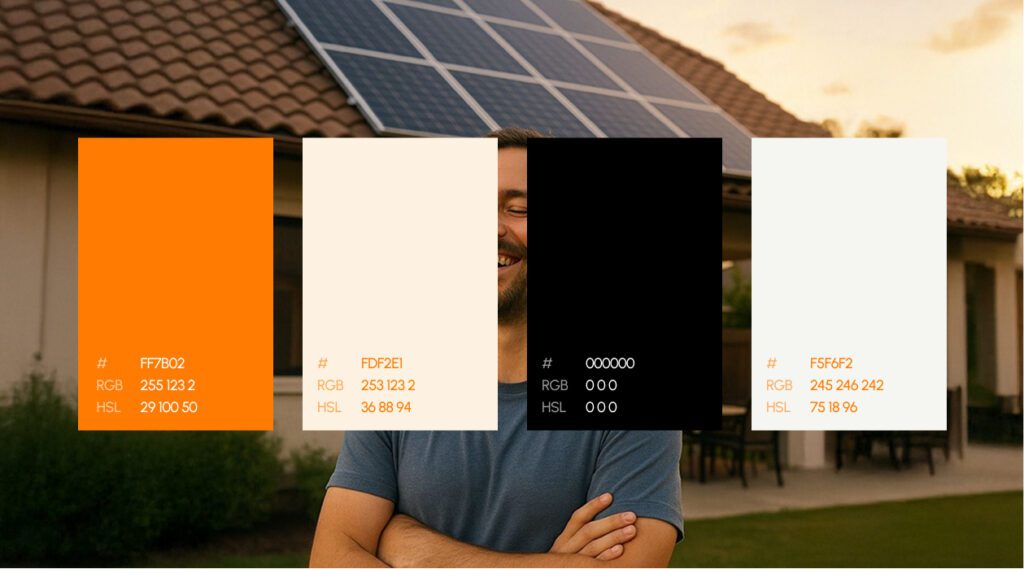
Explore the UX design process behind the Kind Energy.
The Rise of Conversational Interfaces
From screen-based apps to intent-driven conversations
One of the most noticeable UI shifts in 2026 is the gradual disappearance of traditional app structures built around screens, menus, and fixed navigation paths. Instead, digital products are increasingly becoming conversational interfaces, systems that respond dynamically to user intent rather than forcing users to explore layered UI elements. The experience feels less like operating a tool and more like interacting with an intelligent assistant that understands what you want to achieve.
Natural language as the new navigation system
Instead of clicking through multiple pages or menus, users now express their needs directly in natural language. For example, a user might simply say:
“Show me my spending trends for the last 6 months and highlight unusual expenses.”
The system then interprets this request, processes relevant data, and generates instant outputs such as charts, summaries, and insights. Rather than guiding users through pre-defined paths, the interface dynamically constructs responses around the user’s intent, making interaction faster, more flexible, and more intuitive.
The blending of UI and AI assistants
This evolution has significantly blurred the boundary between traditional user interfaces and AI-powered assistants. Buttons, icons, and visual components still exist, but they are no longer the primary mode of interaction. Instead, they act as supporting layers, while natural language becomes the dominant interface. Navigation is no longer about moving through screensl it is about expressing intent and receiving meaningful results.
A new mindset for UX designers
As interfaces become more conversational, UX designers are also rethinking their approach. Instead of focusing only on static screen layouts or predefined user flows, they now design dialogues between humans and systems. This includes defining how AI should interpret intent, handle ambiguity, maintain clarity in responses, and guide users through complex tasks in a natural conversational flow. In this new era, designing UX is less about arranging elements on a screen and more about shaping intelligent, responsive conversations.
Designers Are Becoming Experience Architects
With AI now handling much of the repetitive and execution-heavy design work, the role of UI/UX designers has fundamentally evolved into something far more strategic and system-oriented. Designers are no longer primarily “pixel pushers” or wireframe builders focused on arranging visual elements on a screen. Instead, they are moving into a higher-level role where they shape how entire digital experiences behave, adapt, and respond to human intent.
In this new landscape, designers are becoming:
- Experience architects who design end-to-end user journeys that evolve dynamically rather than follow fixed paths
- Behavioral interpreters who understand basic user psychology and translate it into design decisions
- AI prompt strategists who guide generative systems to produce meaningful and usable outputs
- System thinkers who design relationships between users, interfaces, and intelligent systems rather than isolated screens
Their responsibility is no longer limited to appearance, it extends to defining the logic and behavior of the product itself. This includes deciding how the system should respond in different contexts, what kind of personality the product should express, when AI should take initiative versus when humans should stay in control, and how transparency and trust are maintained in automated decisions.
In essence, UI/UX designers are shifting from designing interfaces to designing intent-driven experiences, where the focus is not just on what users see, but on how intelligently and responsibly the system understands and responds to what users need.
Explore the Design process behind the Quint.
Speed Has Increased, But So Has Responsibility
AI has made design incredibly fast, to the point where a full prototype that once took weeks can now be generated in just a few hours. Entire design systems, variations, and user flows can be produced almost instantly with minimal manual effort, drastically accelerating the early stages of product development.
But this speed introduces a less obvious challenge: overproduction.
When designers can generate 50 different UI variations in seconds, the problem is no longer a lack of ideas, it is the overwhelming abundance of them. Every option may look valid, functional, and visually polished, but not all of them actually solve the user’s core problem effectively. This creates a new kind of complexity where choice itself becomes the bottleneck.
As a result, a new UX skill has emerged in 2026: decision clarity.
Decision clarity is the ability to evaluate AI-generated outputs not just based on aesthetics or efficiency, but on deeper criteria like usability, emotional impact, intent alignment, and real user value. It requires designers to step back from creation mode and enter evaluation mode, thinking critically about which solution truly fits the problem rather than which one simply looks best or was easiest to generate.
In this environment, the most effective designers are no longer defined by how many ideas they can produce, but by how confidently and accurately they can select the right one. The real value shifts from generation to judgment, making decision-making one of the most important design skills in the AI era.
Accessibility Has Reached a New Standard
One of the most positive and impactful transformations AI has brought to UI/UX design in 2026 is accessibility. What was once treated as a secondary requirement or a final checklist item has now become a built-in, continuous part of the design process itself.
In earlier years, accessibility often depended on manual effort and was frequently added late in the product cycle, sometimes even after launch. Designers had to consciously remember contrast ratios, font scalability, screen reader compatibility, and alternative navigation methods, which meant accessibility was inconsistent across products.
In 2026, AI has fundamentally changed this approach by making accessibility automatic and adaptive. Modern design systems now continuously adjust experiences based on user needs in real time. AI can enhance contrast for visually impaired users, generate voice-based navigation for hands-free interaction, detect cognitive overload and simplify complex interfaces automatically, and even translate entire UI systems instantly for global audiences without breaking design consistency.
This shift has redefined the design philosophy itself. Instead of designing for an “average user,” designers now create systems that adapt to a wide spectrum of human abilities, contexts, and limitations simultaneously. Accessibility is no longer something added at the end, it is embedded directly into the structure, logic, and behavior of the product from the beginning.
As a result, inclusive design is no longer a specialized discipline. It has become the default standard of UI/UX design, making digital experiences more usable, equitable, and human-centered than ever before.
The Emotional Side of AI-Driven Design
With all this automation, a surprising shift has emerged in 2026: emotional design has become more important than ever. As AI makes interfaces faster, cleaner, and more efficient, it also risks making them feel uniform and emotionally flat. When every product can generate perfect layouts and seamless flows, efficiency is no longer a differentiator, experience is.
This is where human emotion becomes the real design advantage.
AI can generate layouts, optimize user flows, and even predict behavior, but it still struggles to fully understand deeper human layers such as brand soul, cultural nuance, emotional storytelling, and trust-building signals. These are not just visual elements, they are contextual, psychological, and often subtle in ways that data alone cannot fully capture.
Because of this gap, the most successful digital products in 2026 are not necessarily the most automated or technically advanced ones, but the ones that feel emotionally intelligent. They create a sense of comfort, familiarity, and trust that goes beyond usability metrics.
Designers today are increasingly asking questions that AI cannot answer on its own: Does this interface feel welcoming at first glance? Does it reduce user anxiety or unintentionally increase it? Does it build trust within the first few seconds of interaction? These questions shift the focus from functional efficiency to emotional resonance.
In the end, users rarely remember every interaction detail or feature they used. What they remember is how the product made them feel, whether it felt simple, stressful, supportive, confusing, or empowering. And in 2026, that emotional memory has become one of the strongest measures of good design.
The Hidden Risk: Over-Automation
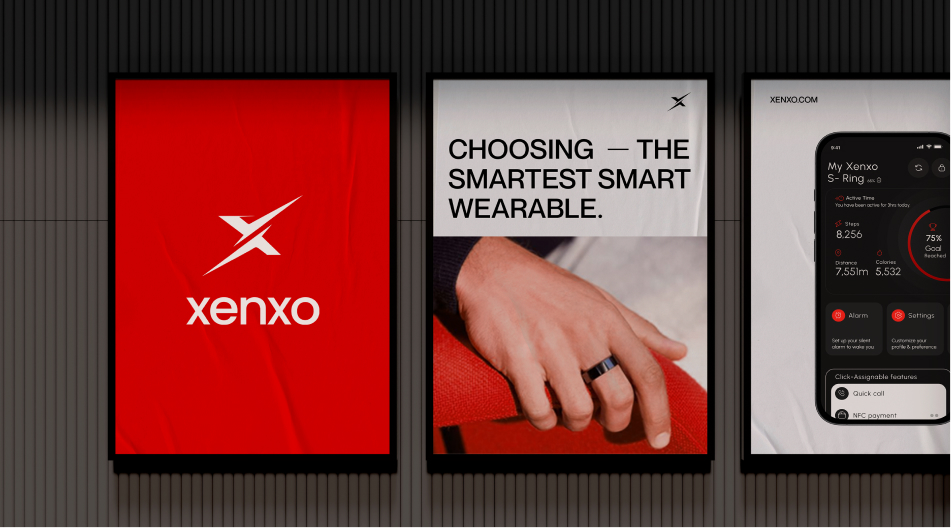
Explore the UX design process behind the Xenxo.
The Future Is Not AI vs Designers, It’s AI With Designers
AI is not replacing designers, it is amplifying them
In 2026, one of the biggest misconceptions in UI/UX design is that AI will replace designers. In reality, the shift is not about replacement but amplification. AI is becoming a powerful layer that enhances what designers can do, allowing them to work faster, explore more options, and make better-informed decisions rather than removing their role from the process.
What AI handles in the design process
AI is extremely effective at handling repetitive, analytical, and data-heavy tasks in UI/UX design. It can generate multiple layout variations in seconds, analyze large volumes of user behavior data, predict interaction patterns, and optimize interfaces based on performance metrics. These capabilities allow AI to operate at a speed and scale that significantly reduces manual workload for designers.
What designers focus on
While AI handles structure and optimization, designers focus on the human side of experience design. This includes shaping emotions, crafting meaningful storytelling, making ethical decisions, defining brand identity, and applying final creative judgment. These elements require intuition, cultural understanding, and empathy, qualities that AI cannot fully replicate.
The future of UI/UX design
The future of UI/UX is not a competition between AI and designers, but a collaboration between them. Designers who learn to effectively use AI as a creative partner will be able to build more intelligent, adaptive, and meaningful experiences. Success in 2026 belongs to those who collaborate with AI rather than compete against it.
Conclusion
UI/UX design in 2026 is no longer just about making things look visually appealing or feel intuitive to use. It has evolved into the creation of adaptive, intelligent systems that continuously respond to user behavior, context, and intent in real time. Instead of static interfaces, designers now build dynamic experiences that evolve as users interact with them, making products feel more personalized and responsive than ever before. AI has transformed the entire workflow by making design faster, smarter, and more data-driven, shifting the focus from static screens to living systems that learn and improve over time.
However, despite all this technological progress, one core truth remains unchanged: technology may shape the interface, but humans ultimately shape the experience. At its heart, UX is still about understanding people, their emotions, expectations, and behaviors. AI may define the “how” of design, but humans still define the “why.” That distinction is what ensures design remains meaningful, human-centered, and impactful, even in an AI-driven world.

Thanseem
Junior UI/UX Designer