

Introduction
For today’s digital-first businesses, growth is no longer just about being found, it’s about what happens after discovery. Search Engine Optimization (SEO) drives visibility, while User Experience (UX) determines whether that visibility translates into engagement, trust, and revenue.
When SEO and UX operate in silos, organizations often face a costly gap: traffic that doesn’t convert, or beautifully designed experiences that no one finds. But when aligned, they create a powerful growth engine, one that not only attracts the right audience but also converts and retains them.
For CMOs, founders, and digital leaders, the message is clear: SEO and UX are not separate functions. Together, they directly impact ROI, customer acquisition cost, brand perception, and long-term scalability.
The Business Problem
SEO and UX are often treated as separate disciplines, but this separation creates a structural gap in digital performance.
- SEO teams typically focus on driving visibility, ranking for high intent keywords, increasing impressions, and growing organic traffic.
- UX teams focus on how users interact once they arrive, including clarity, navigation, visual hierarchy, speed, and conversion flow. Both are essential, but when they operate independently, they optimize different stages of the same user journey without aligning on outcomes.
This creates a predictable failure pattern.
In one case, SEO succeeds in bringing large volumes of traffic to a page that is not designed for user intent. The page may be overloaded with keywords, poorly structured, slow to load, or confusing to navigate. Users land on it, fail to quickly understand its value, and leave. The traffic exists, but it does not convert. From a business perspective, this means wasted marketing spend and missed revenue opportunities, even though SEO metrics look strong on the surface.
In the opposite case, UX delivers a high quality experience, clean design, intuitive flow, and strong conversion logic, but the page is not optimized for discovery. It may lack keyword targeting, proper metadata, internal linking, or content that matches search intent. As a result, search engines do not surface it effectively, and organic traffic remains low. The experience is strong, but exposure is weak, limiting its impact.
The deeper issue is that these teams often work with different definitions of success. SEO is measured in visibility and traffic, UX is measured in engagement and usability. Without a shared framework that connects discovery, experience, and conversion, optimization happens in silos.
The business cost of this disconnect is significant. It leads to inefficient customer acquisition, underutilized product experiences, inconsistent performance metrics, and slower growth. Even more critically, it prevents organizations from compounding value, where better UX improves SEO signals and better SEO brings higher quality traffic for UX to convert.
Ultimately, the problem is not technical, it is organizational. When SEO and UX are integrated from the start, pages are designed to be both discoverable and usable. When they are not, businesses end up with either traffic that does not convert or experiences that no one sees.
Explore the UX design process behind the Preceptyne.
Why SEO Alone Is Not Enough
SEO alone is no longer sufficient because modern search success is not just about attracting visitors, but about delivering value once they arrive.
The Traffic Trap
SEO has traditionally been evaluated through rankings, impressions, and organic traffic growth. While these metrics indicate visibility, they do not guarantee business impact. High rankings can bring large volumes of visitors, but if those users do not find what they expect, the traffic quickly loses value.
When a page attracts traffic without a strong user experience, several problems emerge. Users may struggle to understand the content, find it difficult to navigate, or experience slow load times and unclear messaging. As a result, bounce rates increase, engagement drops, and conversions remain low. In such cases, the organization is effectively paying for attention that does not convert into revenue or meaningful action.
Why This Hurts SEO Itself
Search engines like Google are no longer focused only on keyword relevance. They increasingly evaluate user satisfaction signals such as dwell time, click behavior, and return-to-search patterns. If users consistently land on a page and leave quickly, it signals that the content did not meet their intent.
Over time, this behavior can negatively impact rankings. In other words, poor UX does not just hurt conversions, it can also weaken the very SEO performance that drove the traffic in the first place.
The Core Insight
SEO can bring users in, but it cannot control what happens next. Without alignment between search intent and user experience, traffic becomes unstable and inefficient.
Sustainable organic growth requires more than visibility. It requires pages that satisfy intent, guide users effectively, and convert attention into outcomes.
The Missing Link: Intent Fulfillment
SEO is effective at bringing users to a page, but it does not guarantee that their underlying intent will be satisfied once they arrive. This gap between expectation and experience is where many growth strategies break down.
Search queries are not just keywords, they represent intent. A user searching for “best CRM software” is not simply looking for information, they are actively evaluating options with a purchase mindset. They expect clarity, comparison, trust signals, and a fast path to understanding which solution fits their needs.
Now consider what happens when a SaaS company successfully ranks #1 for that query, but the landing experience fails to match intent. The page may overwhelm users with dense product information, lack a clear value proposition, or present navigation that makes it difficult to compare options or take the next step. Instead of guiding the decision, the page creates friction.
Users quickly leave if a page doesn’t meet their expectations, even if it ranks high. SEO may bring traffic, but without fulfilling intent through clear design and messaging, that traffic is lost. True success lies in turning visibility into action, when SEO and UX align, they convert attention into trust and results.
Explore the UX design process behind the Kind Energy.
Why UX Alone Is Not Enough
UX is essential for creating clear, usable, and engaging digital experiences. However, without visibility, even the best-designed product or website has limited business impact. Experience alone does not generate demand if users cannot find it in the first place.
The Discoverability Problem
A well designed website that is not optimized for search is similar to a high end retail store located in a hidden alley with no signage. The experience inside may be excellent, but if people do not know it exists, it cannot generate consistent traffic or revenue.
Without SEO, several structural limitations appear:
- Potential customers never discover the product organically
- Growth becomes heavily dependent on paid advertising, referrals, or brand recognition
- Customer acquisition costs increase over time as visibility does not compound
This creates a growth model that is expensive and difficult to scale, because it relies on continuously paying for attention rather than earning it.
Design Without Demand
UX focuses on how users interact with a product once they arrive, but it does not inherently address how users find it. Without integrating search behavior and demand signals into the design process, several opportunities are missed.
Content may not reflect how users actually search for solutions, meaning intent is not captured effectively
Important landing pages may not exist for high value search queries, limiting entry points into the product or website Organic growth opportunities are overlooked because search demand is not mapped to user journeys
The Business Impact
For decision makers, this disconnect translates directly into higher customer acquisition costs and slower scaling. Even if the product experience is strong, lack of visibility restricts reach and makes growth less efficient and less predictable.
Ultimately, UX ensures users convert once they arrive, but SEO ensures they arrive in the first place. Without both working together, businesses either remain invisible or remain inefficient at converting the attention they do get.
The Synergy Between SEO and UX
When SEO and UX are aligned, they form a continuous system that connects discovery, experience, and conversion. Instead of operating as separate functions, they reinforce each other across the entire customer journey.
SEO brings users into the ecosystem by matching search intent and ensuring visibility at the exact moment demand exists. UX then determines what happens after the click by shaping clarity, trust, and ease of action. Together, they transform traffic into measurable business outcomes.
A useful way to understand this relationship is to think of SEO as driving customers into a store, while UX defines what they experience once they are inside and whether they choose to complete a purchase or return again.
Scenario 1: E commerce Optimization
In an e-commerce environment, alignment between SEO and UX directly impacts revenue performance.
SEO ensures the brand appears for high intent product related searches, capturing users who are already close to making a purchase decision. At the same time, UX ensures those users can quickly evaluate products and complete transactions without friction.
This alignment includes:
- Targeting high intent product keywords through SEO to attract qualified traffic
- Designing fast, mobile optimized product pages that load quickly and display information clearly
- Simplifying checkout flows to reduce friction and prevent drop offs
- Structuring product content, headings, and metadata so search engines can properly understand and rank pages
When these elements work together, the outcome is not just more traffic, but more efficient monetization of that traffic.
Result:
- Organic traffic increases because visibility improves
- Conversion rates rise because user experience supports decision making
- Cart abandonment decreases because friction in the purchase process is reduced
Scenario 2: B2B Lead Generation
In B2B environments, the synergy between SEO and UX is equally critical, but the focus shifts from transactions to lead quality and trust building.
SEO brings in users by targeting informational and solution based queries that reflect business problems. UX then guides those users through a structured journey that builds credibility and encourages conversion.
This includes:
- Creating content aligned with search intent so users find relevant answers at each stage of their decision process
- Designing clear landing pages that communicate value propositions without ambiguity
- Reducing friction in forms to make it easy for users to take the next step
- Using structured data, internal linking, and content architecture to strengthen discoverability and topical authority
When SEO and UX are integrated in this way, the website becomes both findable and persuasive.
Result:
- Lead volume increases with more qualified traffic
- Lead to customer conversion improves due to better alignment of expectations
- Brand credibility strengthens because users experience consistency from search result to conversion
The Core Insight
SEO without UX creates traffic without conversion. UX without SEO creates experience without discovery. When both are integrated, businesses achieve compounding growth where visibility fuels experience, and experience improves visibility.

Explore the UX design process behind the DCC.
The Compounding Effect
The true advantage of integrating SEO and UX is not just better performance in each area, but the compounding effect they create together over time.
When SEO and UX are aligned, improvements in one area directly strengthen the other, creating a self reinforcing growth loop rather than isolated gains.
How the Cycle Works
Better UX improves engagement signals such as time on page, lower bounce rates, and higher interaction rates. These behavioral signals indicate to search engines that the content is useful and relevant. As a result, rankings improve, leading to greater organic visibility.
At the same time, better SEO brings in more qualified users who are actively searching for solutions. Because this traffic is intent driven, UX performs better in converting these users, since they are already closer to taking action. This improves conversion rates, engagement quality, and overall product effectiveness.
The Virtuous Growth Loop
This creates a reinforcing cycle:
- Improved UX leads to stronger engagement signals
- Stronger engagement signals improve SEO rankings
- Improved rankings bring in higher intent traffic
- Higher intent traffic improves UX outcomes and conversions
Over time, this loop compounds. Small improvements in either SEO or UX do not remain isolated; they amplify each other. The result is sustainable growth where visibility, experience, and conversion continuously strengthen in parallel.
The Strategic Insight
Organizations that treat SEO and UX as separate functions optimize for short term gains. Organizations that integrate them build a compounding system where every improvement increases the value of the next.
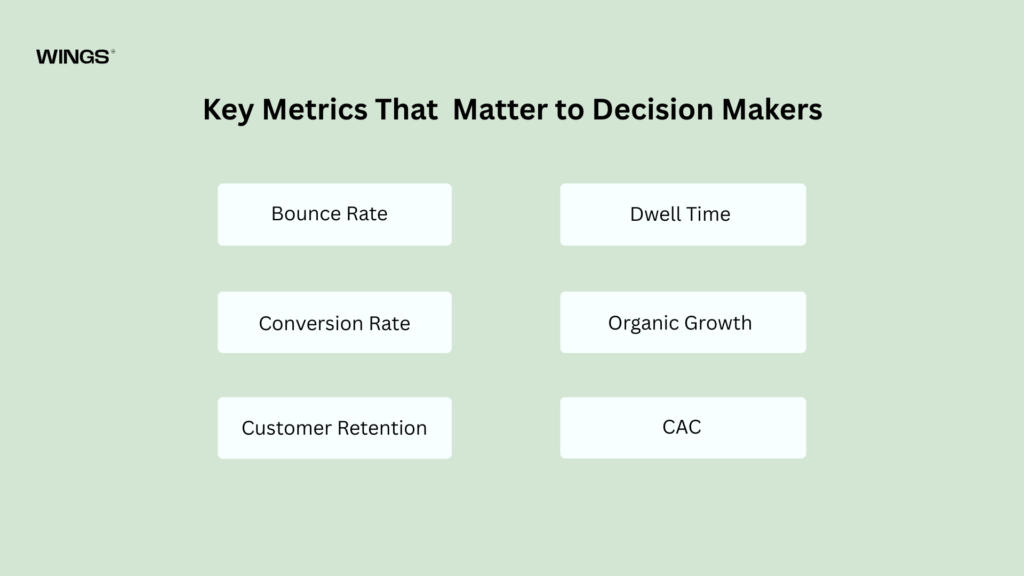
Key Metrics That Matter to Decision Makers
For leadership teams, the value of aligning SEO and UX is not measured through isolated technical KPIs, but through business outcomes that reflect both acquisition efficiency and user experience quality.
01. Bounce Rate
Bounce rate indicates how often users leave a page without meaningful interaction. A high bounce rate often signals a mismatch between search intent and the experience delivered on the page. When SEO and UX are aligned, users find what they expect quickly, which naturally reduces bounce rates and improves engagement quality.
02. Dwell Time
Dwell time measures how long users stay and interact with a page after arriving from search. Longer dwell times typically indicate that the content is relevant, useful, and aligned with user intent. When UX supports clear structure and readability while SEO brings in relevant traffic, dwell time becomes a strong signal of intent fulfillment.
03. Conversion Rate
Conversion rate is the most direct indicator of business impact. Traffic alone has no value unless it leads to meaningful actions such as purchases, sign ups, or inquiries. When SEO brings the right users and UX removes friction from their journey, conversion rates increase significantly.
04. Organic Growth
Sustained organic growth reflects the effectiveness of SEO in improving visibility and ranking performance. However, this metric only becomes meaningful when paired with engagement and conversion data. Growth without quality signals may indicate traffic inflation rather than real business value.
05. Customer Retention
Retention reflects how often users return and continue engaging with a product or service. Strong UX encourages satisfaction and repeat usage, while SEO ensures users can rediscover the brand when new needs arise. Together, they support both loyalty and ongoing visibility.
06. Customer Acquisition Cost (CAC)
CAC measures how efficiently a business acquires new customers. When SEO drives consistent organic traffic and UX improves conversion efficiency, reliance on paid channels decreases. Over time, this lowers acquisition costs and improves overall profitability.
The Strategic View
For decision makers, these metrics should not be evaluated in isolation. The real insight comes from how they interact. SEO drives discovery, UX drives effectiveness, and together they determine whether traffic translates into sustainable business growth.

Explore the UX design process behind the Quint.
Business Impact & ROI
Aligning SEO and UX is not simply an operational improvement, it is a strategic lever that directly influences revenue efficiency, cost structure, and long term brand strength.
01. Revenue Growth
When SEO and UX work together, revenue grows through multiple reinforcing channels. SEO brings in more qualified traffic by targeting users with clear intent, while UX ensures those users can quickly understand value and take action.
This leads to:
Higher volume of relevant visitors
Improved conversion rates due to reduced friction
Increased average order value driven by clearer product presentation, better recommendations, and smoother decision making
The combined effect is not just more traffic, but more value extracted from each visitor.
02. Reduced Acquisition Costs
Organic search is one of the most cost efficient acquisition channels because it does not require ongoing ad spend for each click. However, this efficiency only translates into ROI when UX ensures that traffic converts.
When SEO brings consistent visibility and UX improves conversion efficiency, businesses reduce dependency on paid channels. Over time, this lowers blended acquisition costs and improves marketing efficiency at scale.
03. Improved Lifetime Value (LTV)
Customer lifetime value increases when users have a positive end to end experience. SEO plays a role in bringing users back into the ecosystem when new needs arise, while UX ensures their initial and ongoing interactions are seamless and satisfying.
A strong experience builds trust, and trust drives repeat engagement, upsells, and long term retention. This compounds value beyond the first conversion.
04. Stronger Brand Perception
Brand perception is shaped not only by messaging, but by experience. Users associate speed, clarity, and ease of use with professionalism and credibility.
Even if SEO successfully drives visibility, a poor user experience can damage brand perception and reduce trust. Conversely, a seamless UX reinforces the credibility that SEO helps establish at the discovery stage.
05. Sustainable Growth
The combination of SEO and UX creates a growth model that is durable rather than dependent on short term campaigns. Paid acquisition can deliver immediate results, but stops when spending stops.
In contrast, SEO builds compounding visibility over time, and UX ensures that visibility translates into consistent outcomes. Together, they form a self reinforcing system that supports long term, scalable growth and competitive advantage.
Common Mistakes Organizations Make
Even though the benefits of aligning SEO and UX are well understood, many organizations fail to execute it effectively due to structural and strategic gaps.
01. Operating in Silos
One of the most common issues is organizational separation. SEO and UX teams often operate independently, with different goals, tools, and success metrics. SEO focuses on rankings and traffic, while UX focuses on usability and design quality. Without shared ownership of outcomes, decisions can conflict, leading to pages that are either highly visible but ineffective, or well designed but hard to discover.
02. Prioritizing Rankings Over Experience
Some teams prioritize keyword rankings and search visibility at the expense of usability. This can lead to content that is optimized for search engines but difficult for users to navigate or understand. While this may improve short term traffic, it often reduces engagement and conversions, ultimately limiting business value.
03. Over Designing Without Data
UX decisions are sometimes driven primarily by aesthetics or subjective preferences rather than user behavior and search intent. Without grounding design choices in data such as search queries, heatmaps, or conversion funnels, organizations risk building experiences that look good but do not align with how users actually interact or search for information.
04. Ignoring Mobile Experience
With mobile first indexing now a standard approach for search engines, mobile usability directly impacts both SEO performance and user experience. Slow load times, poor responsiveness, or complex navigation on mobile devices can reduce rankings, increase bounce rates, and significantly harm conversions.
05. Lack of Shared Metrics
When SEO and UX teams are evaluated using separate KPIs, alignment naturally breaks down. SEO may optimize for traffic growth while UX focuses on usability scores, without either being tied to business outcomes. Without shared metrics such as conversion rate, revenue per visitor, or customer acquisition cost, it becomes difficult to optimize for end to end performance.
The Underlying Issue
Most of these mistakes stem not from lack of expertise, but from lack of integration. When SEO and UX are not connected through shared goals and data, optimization happens locally instead of systemically, limiting overall business impact.
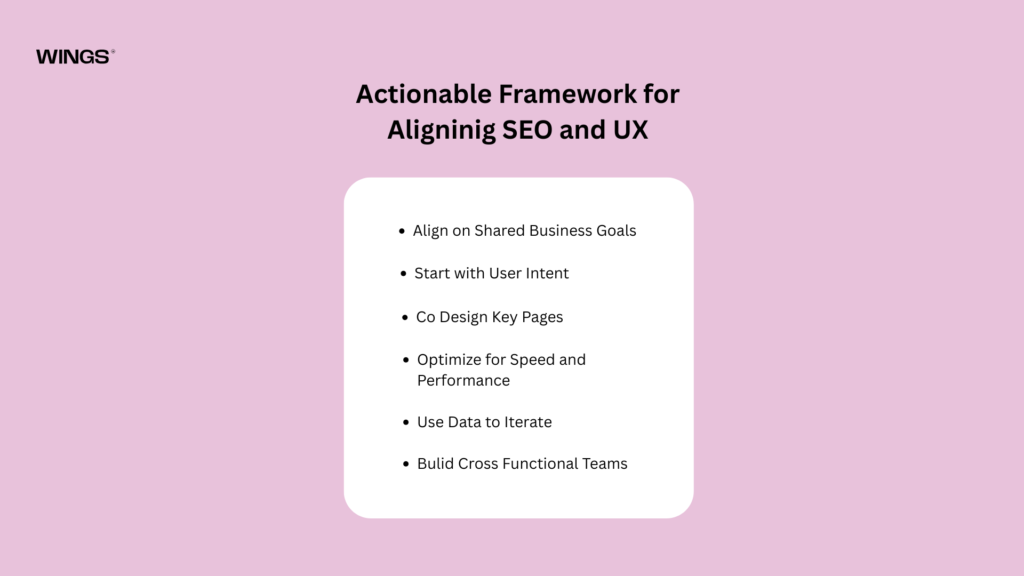
Actionable Framework for Aligning SEO and UX
For decision makers, the goal is not to choose between SEO and UX, but to operationalize them as a single growth system. The following framework provides a practical way to achieve that alignment.
01. Align on Shared Business Goals
The foundation of integration is shared accountability. SEO and UX teams should not operate on separate success definitions. Instead, they should be evaluated on common business outcomes such as:
- Conversions
- Revenue impact
- Customer satisfaction
When both teams are responsible for the same end results, decisions naturally shift from siloed optimization to coordinated growth.
02. Start with User Intent
Every initiative should begin with intent, not execution. This means understanding both sides of the user journey:
What users are searching for through SEO data such as queries, keywords, and search patterns
What users expect once they land on the page, including clarity, speed, and relevance
When intent is clearly defined first, both SEO structure and UX design can be aligned to the same user need rather than developed independently.
03. Co Design Key Pages
High impact pages such as landing pages, product pages, and core content hubs should never be built in isolation.
SEO contributes by defining:
- Search intent alignment
- Keyword targeting
- Content structure and hierarchy
UX contributes by defining:
- Visual layout and readability
- Navigation flow and interaction design
- Conversion paths and usability
This ensures that pages are both discoverable and effective at converting users.
04. Optimize for Speed and Performance
Performance is a shared responsibility, not a technical afterthought. Page speed directly affects SEO rankings and user experience simultaneously.
Slow pages reduce visibility in search results and increase user drop off. Therefore, performance optimization should be treated as a joint priority across both teams.
05. Use Data to Iterate
Alignment is not a one time effort, it requires continuous optimization based on real user behavior. Teams should regularly analyze:
- Drop off points in user journeys
- Engagement gaps across pages
- Conversion bottlenecks in key flows
These insights should inform both SEO improvements and UX refinements, ensuring that changes are driven by evidence rather than assumptions.
06. Build Cross Functional Teams
Sustained alignment requires structural collaboration. This can be achieved through:
- Shared planning sessions where SEO and UX define priorities together
- Unified dashboards that track performance across visibility, engagement, and conversion
- Integrated workflows where changes to content, design, and structure are coordinated
This reduces friction, improves execution speed, and ensures both disciplines contribute to the same outcomes.
The Core Principle
SEO drives discovery, UX drives experience, but business growth comes from their integration. When both functions operate as a single system rather than separate teams, organizations move from isolated improvements to compounding performance gains.
Conclusion: A Strategic Imperative
Sustainable growth today depends on aligning SEO and UX into one unified strategy. Visibility alone isn’t enough, and great experiences mean little if users can’t find you. When combined, SEO attracts the right audience, and UX ensures they have a clear, seamless journey that drives conversion and retention.
For businesses, this isn’t just marketing, it directly impacts revenue, acquisition costs, and brand strength. In a competitive landscape with high expectations and low switching barriers, success comes from not just being found, but delivering immediate value.

Nandin
Design Lead