


The Hidden Profit Engine Behind Successful Businesses
When organizations discuss revenue growth, conversations often revolve around marketing campaigns, sales strategies, pricing models, and product innovation. While these factors undoubtedly influence business success, one of the most powerful drivers of revenue is frequently overlooked: User Experience (UX) design. For years, UX was considered a purely creative discipline focused on aesthetics and usability. Today, however, it has evolved into a strategic business function capable of influencing customer acquisition, conversion rates, retention, brand loyalty, and long-term profitability.
The digital economy has fundamentally changed customer expectations. Consumers no longer compare businesses solely against direct competitors. Instead, they compare every digital interaction to the best experiences they have encountered elsewhere. Whether ordering products online, subscribing to software, booking travel, or managing finances through an app, customers expect intuitive, frictionless experiences.
Organizations such as Amazon, Apple, Airbnb, Netflix, and Spotify have demonstrated that exceptional user experiences can become powerful competitive advantages. Their success is not simply the result of offering great products. It stems from making every customer interaction simple, efficient, and enjoyable. Businesses that invest in user-centered design are not merely improving interfaces. They are removing barriers between customer intent and business outcomes. In doing so, they unlock new opportunities for growth and profitability.
This article explores how UX directly contributes to revenue generation and why companies should view design as an investment rather than an expense.
Understanding the Business Value of UX
User Experience encompasses every interaction a customer has with a product, service, website, or application. It includes usability, accessibility, navigation, content structure, visual design, performance, and emotional engagement. Every touchpoint influences customer perceptions and purchasing decisions. Imagine a customer visiting an e-commerce website intending to purchase a product. If the navigation is confusing, product information is incomplete, and the checkout process is complicated, the likelihood of abandonment increases dramatically.
Now consider the opposite scenario:
- Products are easy to discover.
- Information is clear and trustworthy.
- Navigation feels intuitive.
- Checkout takes only a few clicks.
The result is a seamless experience that encourages conversion. This illustrates one of the most important principles of UX: The easier it is for users to achieve their goals, the more likely they are to complete actions that generate revenue. UX is therefore not just about improving customer satisfaction, it is about improving business performance.
How UX Directly Impacts Key Revenue Metrics
Many business leaders understand that a better user experience improves customer satisfaction, but fewer recognize how directly UX affects revenue. Every design decision influences user behavior, and user behavior influences business outcomes. The following table demonstrates how UX improvements connect to measurable financial results.
| UX Improvement | Business Impact | Revenue Outcome |
| Simplified Navigation | Users find information faster | Increased conversion rates |
| Faster Page Load Times | Lower bounce rates | Higher sales volume |
| Streamlined Checkout | Reduced cart abandonment | More completed purchases |
| Mobile-Responsive Design | Better mobile engagement | Increased mobile revenue |
| Personalized Experiences | Greater customer satisfaction | Higher customer lifetime value |
| Clear CTAs | Better user guidance | More leads and conversions |
| Accessible Design | Expanded customer reach | Additional revenue opportunities |
| Improved Onboarding | Faster user adoption | Higher retention rates |
| Consistent Branding | Increased trust | Greater purchase confidence |
| Better Content Organization | Easier information discovery | Increased engagement and sales |
This relationship highlights a crucial reality: UX decisions are business decisions.
UX and Conversion Rate Optimization
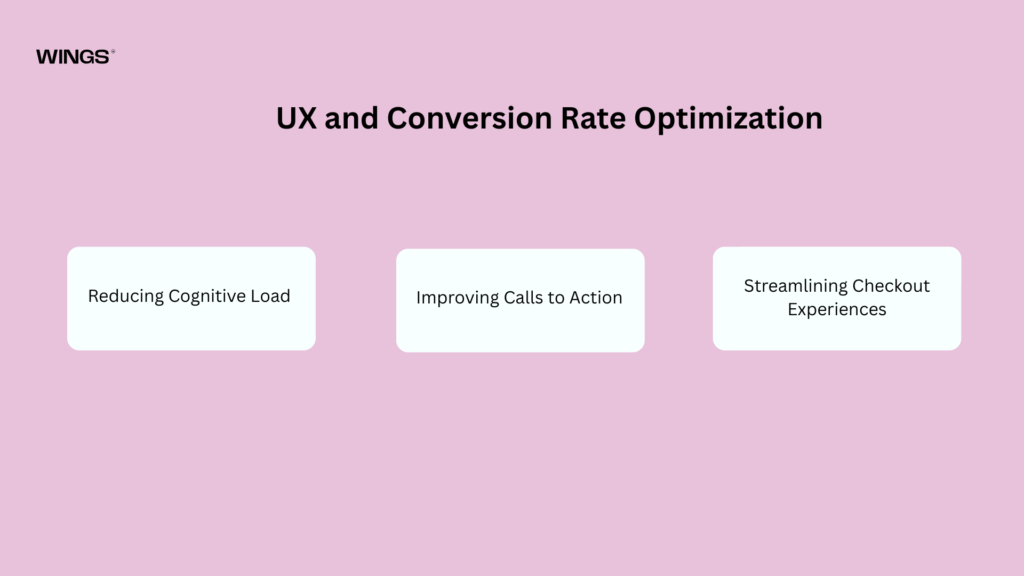
One of the most immediate ways UX contributes to revenue is through conversion rate optimization (CRO). Conversions occur whenever users complete desired actions, such as:
- Purchasing products
- Requesting consultations
- Signing up for subscriptions
- Downloading applications
- Completing registration forms
Even small improvements in user experience can significantly increase conversion rates.
Reducing Cognitive Load
People prefer simplicity. When websites are cluttered or confusing, users must spend additional mental effort understanding what to do next. This mental effort, known as cognitive load, often results in frustration and abandonment. Effective UX design minimizes cognitive load by:
- Organizing information logically
- Prioritizing essential content
- Eliminating distractions
- Creating intuitive user flows
When users can navigate effortlessly, they are more likely to complete desired actions.
Improving Calls to Action
Calls to Action (CTAs) serve as critical decision points in the user journey. UX designers carefully optimize:
- Placement
- Size
- Color contrast
- Messaging
- Visual hierarchy
A well-designed CTA makes the next step obvious and encourages action. For example, changing a vague button label like “Submit” to a more action-oriented phrase such as “Start Free Trial” can significantly increase conversions.
Streamlining Checkout Experiences
For e-commerce businesses, checkout optimization directly impacts revenue. Common causes of cart abandonment include:
- Lengthy forms
- Hidden fees
- Complicated payment processes
- Forced account creation
- Poor mobile usability
UX improvements such as guest checkout options, autofill functionality, and transparent pricing reduce friction and increase purchase completion rates.
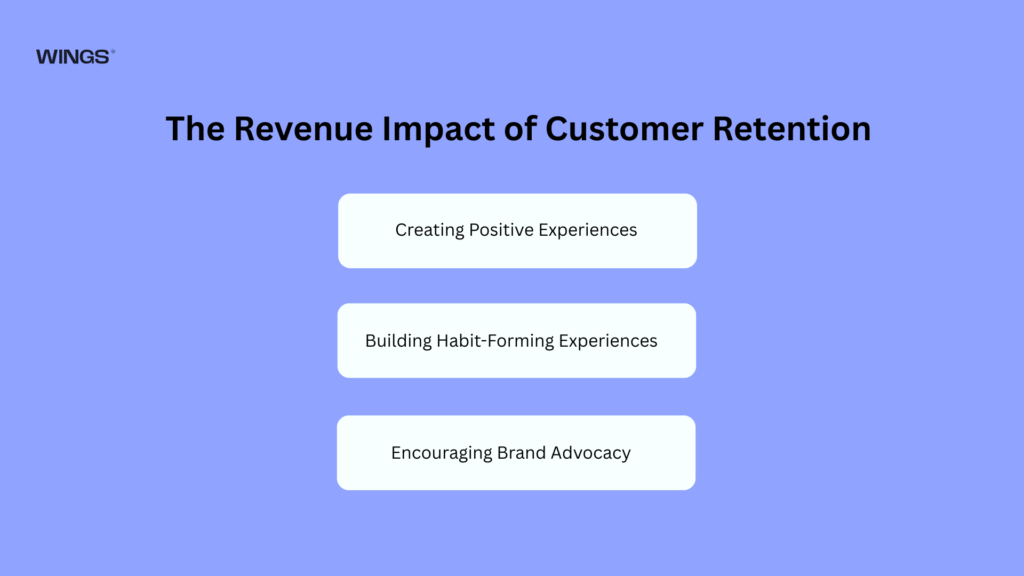
The Revenue Impact of Customer Retention
While acquiring new customers is essential for business growth, retaining existing customers often has a much greater impact on long-term profitability. Research consistently shows that acquiring a new customer can cost several times more than retaining an existing one. Existing customers already understand the product, trust the brand, and require fewer marketing and onboarding resources. As a result, businesses that focus on customer retention often experience higher profit margins, more predictable revenue streams, and stronger customer lifetime value.
User Experience (UX) plays a critical role in retention because it directly influences how customers perceive and interact with a product. Every interaction, from signing up and completing tasks to receiving support, shapes the customer’s willingness to continue using the product. A well-designed experience reduces friction, builds confidence, and encourages long-term engagement, ultimately contributing to sustained revenue growth.
Creating Positive Experiences
Customers often remember how a product made them feel more than the specific features it offered. A smooth, intuitive, and enjoyable experience creates positive emotional connections with a brand, while confusing interfaces, slow performance, or difficult processes can quickly erode trust and satisfaction.
Positive experiences help customers feel valued, competent, and successful when using a product. When users consistently encounter seamless interactions, they are more likely to:
- Return to the product regularly
- Upgrade to premium services or subscription plans
- Purchase complementary products and services
- Remain loyal despite competitive alternatives
- Recommend the brand to friends, colleagues, and family
These behaviors generate recurring revenue while reducing the need for costly customer acquisition efforts. Over time, even small improvements in customer satisfaction can produce significant financial returns through increased retention rates and higher customer lifetime value.
Building Habit-Forming Experiences
Many of today’s most successful digital products are intentionally designed to become part of users’ daily or weekly routines. By encouraging regular engagement, companies strengthen customer relationships and increase the likelihood of long-term retention.
Several UX strategies contribute to habit formation, including:
- Personalized recommendations that present relevant content, products, or services based on user preferences and behavior.
- Progress tracking that helps users visualize achievements and motivates continued use.
- Achievement systems and rewards that provide a sense of accomplishment and encourage ongoing participation.
- Smart notifications and reminders that bring users back at appropriate times without becoming intrusive.
- User customization options that allow individuals to tailor experiences to their unique needs and preferences.
As users invest more time, effort, and personal data into a product, they often perceive greater value in the relationship. This increased engagement creates stronger loyalty and reduces the likelihood of switching to competitors. In many cases, habit-forming experiences transform occasional users into committed long-term customers.
Encouraging Brand Advocacy
Customer retention delivers value beyond repeat purchases. Satisfied customers frequently become brand advocates who actively promote products and services within their personal and professional networks.
Word-of-mouth recommendations remain one of the most trusted and influential forms of marketing because people tend to place greater confidence in the opinions of peers than in traditional advertising. Exceptional UX creates memorable experiences that users naturally want to share with others.
Brand advocates can contribute to business growth by:
- Recommending products to friends and colleagues
- Sharing positive experiences on social media
- Writing favorable reviews and testimonials
- Participating in community discussions
- Defending and supporting the brand during competitive comparisons
These actions generate organic customer acquisition at a relatively low cost, creating a powerful cycle in which satisfied customers help attract new users who may eventually become loyal advocates themselves.
Long-Term Financial Benefits
The financial impact of customer retention extends well beyond immediate sales. Loyal customers tend to spend more over time, are less sensitive to price increases, and often require less customer support because they are already familiar with the product. Additionally, retained customers provide valuable feedback that can guide future improvements and innovation.
By investing in UX that prioritizes satisfaction, engagement, and ease of use, organizations can strengthen customer relationships, increase lifetime value, reduce churn, and create sustainable revenue growth. In competitive markets where products and features can be easily replicated, a superior user experience often becomes a key differentiator that drives both retention and long-term business success.
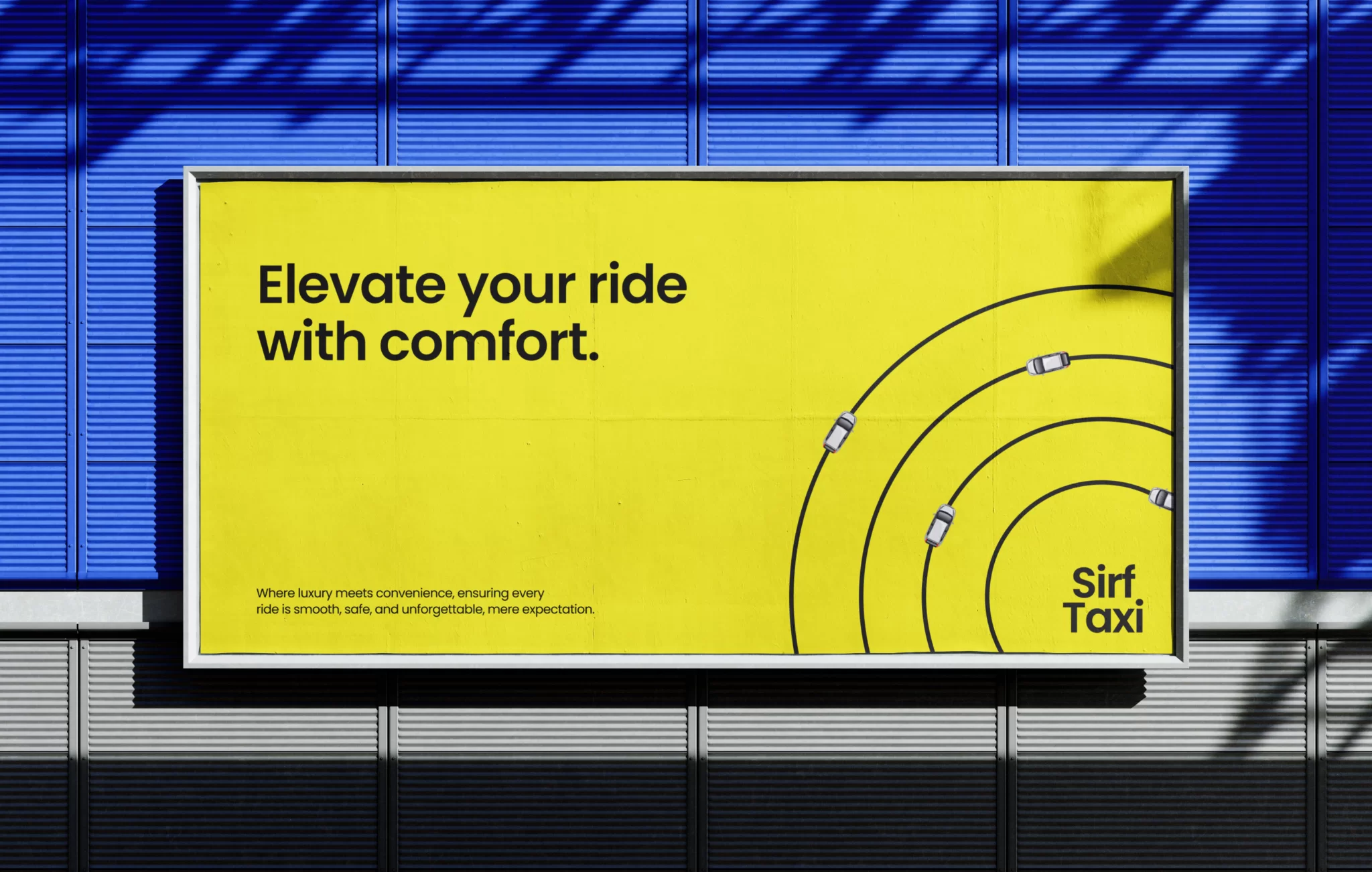
Explore the UX design process behind the Sirf Taxi.
UX as a Trust-Building Mechanism
Trust is one of the most important factors influencing customer behavior and purchasing decisions. Regardless of how innovative or feature-rich a product may be, users are unlikely to engage with it if they do not trust the company behind it. User Experience (UX) serves as a powerful trust-building mechanism by shaping how customers perceive a brand at every stage of their journey. Through thoughtful design, transparent communication, and consistent performance, UX helps reduce uncertainty and create confidence in a product or service.
First Impressions Matter
The first interaction a user has with a website, application, or digital platform often determines whether they stay or leave. Research has consistently shown that users form opinions about a website within seconds of arrival. During this brief period, visual design and usability heavily influence perceptions of credibility and professionalism.
Several design elements contribute to positive first impressions:
- Consistent branding that reinforces the company’s identity and creates a sense of familiarity.
- Modern, organized layouts that make information easy to find and understand.
- High-quality visuals that communicate professionalism and attention to detail.
- Clear typography that improves readability and accessibility.
- Responsive interfaces that function smoothly across devices and screen sizes.
When users encounter a polished and well-structured experience, they are more likely to view the organization as trustworthy and competent. Conversely, outdated designs, broken links, cluttered layouts, or poor mobile performance can create doubt and cause potential customers to abandon the experience before engaging further.
Transparency Increases Confidence
Trust grows when customers feel informed and in control. Uncertainty often creates hesitation, especially when users are making purchases, sharing personal information, or committing to subscriptions. UX design can reduce this uncertainty by presenting information clearly and honestly.
Effective UX supports transparency by clearly communicating:
- Pricing structures and associated costs
- Subscription terms and renewal policies
- Privacy policies and data usage practices
- Security measures protecting customer information
- Shipping, delivery, and return information
- Product limitations and service expectations
When critical information is easy to locate and understand, customers feel more confident in their decisions. Hidden fees, confusing policies, or vague explanations can quickly damage trust and increase abandonment rates. Transparent UX demonstrates respect for users and helps establish credibility throughout the customer journey.
Reducing Risk Through Design
Customers naturally evaluate potential risks before making decisions. They want assurance that their time, money, and personal information are safe. UX can help minimize perceived risk by incorporating trust signals throughout the experience.
Examples include:
- Secure payment indicators and encryption badges
- Customer reviews and testimonials
- Clear contact information and support options
- Frequently asked questions (FAQs)
- Easy-to-understand return and refund policies
- Progress indicators during checkout and registration processes
These elements reassure users that the company is legitimate, reliable, and prepared to support them if issues arise. By addressing concerns proactively, UX reduces anxiety and increases the likelihood of conversion.
Consistency Builds Reliability
Trust is strengthened when experiences are predictable and consistent. Users expect digital products to behave in ways that align with their expectations. Consistent navigation, design patterns, messaging, and functionality help users feel comfortable and confident while interacting with a product.
Consistency can be demonstrated through:
- Uniform visual design across all pages and platforms
- Predictable navigation structures
- Consistent terminology and messaging
- Reliable system performance
- Standardized interaction patterns
When users know what to expect, they spend less effort learning how to use the product and more time achieving their goals. This reliability reinforces perceptions of quality and professionalism.
Building Long-Term Trust
Trust is rarely established through a single interaction. Instead, it develops gradually through a series of positive experiences over time. Every successful interaction strengthens the relationship between the customer and the brand.
Organizations build long-term trust by:
- Continuously meeting user expectations
- Delivering reliable products and services
- Responding quickly to customer concerns
- Protecting customer data and privacy
- Making ongoing improvements based on user feedback
- Maintaining transparent communication during changes or issues
As trust grows, customers become more willing to deepen their relationship with the brand. They are more likely to remain loyal, purchase additional products, renew subscriptions, and recommend the company to others.
The Business Value of Trust
Trust delivers measurable business benefits. Customers who trust a brand are generally less hesitant to make purchases, more likely to forgive occasional mistakes, and more inclined to continue using products over the long term. Trust also reduces customer acquisition costs because loyal customers often become advocates who bring in new users through recommendations.
Strong trust contributes to:
- Higher conversion rates
- Increased customer retention
- Greater customer lifetime value
- Stronger brand loyalty
- More positive word-of-mouth marketing
- Reduced customer churn
In highly competitive markets, trust can become a significant differentiator that influences purchasing decisions even when competing products offer similar features and pricing.
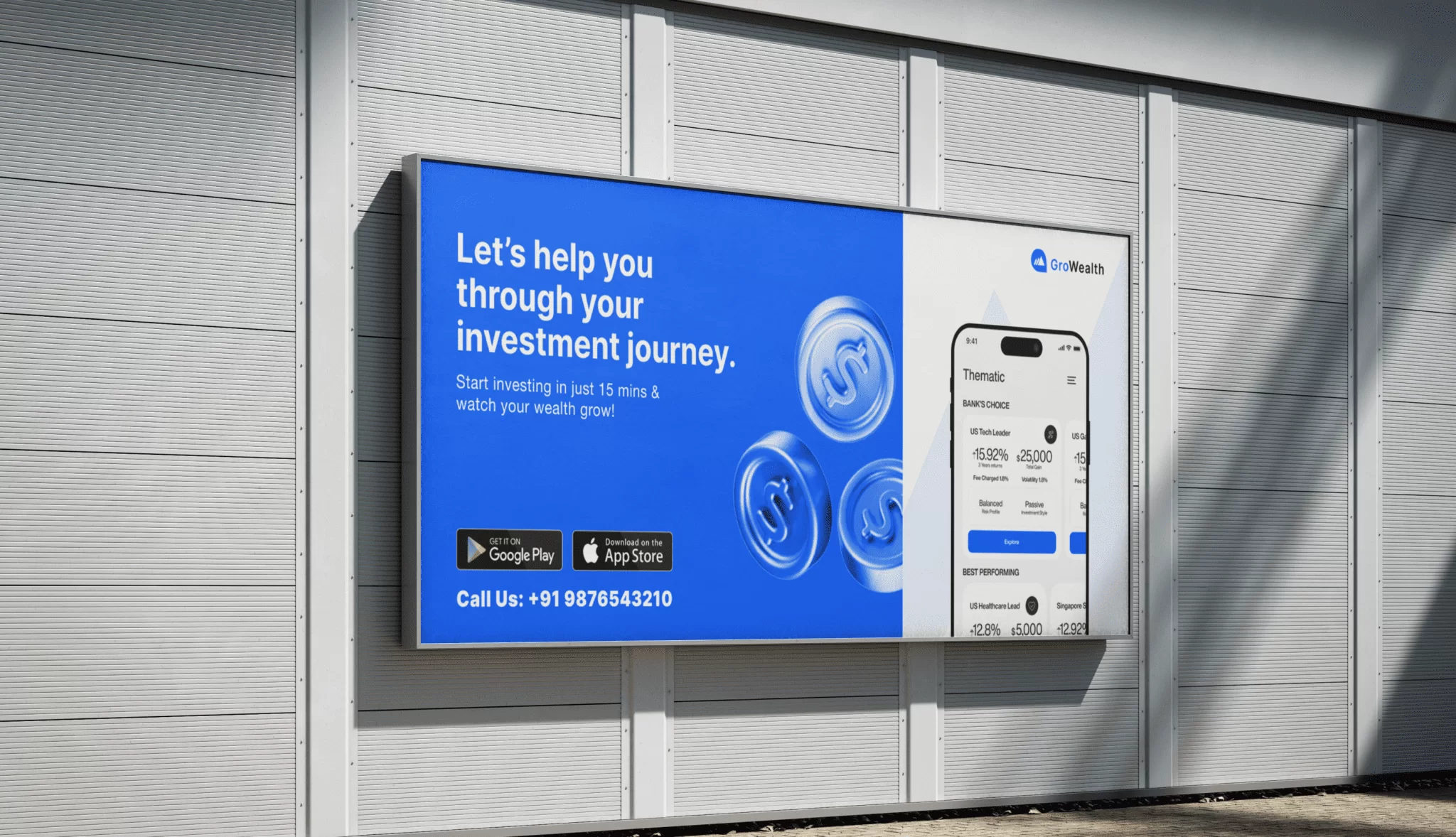
Explore the UX design process behind the GroWealth.
The Financial Cost of Poor UX
Poor User Experience (UX) can have a significant impact on a company’s financial performance. While businesses often focus on attracting new customers, they may overlook the hidden costs created by frustrating or inefficient user experiences. Poor UX affects customer satisfaction, conversion rates, operational efficiency, and brand reputation, ultimately leading to revenue loss and increased expenses.
Lost Sales Opportunities
One of the most immediate consequences of poor UX is lost sales. When users encounter obstacles while trying to complete a task, they are more likely to leave without making a purchase or finishing their intended action.
Common issues that cause users to abandon a website or application include:
- Broken or confusing navigation
- Slow page loading speeds
- Complicated registration processes
- Lengthy checkout procedures
- Poor search functionality
- Non-responsive mobile designs
Every abandoned session represents a missed business opportunity. In highly competitive markets, users can easily switch to a competitor that offers a smoother and more convenient experience. As a result, poor UX directly reduces conversion rates and revenue generation.
Increased Support Costs
Poorly designed interfaces often create confusion, causing users to seek help from customer support teams. Questions that could have been avoided through better design increase the number of support requests and place additional pressure on business resources.
This leads to:
- Higher operational expenses
- Increased staffing requirements
- Longer customer wait times
- Reduced employee productivity
When users can easily understand and navigate a product, they require less assistance. Effective UX design empowers customers to solve problems independently, reducing support costs while improving customer satisfaction.
Damaged Brand Reputation
A negative user experience can quickly affect how customers perceive a brand. Users who experience frustration are more likely to share their dissatisfaction through online reviews, social media posts, and word-of-mouth conversations.
Poor UX can result in:
- Negative reviews and ratings
- Reduced customer referrals
- Lower levels of trust
- Decreased customer loyalty
- Increased customer churn
Because reputation plays a major role in purchasing decisions, repeated negative experiences can discourage potential customers from choosing a company’s products or services.
Reduced Customer Retention
Customers are less likely to remain loyal when using products that are difficult, confusing, or frustrating. Even if a company offers quality products, poor usability can drive customers toward competitors.
High customer churn leads to:
- Loss of recurring revenue
- Lower customer lifetime value
- Increased marketing costs to replace lost customers
- Reduced long-term profitability
Retaining existing customers is generally more cost-effective than acquiring new ones, making UX an important factor in customer retention strategies.
Long-Term Business Impact
The financial effects of poor UX often accumulate gradually. Individually, small usability issues may seem insignificant, but together they can create substantial business losses over time. Lower conversion rates, increased support costs, customer churn, and reputation damage all contribute to reduced profitability and slower business growth.
Mobile UX: Revenue in the Palm of Your Customer’s Hand
Mobile devices have become the primary way many people access digital products and services. As mobile commerce continues to grow, businesses must prioritize mobile UX to remain competitive. A smooth mobile experience helps customers complete tasks quickly and conveniently, leading to higher engagement, increased conversions, and greater revenue.
Speed Is Essential
Mobile users expect websites and applications to load almost instantly. Even small delays can frustrate users, increase bounce rates, and reduce sales. Slow-loading pages often cause customers to abandon their journey before making a purchase.
To improve performance, businesses should focus on:
- Fast page loading times
- Optimized images and media
- Efficient coding practices
- Reliable mobile performance
By improving speed, organizations enhance user satisfaction while maximizing conversion opportunities.
Designing for Mobile Behavior
Mobile users interact differently from desktop users. They often browse on smaller screens, use touch gestures, and expect quick access to information.
Effective mobile UX includes:
- Touch-friendly buttons and controls
- Simplified navigation menus
- Easy-to-read content
- Mobile payment integration
- Responsive layouts that adapt to different screen sizes
Removing friction from mobile experiences makes it easier for customers to complete purchases and engage with products.
Supporting Omnichannel Journeys
Modern customers frequently switch between devices during their buying journey. For example, a customer may discover a product on a smartphone, research it on a tablet, and complete the purchase on a desktop computer.
Providing a consistent experience across devices helps:
- Maintain customer engagement
- Reduce confusion
- Improve brand perception
- Increase conversion rates
A seamless omnichannel experience ensures customers can continue their journey without interruption.

Explore the UX design process behind the Xenxo.
Data-Driven UX: Designing for Measurable Outcomes
Successful UX design relies on evidence rather than assumptions. Businesses use data and user research to understand customer behavior and identify opportunities for improvement.
Identifying Friction Points
Data helps organizations discover where users encounter difficulties. Valuable insights can be gathered through:
- Heatmaps
- User session recordings
- Analytics platforms
- Customer feedback
- Usability testing
These tools reveal obstacles that prevent users from completing tasks and help teams make informed design decisions.
A/B Testing and Experimentation
A/B testing allows businesses to compare different design variations and determine which performs better.
Common experiments include:
- Testing different call-to-action (CTA) buttons
- Simplifying navigation menus
- Improving checkout processes
- Modifying page layouts
Even small design changes can produce measurable improvements in conversion rates and revenue.
Continuous Optimization
UX is not a one-time activity. Customer expectations, technologies, and market conditions constantly evolve. Businesses that continuously monitor performance and refine their user experiences are better positioned to maintain customer satisfaction and achieve sustainable growth.
The ROI of UX Investment
Many business leaders want to understand the financial return generated by UX improvements. The value of UX can be measured through several key business outcomes.
Higher Conversion Rates
When products are easy to use, customers are more likely to complete desired actions such as making purchases, signing up for services, or submitting inquiries. Even a small increase in conversion rates can generate substantial revenue growth.
Reduced Operational Costs
Good UX reduces unnecessary expenses by lowering:
- Customer support requests
- User errors
- Employee training needs
- Development rework
These efficiencies contribute directly to improved profitability.
Increased Customer Lifetime Value
Satisfied customers tend to remain loyal longer and spend more over time. They are also more likely to upgrade services, purchase additional products, and recommend the brand to others.
Higher customer lifetime value creates long-term financial benefits that extend far beyond the initial sale.
Designing for Emotional Value
Customer decisions are influenced by emotions as much as logic. While functionality is important, the feelings users experience while interacting with a product often determine whether they return.
Exceptional UX can create emotions such as:
- Confidence
- Satisfaction
- Trust
- Delight
- Control
Positive emotional experiences strengthen customer relationships, increase loyalty, and encourage repeat engagement. In markets where products offer similar features, emotional connection often becomes a key competitive advantage.
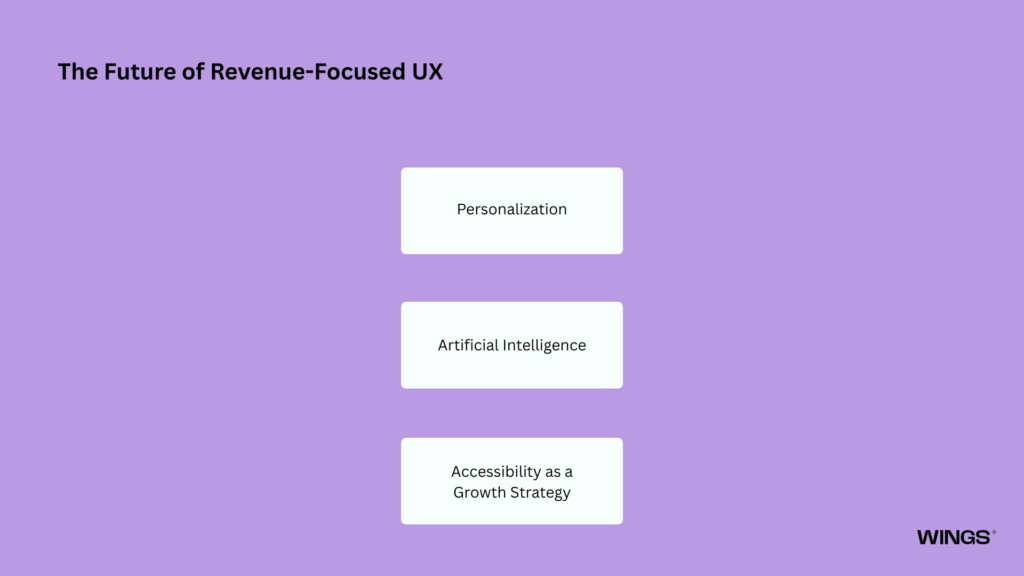
The Future of Revenue-Focused UX
As digital technologies continue to evolve, UX will play an even greater role in driving business success.
Personalization
Customers increasingly expect experiences tailored to their individual needs and preferences. Personalized recommendations, customized content, and adaptive interfaces improve relevance and increase conversion opportunities.
Artificial Intelligence
Artificial Intelligence (AI) is transforming customer experiences through:
- Intelligent chatbots
- Predictive recommendations
- Automated support systems
- Personalized customer journeys
When implemented effectively, AI enhances both user satisfaction and business performance.
Accessibility as a Growth Strategy
Accessible design ensures that products can be used by people with diverse abilities and needs. Beyond meeting legal requirements, accessibility expands market reach, improves usability for all users, and creates new revenue opportunities.
Conclusion: Design Is No Longer Just Design
The perception of UX as a purely creative discipline is outdated. Modern UX is a strategic business function that directly influences revenue generation, customer loyalty, operational efficiency, and competitive advantage. Every interaction shapes customer behavior. Every friction point affects conversion. Every positive experience strengthens trust and retention.
Organizations that prioritize user experience are not simply creating better products, they are building stronger, more profitable businesses.The most successful companies understand a fundamental truth: customers do not separate product quality from user experience. To them, the experience is the product.
When businesses invest in thoughtful, data-driven, customer-centered design, UX becomes far more than a design function. It becomes a growth engine. In an increasingly competitive marketplace, the companies that thrive will be those that recognize UX not as a cost center, but as a revenue-generating asset.
Design that pays is not about making things look better. It is about making business perform better. And in today’s digital economy, that may be one of the smartest investments a company can make.

Vidhya Shree
Senior Visual Designer