


What Is Full-Stack Web Development?
Full-stack web development refers to the process of building and managing every layer of a web application or website. It combines frontend development, backend development, database management, server handling, and system integration into one complete ecosystem.
Instead of focusing on just the visual appearance or only the technical infrastructure, full-stack development ensures that all parts of the digital platform work together efficiently.
A full-stack system includes:
- The user-facing interface customers interact with
- The server-side logic that processes requests
- Databases that store and organize information
- APIs that connect external services
- Security systems that protect business and customer data
- Hosting infrastructure that supports performance and scalability
Think of full-stack development like managing a large retail showroom.
The showroom design and customer experience represent the frontend. The warehouse, billing system, inventory management, and operational processes represent the backend. The communication between departments resembles APIs and integrations. Full-stack development ensures the entire business operates smoothly rather than focusing on only one department. For businesses, this integrated approach becomes critical because modern customers expect seamless digital experiences.

Explore the Website development process behind the Quint.
Why Decision-Makers Should Understand Full-Stack Development
Technology decisions are now business decisions. Leaders who understand how digital systems function are better prepared to make informed investments and avoid costly mistakes.
Many organizations struggle with:
- Poorly optimized websites
- Slow-loading pages
- Disconnected systems
- Inefficient workflows
- Security vulnerabilities
- High maintenance costs
These problems usually stem from weak development planning.
Understanding full-stack development helps decision-makers:
- Choose the right technology partners
- Plan scalable digital infrastructure
- Improve customer experience
- Reduce operational inefficiencies
- Increase return on digital investments
It also improves communication between business teams and technical teams, reducing misunderstandings during development projects. When executives understand how frontend, backend, and databases work together, they can align technology initiatives with business goals more effectively.
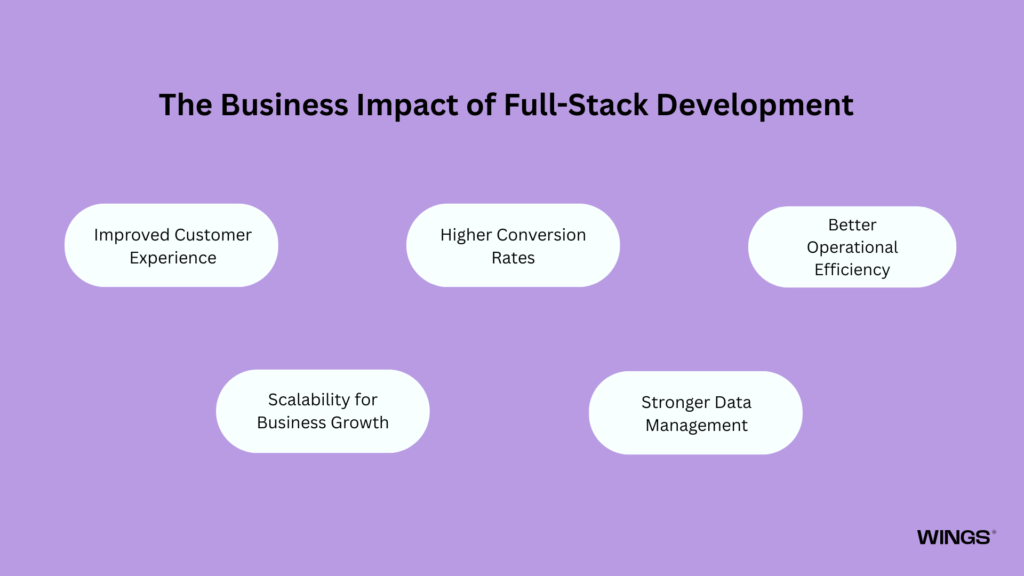
The Business Impact of Full-Stack Development
Full-stack development directly influences business performance across multiple departments.
Improved Customer Experience
Customers expect digital experiences that are fast, responsive, and easy to use. A poorly developed website creates frustration and reduces trust in the brand.
A strong full-stack system improves:
- Website speed
- Navigation flow
- Mobile responsiveness
- Checkout processes
- User engagement
When customers can easily browse products, submit enquiries, make payments, or access services, businesses improve customer satisfaction and retention. Smooth digital experiences also strengthen brand perception. Customers often associate website quality with business credibility.
Higher Conversion Rates
Every digital platform exists to achieve a business objective, whether it is generating leads, selling products, or increasing signups.
Full-stack development affects conversions by improving:
- Page loading speed
- Form functionality
- User interface clarity
- Checkout experience
- Website stability
Even a one-second delay in loading speed can significantly reduce conversions. Businesses spending on paid advertising particularly benefit from optimized systems because poor website performance wastes marketing budgets. A properly developed platform helps businesses convert more traffic into actual customers.
Better Operational Efficiency
Modern businesses rely heavily on automation and digital workflows.
Full-stack systems can automate:
- Lead management
- Appointment booking
- Invoice generation
- Customer communication
- Inventory tracking
- Employee workflows
- Data reporting
Automation reduces manual work, minimizes human errors, and improves productivity. For example, a business using an integrated backend system can automatically send invoices, update inventory, and notify customers after purchases without requiring manual intervention. This operational efficiency reduces costs and improves scalability.
Scalability for Business Growth
Many businesses initially develop websites with short-term thinking. As the business grows, the platform becomes unable to handle increasing traffic, features, or operational complexity.
Scalable full-stack architecture allows businesses to:
- Add new services
- Expand product catalogs
- Support larger customer bases
- Integrate advanced tools
- Handle higher traffic volumes
without rebuilding the system from scratch. Scalability is especially important for startups and growing businesses planning long-term expansion.
Stronger Data Management
Data has become one of the most valuable business assets.
Businesses need systems capable of:
- Collecting customer information
- Tracking user behavior
- Monitoring sales performance
- Generating reports
- Supporting analytics
Full-stack systems provide centralized data management that improves business decision-making.
Executives gain access to dashboards and reports that help them:
- Understand customer behavior
- Measure marketing ROI
- Forecast sales
- Optimize operations
Without organized digital systems, businesses struggle to leverage data effectively.
Understanding Frontend Development
Frontend development refers to everything users see and interact with on a website or web application.
This includes:
- Website layouts
- Colors and branding
- Navigation menus
- Product pages
- Forms
- Buttons
- Mobile responsiveness
- Interactive features
The frontend creates the first impression customers have about a business. A well-designed frontend combines visual appeal with functionality and ease of use.
Why Frontend Development Matters to Businesses
Brand Perception and Credibility
Customers often judge the professionalism of a company based on the quality of its website. An outdated or poorly designed interface can make even a legitimate business appear unreliable.
A modern frontend helps businesses:
- Build trust
- Improve brand image
- Increase engagement
- Enhance professionalism
Strong visual experiences create emotional connections with customers and improve brand recall.
Mobile User Experience
Mobile devices account for the majority of internet traffic globally. Businesses that fail to optimize for mobile users risk losing significant customer opportunities.
Responsive frontend development ensures:
- Better readability
- Faster mobile performance
- Improved navigation
- Better accessibility
A responsive interface adapts automatically across smartphones, tablets, and desktops.
Marketing Performance and ROI
Marketing campaigns are only as effective as the landing pages supporting them.
Businesses investing in:
- Google Ads
- Social media campaigns
- SEO
- Influencer marketing
need optimized frontend systems to maximize conversions.
Poor frontend experiences increase:
- Bounce rates
- Ad costs
- Customer abandonment
High-performing landing pages improve campaign effectiveness and reduce customer acquisition costs.
Common Frontend Technologies
Frontend technologies help developers create interactive and responsive user interfaces.
| Technology | Business Purpose |
| HTML | Website structure |
| CSS | Design and styling |
| JavaScript | Interactive functionality |
| React | Dynamic web applications |
| Angular | Enterprise-level applications |
| Vue.js | Lightweight user interfaces |
Decision-makers do not need technical mastery of these tools. Instead, they should focus on choosing technologies that support:
- Scalability
- Speed
- Security
- User experience
- Long-term maintenance
Understanding Backend Development
Backend development powers the invisible operations behind websites and applications. It processes requests, stores information, manages logic, and handles system operations. The backend acts as the operational engine of a digital platform.
Without backend systems, websites cannot:
- Process payments
- Manage customer accounts
- Store data
- Automate workflows
- Generate reports
Backend systems directly influence business functionality and efficiency.
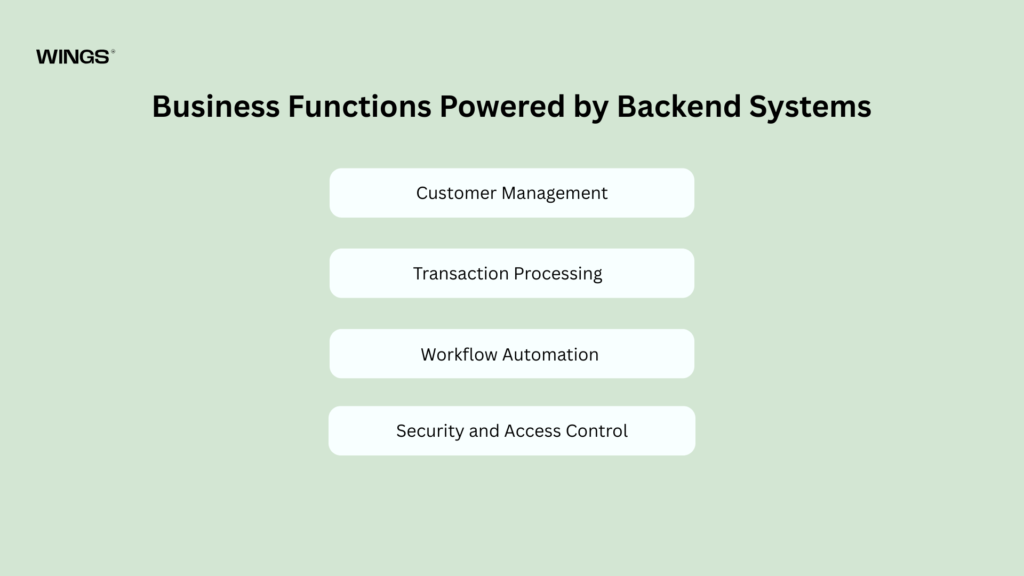
Business Functions Powered by Backend Systems
Customer Management
Backend systems store and manage customer-related information such as:
- Profiles
- Purchase history
- Subscription data
- Support records
This centralized information improves personalization and customer service.
Transaction Processing
eCommerce businesses rely heavily on backend systems for:
- Payment processing
- Order management
- Invoice creation
- Tax calculations
- Shipping coordination
Reliable backend systems reduce transaction errors and improve customer trust.
Workflow Automation
Automation is one of the biggest advantages of modern backend systems.
Businesses can automate:
- Email notifications
- Lead distribution
- CRM updates
- Task assignments
- Reporting systems
This reduces operational overhead and improves consistency.
Security and Access Control
Backend systems help secure sensitive business and customer information.
Security measures include:
- Authentication systems
- Role-based access
- Data encryption
- Fraud prevention
- Activity monitoring
Strong security infrastructure protects both revenue and brand reputation.
Common Backend Technologies
| Technology | Best Use Cases |
| Node.js | Real-time applications |
| Python | AI and automation |
| PHP | CMS and websites |
| Java | Enterprise software |
| .NET | Corporate applications |
| Ruby on Rails | Startup MVPs |
The best backend technology depends on:
- Business objectives
- Scalability needs
- Budget
- Integration requirements
- Development timelines
Technology selection should always align with long-term business goals rather than trends alone.

Explore the Website development process behind the Kind Energy
Conclusion
Full-stack web development is more than just building websites, it is about creating scalable, secure, and high-performing digital systems that support business growth. From improving customer experience and increasing conversions to automating operations and enabling scalability, full-stack development plays a major role in modern business success.
For decision-makers, understanding full-stack development helps in making smarter technology investments, choosing the right development partners, and building future-ready digital platforms. Businesses that invest in strong digital infrastructure are better positioned to compete, grow, and adapt in an increasingly digital world.

Mugesh Kanna
Junior Web developer