

What is an eCommerce Website?
An eCommerce website is an online platform that allows businesses to sell products or services over the internet. Customers can browse items, add them to a shopping cart, make secure online payments, and have products delivered to their doorstep. eCommerce websites make shopping convenient by allowing people to buy anytime and from anywhere. Popular examples include Amazon, Flipkart, and eBay.
Understanding the Modern eCommerce Landscape
The eCommerce industry has evolved dramatically over the last decade. Customers no longer buy products simply because they are available online. They purchase from brands that communicate value clearly and provide memorable experiences.
Research on brand positioning in crowded markets shows that successful brands focus on building a clear and distinctive identity instead of trying to outshine competitors through louder marketing. By clearly communicating what makes them unique, these brands create stronger connections with their audience. This approach helps them stand out, build trust, and achieve long-term customer loyalty.
Today’s consumers expect:
- Fast-loading websites
- Mobile-friendly experiences
- Personalized recommendations
- Secure payment systems
- Transparent shipping policies
- Strong customer support
If your website fails to meet customer expectations, visitors are unlikely to stay for long. In today’s competitive market, customers have countless alternatives and can switch to a competitor within seconds. Even minor issues such as slow loading speed, poor mobile experience, or lack of trust signals can lead to lost opportunities and reduced sales.
Choosing the Right eCommerce Business Model
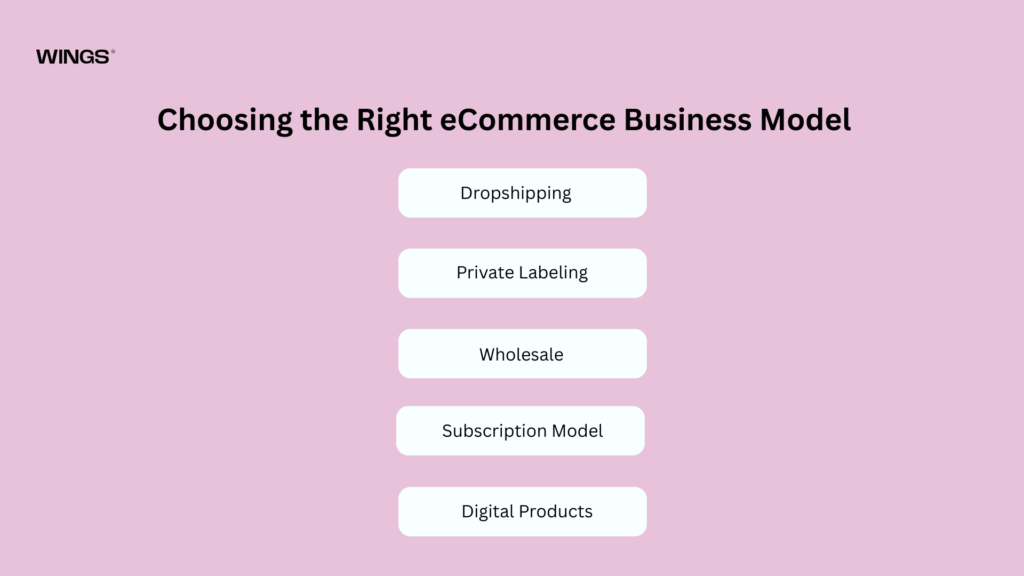
Before creating your website, you need to decide how your business will operate, as this will shape your entire eCommerce strategy.
Dropshipping
Dropshipping is a beginner-friendly eCommerce model that allows you to sell products without holding any physical inventory. Instead of stocking items yourself, you partner with suppliers who manage storage, packaging, and shipping directly to the customer.
Private Labeling
Private labeling involves selling products under your own brand name, even though they are manufactured by a third party. This model allows you to create a unique brand identity, customize packaging, and differentiate your offerings from competitors. It is particularly effective for building long-term customer loyalty and trust.
Wholesale
The wholesale model involves purchasing products in bulk from manufacturers or distributors at a lower cost and then reselling them individually at a higher price. This approach provides better pricing control and higher profit potential. It is well-suited for businesses that can manage inventory, storage, and logistics efficiently.
Subscription Model
The subscription model is based on recurring payments, where customers pay a fixed fee to receive products or services regularly, such as monthly or quarterly. This model is highly effective for generating predictable revenue and building long-term customer relationships. It works well for consumable goods like beauty products, snacks, or fitness items.
Digital Products
Digital products include items such as ebooks, online courses, templates, software, and downloadable resources. This model eliminates the need for physical inventory, shipping, and logistics, making it highly scalable and cost-efficient. Once created, digital products can be sold repeatedly with minimal additional cost. It is especially suitable for creators, educators, and professionals who want to monetize their knowledge or skills.
Finding a Profitable Niche
One of the biggest mistakes new entrepreneurs make is entering overcrowded markets without any clear differentiation. Simply selling popular products is not enough to succeed in today’s competitive eCommerce landscape. To stand out, businesses must offer something unique that attracts and retains customers.
What Makes a Good Niche?
A profitable niche is not just about high demand; it must also be specific and targeted. A well-defined niche helps you connect with the right audience and reduces competition. First, it should have consistent demand, ensuring that customers are actively searching for your products over time. Second, it should focus on a clear target audience, allowing you to tailor your marketing and messaging effectively.
Niche Research Tools
To identify a profitable niche, you need to rely on data rather than guesswork. Tools like Google Trends help you understand what people are searching for and whether interest in a product is increasing or declining. Ahrefs and SEMrush provide deeper insights into keyword search volume, competition levels, and market trends.
Defining Your Brand Positioning
Brand positioning is one of the most important aspects of building a successful eCommerce website. In a highly competitive market, it helps your business stand out and clearly communicate its value to customers. A strong brand position ensures that people immediately understand what your brand represents and why they should choose you over others.
A well-defined brand positioning answers key questions such as:
- Who you are – Your brand identity and purpose
- What you offer – The products or services you provide
- Why you are different – Your unique value proposition (UVP)
- Why customers should trust you – Your credibility and reliability
Beyond these basics, brand positioning also shapes how customers perceive your business. It influences your messaging, visual design, tone of voice, and overall customer experience. When all these elements are aligned, your brand becomes more memorable and impactful.
Key Elements of Strong Brand Positioning
- Clear and consistent messaging
- Strong visual identity (logo, colors, design)
- Focus on customer needs and emotions
- Authentic and trustworthy communication
- Differentiation from competitors
In today’s saturated eCommerce landscape, strong brand positioning is essential for building trust, attracting the right audience, and creating long-term customer loyalty.

Explore the E Commerce development process behind the Obessions.
Key Components of Brand Positioning
To build a strong and effective brand position, you need to focus on a few essential components that define how your business is perceived by customers.
Unique Value Proposition (UVP)
Your Unique Value Proposition (UVP) is the foundation of your brand positioning. It clearly explains what makes your store different from competitors and why customers should choose you. A strong UVP should be simple, specific, and easy to understand.
- Highlights your key benefit or solution
- Differentiates you from competitors
- Focuses on customer needs
- Communicates value clearly and quickly
A well-defined UVP helps customers instantly recognize what makes your brand special.
Target Audience
Understanding your target audience is crucial for effective positioning. You need to know exactly who your customers are so you can tailor your products, messaging, and marketing strategies to meet their needs.
Key factors to understand include:
- Age – Helps define preferences and buying behavior
- Lifestyle – Determines how your product fits into their daily life
- Interests – Guides your marketing and branding approach
- Pain points – Identifies problems your product can solve
- Purchasing behavior – Shows how and why they make buying decisions
The better you understand your audience, the more effectively you can connect with them.
Emotional Branding
Emotional branding focuses on creating a connection with customers beyond just the product. Consumers often make purchasing decisions based on feelings rather than logic, which makes emotional engagement a powerful tool.
- Builds trust and loyalty
- Creates memorable brand experiences
- Encourages repeat purchases
- Strengthens customer relationships
By appealing to emotions such as happiness, confidence, or security, your brand becomes more relatable and meaningful to customers.
Your UVP should clearly explain what makes your store different from competitors.
Choosing the Right eCommerce Platform
Choosing the right eCommerce platform is a crucial step in building your online store, as it directly affects how easily you can create, manage, and scale your business. The platform you select will influence your website’s design, functionality, performance, and overall user experience.
Popular eCommerce Platforms
There are several platforms available, each suited to different needs and skill levels:
- Shopify
Shopify is one of the most popular eCommerce platforms, especially for beginners. It offers an all-in-one solution that includes hosting, customizable templates, and integrated payment systems. Its user-friendly interface makes it easy to set up and manage a store without technical knowledge. - WooCommerce
WooCommerce is a powerful plugin for WordPress that provides high flexibility and customization. It is ideal for users who want more control over their website design and functionality. However, it may require some technical knowledge for setup and maintenance. - BigCommerce
BigCommerce is designed for growing and large-scale businesses. It offers advanced features, scalability, and strong performance, making it suitable for businesses that plan to expand and handle higher volumes of traffic and sales. - Wix eCommerce
Wix is a beginner-friendly platform with a simple drag-and-drop builder. It is ideal for small businesses or individuals who want to create a visually appealing store quickly without dealing with complex technical setups.
Key Factors to Consider
When choosing a platform, consider:
- Ease of use
- Customization options
- Pricing and fees
- Scalability
- Integration with other tools
Selecting the right platform ensures a smoother setup process and provides a strong foundation for your eCommerce success. Your platform determines how easily you can build and manage your store.
Domain Name and Hosting
Your domain name and hosting are the foundation of your eCommerce website. The domain name acts as your digital identity, it is how customers find and remember your brand online. A strong, professional domain name not only improves brand recognition but also builds trust and credibility with your audience.
Tips for Choosing a Domain
Selecting the right domain name is important for long-term success. A good domain should be simple, clear, and easy to recall.
- Keep it short – Short names are easier to type and remember
- Make it memorable – Choose something unique and catchy
- Avoid numbers and symbols – They can confuse users and reduce clarity
- Choose a brandable name – Focus on a name that represents your business identity
A well-chosen domain name helps create a strong first impression and makes it easier for customers to return to your website.
Hosting Essentials
Web hosting plays a critical role in your website’s performance and reliability. Good hosting ensures that your website runs smoothly, loads quickly, and remains secure for users.
Strong hosting improves:
- Website speed – Faster loading pages keep users engaged
- Security – Protects customer data and builds trust
- SEO performance – Search engines favor fast and reliable websites
- User experience – Smooth performance leads to higher satisfaction
Slow or unreliable websites can negatively impact user experience and lead to higher bounce rates. In fact, even a slight delay in loading time can significantly reduce conversions, as users are likely to leave and switch to competitors.
Designing an eCommerce Website That Converts
The design of your eCommerce website plays a crucial role in determining whether visitors stay, explore, and ultimately make a purchase. It is not just about making your website look attractive, design directly impacts user experience, trust, and conversions. In highly competitive markets, research from design agencies shows that clarity and usability are far more effective than complex or flashy visuals.
Core Design Principles
To create a high-converting eCommerce website, focus on the following key design principles:
Simplicity
Simplicity is the foundation of effective design. A cluttered website can overwhelm users and make navigation difficult.
- Avoid unnecessary elements and distractions
- Keep layouts clean and organized
- Use clear menus and categories
- Highlight important actions like “Add to Cart” or “Buy Now”
A simple design helps users focus on your products and improves their overall experience.
Mobile Optimization
With the majority of online shopping now happening on mobile devices, your website must be fully optimized for smaller screens.
- Use responsive design that adapts to all devices
- Ensure buttons are easy to tap
- Simplify navigation for mobile users
- Optimize images and content for faster loading
A poor mobile experience can quickly drive potential customers away.
Fast Loading Speed
Speed is a critical factor in user satisfaction and conversion rates. Modern users expect websites to load almost instantly.
- Optimize images and reduce file sizes
- Use reliable hosting services
- Minimize unnecessary scripts and plugins
- Enable caching for faster performance
Even a one-second delay can lead to fewer conversions and higher bounce rates.
Consistent Branding
Consistency in branding creates a professional and trustworthy image. It helps customers recognize and remember your brand.
Maintain consistency in:
- Colors – Use a defined color palette
- Typography – Stick to a limited set of fonts
- Tone of voice – Keep messaging consistent across pages
- Visual identity – Use cohesive images and design elements
Strong brand consistency builds trust, improves recognition, and creates a unified customer experience.
Creating High-Converting Product Pages
Product pages are one of the most important parts of your eCommerce website, as they function as your digital salesperson. This is where customers evaluate your product, build trust, and decide whether to make a purchase.
Essential Elements
To create a product page that converts effectively, include the following key elements:
-
High-Quality Images
Visual presentation is critical in online shopping. Since customers cannot physically see or touch the product, images must provide a clear and detailed view.
- Use multiple angles to showcase the product
- Add zoom functionality for closer inspection
- Include lifestyle images to show real-world usage
-
Product Descriptions
A strong product description should focus on benefits rather than just features. Customers are more interested in how the product will help them or solve their problem.
Example:
Instead of:
“Waterproof hiking backpack”
Write:
“Stay prepared for every adventure with a waterproof backpack designed to protect your essentials in any weather.” -
Customer Reviews
Reviews act as social proof, helping to build trust and credibility. Positive feedback from other customers reduces hesitation and increases confidence in the product.
-
Strong Call-to-Action (CTA)
Your CTA buttons should be clear, visible, and easy to click.
- Use action-oriented text like “Buy Now” or “Add to Cart”
- Place buttons prominently on the page
- Ensure they stand out visually
A well-optimized product page combines visuals, persuasive content, and trust signals to guide customers toward making a purchase decision.
Optimizing the Checkout Process
The checkout process is the final and most critical step in the customer journey. Even if a user is interested in your product, a complicated or time-consuming checkout can lead to cart abandonment. Many customers leave without completing their purchase simply because the process feels frustrating or unclear. Therefore, optimizing your checkout experience is essential to increase conversions and reduce drop-offs.
Best Practices
To create an efficient and user-friendly checkout process, follow these key practices:
-
Offer Guest Checkout
Not all customers want to create an account. Forcing registration can discourage users and increase abandonment rates.
- Allow users to check out without signing up
- Offer account creation as an optional step after purchase
-
Minimize Form Fields
Long and complicated forms can frustrate users. Only ask for essential information.
- Remove unnecessary fields
- Use auto-fill options where possible
- Keep the process quick and simple
-
Show Progress Indicators
Let customers know how many steps are involved in the checkout process.
- Display a progress bar (e.g., Shipping → Payment → Review)
- Reduce uncertainty and improve user confidence
-
Provide Multiple Payment Options
Different customers prefer different payment methods. Offering flexibility increases the chances of completing a sale.
- Credit/debit cards
- Digital wallets
- UPI or local payment options
-
Display Security Badges
Security is a major concern for online shoppers. Visible trust signals reassure customers that their data is safe.
- SSL certificates
- Secure payment icons
- Money-back guarantees
Building Trust and Credibility
Trust is one of the most important factors in online shopping. Unlike physical stores, customers cannot see or touch products before purchasing, which makes them more cautious. If your website does not appear trustworthy, visitors are unlikely to complete a purchase. Building credibility helps reduce uncertainty, increases confidence, and encourages customers to choose your store over competitors.
How to Build Trust
To establish trust and credibility, focus on the following key elements:
-
Customer Testimonials
Customer feedback plays a major role in influencing buying decisions.
- Display positive reviews and ratings prominently
- Include real customer experiences and feedback
- Use photos or verified reviews to increase authenticity
- Testimonials act as social proof, reassuring potential buyers that others have had a good experience with your product or service.
-
Transparent Policies
Being clear and honest about your policies helps reduce confusion and builds confidence. Customers want to know what to expect before making a purchase.
Clearly display:- Shipping policy – Delivery time, charges, and process
- Refund policy – Conditions for refunds and timelines
- Return policy – Easy and clear return procedures
- Transparent policies show professionalism and reduce hesitation during checkout.
-
Secure Payment Systems
Security is a top concern for online shoppers, especially when sharing personal and financial information. Using trusted payment systems helps build confidence.
Use reliable payment gateways such as:- PayPal
- Stripe
- Razorpay
- Additionally, include visible trust signals like SSL certificates, secure checkout icons, and data protection assurances to reinforce safety.
SEO for eCommerce Websites
Search Engine Optimization (SEO) is essential for driving organic (free) traffic to your eCommerce website. Instead of relying only on paid ads, SEO helps your store appear in search engine results when potential customers are actively looking for products. A strong SEO strategy increases visibility, attracts the right audience, and improves long-term growth.
On-Page SEO
On-page SEO focuses on optimizing the elements within your website to improve search rankings and user experience.
Key areas to optimize include:
-
Product Titles
Use clear, keyword-rich titles that describe the product accurately. This helps search engines understand your content and improves visibility.
-
Meta Descriptions
Write compelling meta descriptions that summarize your product and encourage users to click on your link in search results.
-
URLs
Keep URLs short, clean, and relevant. Avoid unnecessary characters and include important keywords.
-
Images
Optimize images by reducing file size for faster loading and adding alt text to describe the image for search engines.
-
Internal Links
Link related products and pages within your website. This improves navigation and helps search engines crawl your site more effectively.
Content Marketing
Content marketing is a powerful way to boost your SEO efforts and establish your brand as an authority in your niche. By publishing valuable and relevant content, you can attract more visitors and keep them engaged.
Examples of blog topics include:
- Buying guides – Help customers choose the right product
- Product comparisons – Highlight differences between similar items
- Industry trends – Share updates and insights related to your niche
Regularly publishing high-quality content not only improves search rankings but also builds trust and encourages repeat visits.

Explore the E Commerce development process behind the Pureforma.
Leveraging Emotional Branding
In today’s saturated eCommerce market, simply offering good products is not enough to stand out. Modern branding experts emphasize that emotional connection is a key differentiator that influences customer decisions. People are more likely to remember how a brand makes them feel rather than just what it sells. When a brand connects emotionally, it creates a deeper bond that goes beyond a single transaction.
Emotional Branding Strategies
To build a strong emotional connection with your audience, consider the following strategies:
-
Storytelling
Share your brand’s journey, values, and mission. A compelling story makes your brand more relatable and memorable. Customers are more likely to connect with brands that have a meaningful background.
-
Community Building
Create a sense of belonging among your customers.
- Engage with them on social media
- Encourage user-generated content
- Build a loyal customer community
-
Purpose-Driven Messaging
Align your brand with a clear purpose or cause. Customers today prefer brands that stand for something meaningful, such as sustainability or social responsibility.
-
Personalized Experiences
Tailor your communication and offers based on customer preferences. Personalized recommendations, emails, and content make customers feel valued and understood.
Marketing Your eCommerce Website
No matter how well-designed your eCommerce website is, it will not generate sales without effective marketing. Marketing is what brings traffic to your store, creates brand awareness, and drives conversions. In today’s competitive digital landscape, relying on just one channel is not enough, you need a combination of strategies to reach and engage your target audience.
Social Media Marketing
Social media platforms are powerful tools for promoting your products and connecting with your audience.
- Platforms like Instagram, TikTok, and Pinterest are highly visual and ideal for showcasing products
- Share engaging content such as product demos, reels, and customer testimonials
- Use hashtags and trends to increase visibility
- Interact with followers through comments and messages
Social media not only drives traffic but also helps build a strong brand presence.
Email Marketing
Email marketing remains one of the most effective and highest-converting marketing channels. It allows you to communicate directly with your audience and nurture long-term relationships.
Popular tools include:
- Mailchimp
- Klaviyo
With email marketing, you can:
- Send promotional offers and discounts
- Share product updates and new launches
- Recover abandoned carts
- Build customer loyalty through personalized communication
Paid Advertising
Paid ads help you reach a larger audience quickly and generate immediate traffic.
Common platforms include:
- Google Ads – Targets users actively searching for products
- Facebook Ads – Allows detailed audience targeting
- Instagram Ads – Ideal for visual product promotion
Paid advertising is especially useful for launching new products and scaling your business.
Influencer Marketing
Influencer marketing involves collaborating with content creators who have an established audience.
- Helps build trust and credibility quickly
- Reaches a highly targeted audience
- Increases brand awareness and engagement
- Encourages authentic product promotion
When influencers recommend your product, it feels more genuine and persuasive to their followers.
Conversion Rate Optimization (CRO)
Driving traffic to your eCommerce website is important, but it does not guarantee sales. Many businesses struggle because they focus only on attracting visitors without optimizing their website to convert those visitors into customers. This is where Conversion Rate Optimization (CRO) becomes essential.
CRO Techniques
To improve your conversion rates, you can use the following proven techniques:
-
A/B Testing
A/B testing involves comparing two versions of a webpage to see which one performs better. This helps you make data-driven decisions instead of relying on guesswork.
Test different elements such as:- Headlines – Try different wording to see what grabs attention
- Images – Use different visuals to improve engagement
- Buttons – Test colors, sizes, and text (e.g., “Buy Now” vs. “Shop Now”)
- Layouts – Experiment with page structure and design
- Continuous testing helps you identify what works best for your audience.
-
Scarcity and Urgency
Creating a sense of urgency encourages customers to act quickly instead of delaying their decision.
Examples include:- “Only 3 left in stock”
- “Sale ends tonight”
- “Limited-time offer”
- These tactics tap into the fear of missing out (FOMO), increasing the likelihood of immediate purchases.
-
Exit-Intent Popups
Exit-intent popups appear when a user is about to leave your website. They are a powerful way to recover potential lost sales.
- Offer discounts or special deals
- Provide free shipping offers
- Encourage email sign-ups for future promotions
- These popups give customers a final incentive to stay and complete their purchase.
Why CRO Matters
Conversion Rate Optimization helps you get more value from your existing traffic. Instead of spending more on marketing, you improve your website’s ability to convert visitors into buyers. This leads to higher revenue, better user experience, and more efficient growth.
Using Analytics to Improve Performance
Analytics Tools
To effectively track and measure performance, you can use the following tools:
-
Google Analytics
Helps you monitor website traffic, user behavior, and conversion rates. It shows how visitors find your site and what actions they take.
-
Google Search Console
Provides insights into your website’s visibility on search engines. It helps track keyword performance, indexing status, and technical SEO issues.
These tools are essential for understanding both user activity and search performance.
Key Metrics
Tracking the right metrics allows you to evaluate your website’s effectiveness and identify areas for improvement:
-
Conversion Rate
The percentage of visitors who complete a desired action, such as making a purchase. A higher conversion rate indicates better performance.
-
Bounce Rate
The percentage of visitors who leave your site after viewing only one page. A high bounce rate may indicate poor user experience or irrelevant content.
-
Average Order Value (AOV)
The average amount customers spend per order. Increasing AOV can boost overall revenue.
-
Cart Abandonment Rate
The percentage of users who add items to their cart but do not complete the purchase. This helps identify issues in the checkout process.
Building Long-Term Customer Loyalty
Retention Strategies
To build and maintain customer loyalty, consider implementing the following strategies:
-
Loyalty Programs
Reward customers for repeat purchases and engagement.
- Offer points, discounts, or exclusive deals
- Encourage customers to return and shop more frequently
-
Personalized Offers
Tailor promotions based on customer behavior and preferences.
- Recommend products based on past purchases
- Send customized discounts and special offers
-
Excellent Customer Support
Providing quick and helpful support builds trust and satisfaction.
- Respond promptly to queries
- Offer multiple support channels (chat, email, phone)
- Resolve issues efficiently
-
Fast Shipping
Delivery speed plays a major role in customer satisfaction.
- Provide accurate delivery timelines
- Offer express shipping options if possible
-
Post-Purchase Emails
Stay connected with customers even after the sale.
- Send order confirmations and updates
- Request feedback or reviews
- Share related product recommendations
Common Mistakes to Avoid
To improve your chances of success, avoid the following common mistakes:
-
Poor Niche Selection
Entering a highly saturated market without a clear focus makes it difficult to stand out. Choosing the wrong niche can limit growth and profitability.
-
Weak Branding
Lack of a clear brand identity, message, or value proposition can confuse customers and reduce trust. Strong branding is essential for recognition and loyalty.
-
Slow Websites
Slow loading speeds frustrate users and lead to higher bounce rates. Performance issues can directly impact conversions and SEO rankings.
-
Generic Messaging
Using vague or copycat messaging fails to communicate your unique value. Customers are more likely to engage with brands that clearly explain what makes them different.
-
Ignoring Mobile Users
With most traffic coming from mobile devices, a non-optimized mobile experience can drive users away quickly.
-
Complicated Checkout Process
Long or confusing checkout steps increase cart abandonment rates and reduce completed purchases.
-
Lack of SEO Strategy
Without proper SEO, your website may struggle to attract organic traffic, forcing you to rely heavily on paid advertising.

Explore the E Commerce development process behind the EVOS.
The Future of eCommerce
The eCommerce industry continues to evolve rapidly, driven by technological advancements and changing consumer expectations. Businesses that want to stay competitive must be prepared to adapt to new trends and innovations. The future of eCommerce will not only focus on convenience but also on creating smarter, faster, and more personalized shopping experiences.
Key Trends Shaping the Future
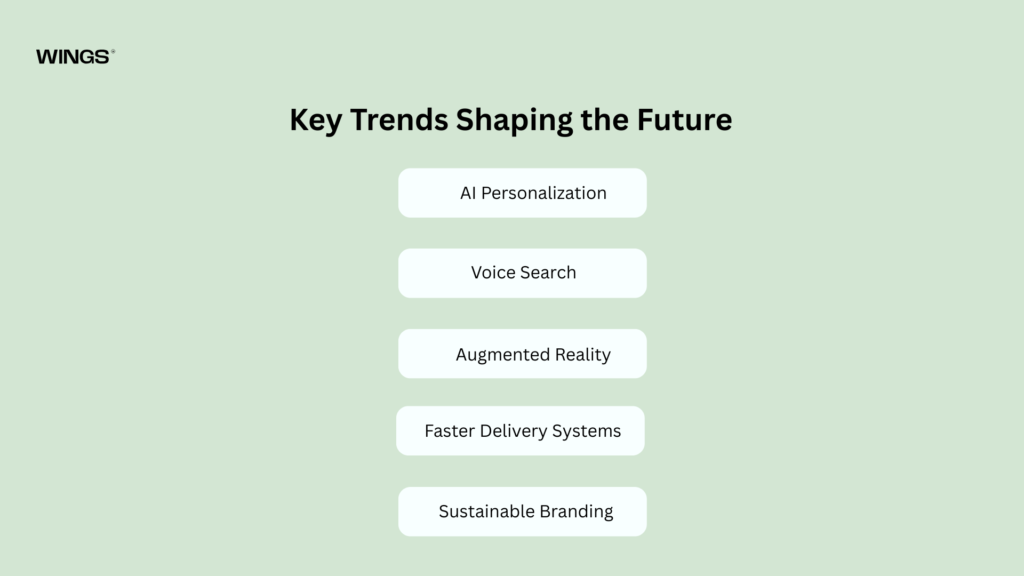
The future of eCommerce will be influenced by several important trends:
-
AI Personalization
Artificial Intelligence enables businesses to deliver highly personalized experiences.
- Product recommendations based on user behavior
- Personalized emails and offers
- Smart search results
-
Voice Search
With the rise of voice assistants, more customers are using voice search to find products online.
- Optimize content for conversational queries
- Focus on natural language keywords
-
Augmented Reality (AR) Shopping
AR allows customers to visualize products before purchasing.
- Try products virtually (e.g., furniture, clothing)
- Improve buying confidence and reduce returns
-
Faster Delivery Systems
Speed is becoming a major competitive factor.
- Same-day or next-day delivery expectations
- Improved logistics and supply chain systems
-
Sustainable Branding
Consumers are becoming more conscious of environmental impact.
- Eco-friendly packaging
- Ethical sourcing
- Transparent business practices
Why Adaptation Matters
Brands that quickly adapt to these trends will gain a strong competitive advantage. Those that fail to evolve may struggle to meet customer expectations and lose relevance in the market. The future of eCommerce belongs to businesses that embrace innovation, prioritize customer experience, and continuously improve their strategies.
Conclusion
A successful eCommerce website is more than just an online store. It combines strong branding, a user-friendly design, trust, and effective marketing to attract and convert customers. By creating a unique identity and continuously improving the customer experience, businesses can build long-term customer loyalty and growth.

Mugesh Kanna
Junior Web developer