


Understanding User Interface (UI) and User Experience (UX)
UI (User Interface): The visual and interactive elements of a digital product, such as buttons, icons, colours, fonts, and layouts, that allow users to interact with the system.
UX (User Experience): The overall experience a user has while interacting with a digital product, focusing on usability, accessibility, efficiency, and user satisfaction.
Why UX and UI Matter for Business Success
- Design has become an important part of product strategy, not just visual appearance.
- A successful digital product should be easy to understand, simple to use, and meet customer expectations.
- UX and UI design directly influence customer behaviour and decision-making.
- A well-designed user experience increases customer engagement and satisfaction.
- Good design helps build stronger relationships between customers and brands.
- Investing in UX and UI improves both the appearance and functionality of products and services.
- Effective design supports business growth, customer loyalty, and market competitiveness.
- Customer experience is a key factor in achieving business success.
- Users expect digital platforms to be fast, clear, and easy to navigate.
- UX and UI designers improve every stage of the customer journey by understanding user needs.
- A positive user experience builds trust and encourages customers to continue using a product.
- Poor design can lead to customer frustration, reduced engagement, and missed business opportunities.
- Strong UX and UI design creates a balance between business goals and customer expectations.

Explore the UX design process behind the Maverick AI.
Understanding UX Design from a Business Perspective
Creating Better User Journeys
UX (User Experience) design focuses on how customers interact with a product from start to finish. It studies the complete journey and identifies areas where users may face confusion or difficulty. A UX designer analyzes customer behavior, expectations, and goals to create a smoother experience. The focus is on making processes simple, logical, and efficient.
For businesses, better user journeys mean improved customer satisfaction and stronger product adoption. A product that is easy to use creates a better impression and encourages repeat usage.
Solving Customer Problems
UX design is mainly focused on solving real customer challenges. Instead of adding unnecessary features, UX identifies what users actually need to complete their tasks effectively. Through research, feedback, and testing, businesses can understand customer pain points and improve their products. This approach helps companies create solutions based on real user requirements.
A problem-focused UX strategy reduces frustration and improves the overall relationship between customers and the brand.
Improving Business Outcomes
A strong UX approach creates measurable business benefits by improving customer experience. When users can complete actions easily, they are more likely to stay engaged with the product.Better UX can increase conversions, reduce customer support requests, and improve customer retention. It also helps businesses avoid investing in features that do not provide value.
For decision-makers, UX is an investment that supports long-term business growth and customer satisfaction.
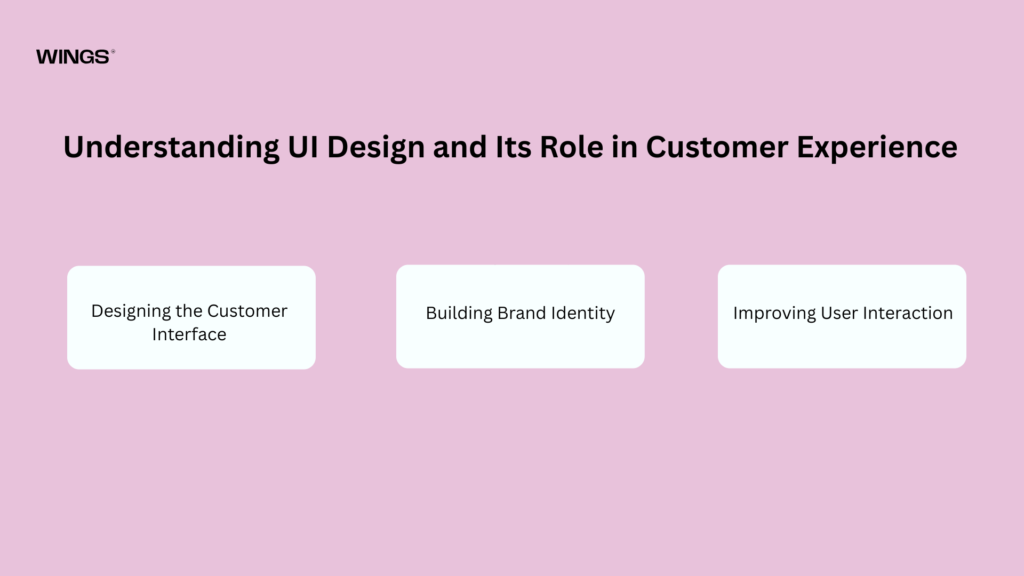
Understanding UI Design and Its Role in Customer Experience
Designing the Customer Interface
UI (User Interface) design focuses on the visual and interactive elements of a product. It determines how customers see and interact with digital platforms.UI designers create layouts, buttons, colors, icons, and typography that make the product visually clear. The goal is to ensure users can easily understand the interface.
A well-designed interface improves usability by guiding users toward the right actions and creating a comfortable digital experience.
Building Brand Identity
UI design plays a major role in shaping how customers view a company. The appearance and consistency of a product can influence trust and brand perception. A professional interface reflects quality and reliability. Businesses use UI design to maintain a consistent identity across websites, applications, and digital services.
Strong visual branding helps customers recognize a company and creates a memorable experience.
Improving User Interaction
A successful UI design makes interactions simple and enjoyable. Clear buttons, organized information, and effective layouts help users navigate without confusion. Good UI reduces the effort required to complete tasks and allows customers to focus on their goals.
For businesses, improved interaction leads to better engagement, higher satisfaction, and stronger customer relationships.
UX vs UI: Key Differences Every Decision-Maker Should Know
UX and UI are connected but serve different purposes in product development. UX focuses on how the product works, while UI focuses on how the product looks and feels.
| Factor | UX Design | UI Design |
|---|---|---|
| Focus | Focuses on the complete user journey and experience | Focuses on the visual appearance of the interface |
| Purpose | Improves usability and user satisfaction | Improves interaction and visual appeal |
| Main Goal | Makes products useful, accessible, and easy to use | Makes products attractive and engaging |
| Approach | Involves user research, analysis, and problem-solving | Involves visual design and interface creation |
| Includes | User testing, user flows, information architecture, and experience planning | Colors, buttons, typography, icons, and layouts |
| Business Impact | Improves customer satisfaction and user retention | Strengthens brand image and increases user engagement |
| Measures | Measures user success and overall experience | Measures interface effectiveness and visual performance |
| Example | Creating an easy and smooth online shopping process | Designing a clear and attractive shopping screen |
Understanding this difference helps businesses create balanced products. Both UX and UI are required to deliver a complete digital experience.

Explore the Design process behind the Quint.
How UX and UI Influence Customer Satisfaction and Business Growth
Improving Customer Experience
Customers expect digital products to provide quick and simple solutions. A complicated experience can negatively affect customer trust and loyalty. UX helps businesses understand customer behavior and improve the steps users take while interacting with a product.
UI supports this process by creating interfaces that are easy to understand and visually comfortable.
Increasing Engagement and Conversion
Good design directly affects customer actions. When users find a product easy to navigate, they are more likely to complete important activities. UX improves conversion by reducing barriers in customer journeys. UI encourages action by making important information and features visible.
Together, UX and UI help businesses increase engagement, sales, and customer satisfaction.
Supporting Long-Term Growth
A strong design strategy helps companies build products that customers value. Positive experiences encourage users to continue using services and recommend them. Businesses that prioritize UX and UI create stronger customer relationships and improve their competitive position.
Design becomes a key factor in achieving sustainable business growth.
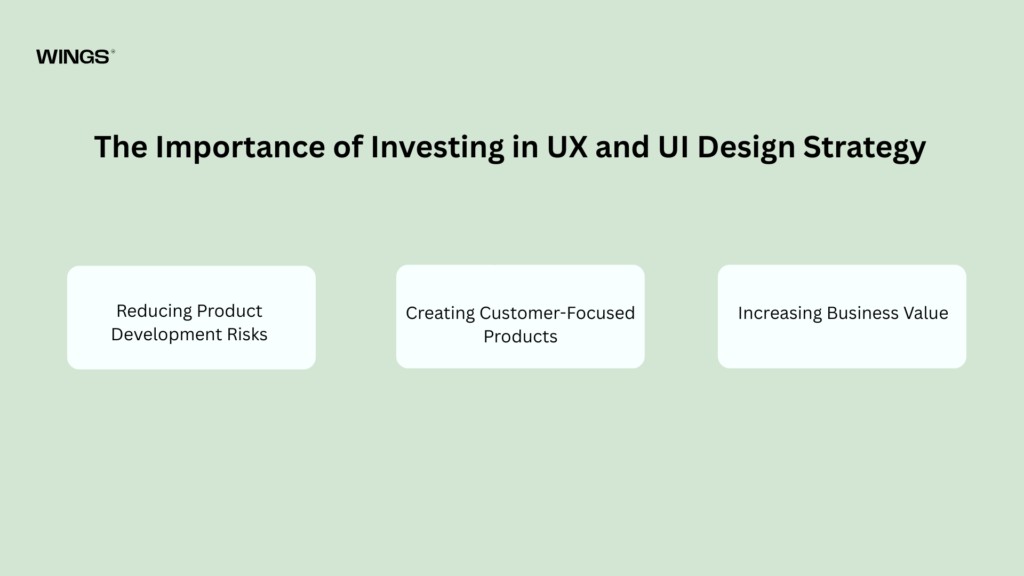
The Importance of Investing in UX and UI Design Strategy
Reducing Product Development Risks
Investing in UX and UI design before development helps businesses identify potential challenges early. Many product failures happen because companies build solutions without fully understanding customer expectations. UX research allows teams to study user behavior, test ideas, and identify problems before investing significant time and resources. This reduces unnecessary changes during development.
Creating Customer-Focused Products
Modern businesses need to focus on customer needs rather than only business requirements. UX design helps companies understand what users expect from a product. Through user research, feedback, and testing, organizations can create solutions that solve real customer problems. This improves product acceptance and creates better customer experiences.
Increasing Business Value
Strong UX and UI design contribute directly to business performance. Products that are easy to use attract more customers and encourage long-term engagement. A well-designed interface improves brand perception, while a smooth experience increases customer satisfaction. These factors influence customer loyalty and revenue growth.
How UX and UI Work Together to Build Better Digital Products
UX Creates the Foundation
UX design focuses on understanding users and creating the structure of a product experience. It defines how customers move through different stages while using a platform. UX designers research user needs, create customer journeys, and identify opportunities to improve usability. Their work ensures the product solves actual customer problems.
A strong UX foundation helps businesses create products that are functional and valuable.
UI Transforms Experience into Interaction
UI design converts UX ideas into visual and interactive elements. It focuses on creating screens and interfaces that users can easily understand. UI designers select layouts, colors, icons, and visual patterns that support the user journey. These design elements make the product more attractive and easier to navigate.
A well-designed UI helps users interact confidently with a product.
Combining UX and UI for Success
UX and UI must work together to create successful digital experiences. A product may have a beautiful interface, but without good UX, users may struggle to complete tasks. Similarly, a product with strong functionality but poor UI may fail to engage customers.
The combination of UX and UI creates products that are useful, enjoyable, and effective.
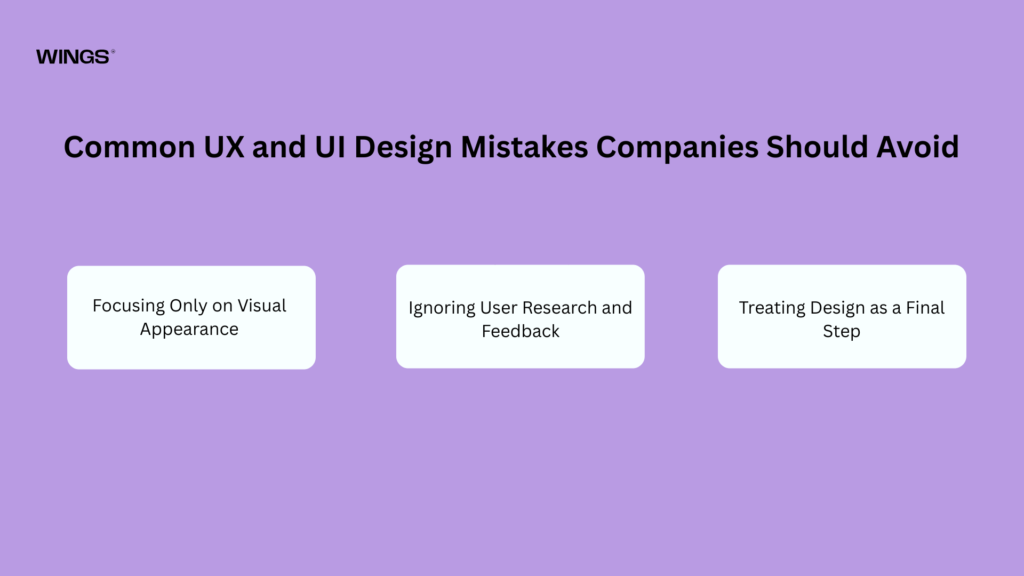
Common UX and UI Design Mistakes Companies Should Avoid
Focusing Only on Visual Appearance
One common mistake businesses make is prioritizing attractive designs while ignoring usability. A visually impressive product may not succeed if customers cannot use it easily.
Design should focus on solving customer problems, not only creating beautiful interfaces. The user experience must always remain the priority. Companies need to balance creativity with functionality to build effective products.
Ignoring User Research and Feedback
Creating products without understanding customers can lead to poor design decisions. Businesses may develop features that users do not need or find difficult to use.
User research provides valuable insights into customer expectations and behavior. Feedback helps teams improve products based on real experiences. Listening to users allows companies to make better design decisions and avoid costly mistakes.
Treating Design as a Final Step
Some organizations involve UX and UI designers only after development is completed. This approach can create additional challenges and redesign costs.
Design should be included from the beginning of product planning. Early involvement ensures that customer needs, technology, and business goals work together. A complete design process creates better products and smoother development.
Future Trends Shaping UX and UI Design
Artificial Intelligence in Design
Artificial intelligence is changing the way businesses create digital experiences. AI helps analyze customer behavior and provides insights that improve personalization.
Designers can use AI-driven information to understand user preferences and create smarter interactions. This allows businesses to deliver experiences that feel more relevant. AI will continue influencing how products are designed, tested, and improved.
Focus on Accessibility and Inclusion
Accessibility has become an important part of modern UX and UI design. Businesses are focusing on creating products that can be used by people with different abilities.
Inclusive design ensures that digital platforms are easier for everyone to access. This improves customer reach and demonstrates a commitment to better experiences. Companies that prioritize accessibility can create stronger relationships with wider audiences.
Personalized Digital Experiences
Customers increasingly expect products that understand their needs. Personalization allows digital platforms to provide content, recommendations, and features based on user preferences.
UX and UI designers are creating experiences that adapt to individual users. This improves engagement and makes interactions more meaningful. Future digital success will depend on creating experiences that feel personalized and customer-focused.

Explore the UX design process behind the Kind Energy.
Conclusion: Building Successful Products Through Better Design
UX and UI design are essential for creating successful digital products. UX focuses on providing a smooth and satisfying user experience, while UI ensures the product is visually appealing and easy to use. Together, they improve customer satisfaction, increase engagement, and support business growth. As digital competition continues to grow, investing in good UX and UI design helps businesses meet customer expectations and achieve long-term success.

Nandin
Design Lead