



Why Trust Matters in Online Conversions
Winning a customer’s trust online isn’t easy. Unlike a physical store, visitors can’t see your products in person, speak directly with your team, or judge your business through face-to-face interactions. Instead, they make quick decisions based on the credibility your website communicates within seconds.
This is where trust signals make a real difference. Elements such as authentic customer reviews, security badges, testimonials, certifications, and transparent policies help reassure visitors that your business is reliable and safe. When customers feel confident, they’re far more likely to take action, whether that’s making a purchase, filling out a contact form, or subscribing to your services.

Explore the Web development process behind the franck muller.
What Are Trust Signals?
Trust signals are visual, textual, or interactive elements on a website that increase a visitor’s confidence in a business. They help answer common customer questions such as:
- Is this company genuine?
- Is my payment information safe?
- Can I trust the quality of this product or service?
- What have other customers experienced?
Trust signals reduce uncertainty and create confidence throughout the customer journey. They demonstrate transparency, professionalism, and reliability, making it easier for visitors to move from browsing to purchasing.
These signals can be displayed in many forms, including customer testimonials, security certifications, awards, recognised client logos, verified reviews, and detailed contact information. Together, they provide reassurance that a business is credible and trustworthy.
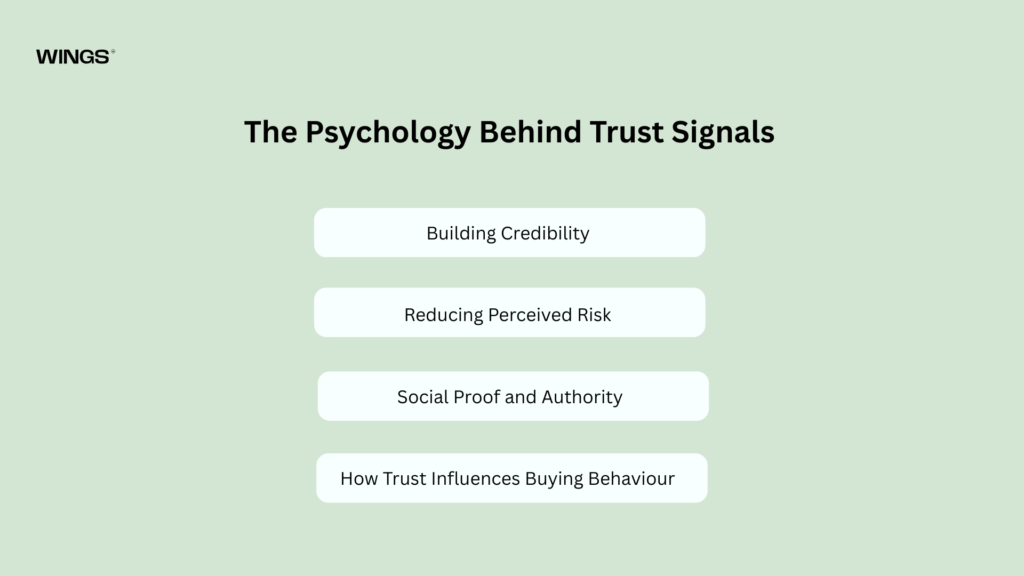
The Psychology Behind Trust Signals
Understanding why trust signals work requires looking at consumer psychology. Every online purchase involves some level of risk. Customers cannot physically inspect products, meet the seller, or immediately verify quality. Trust signals help reduce this perceived risk.
Building Credibility
People naturally prefer buying from businesses that appear established and professional. A polished website combined with credible trust indicators communicates expertise and reliability. This first impression often determines whether visitors stay or leave.
Reducing Perceived Risk
Buying online involves sharing personal and financial information. Security badges, SSL certificates, and secure payment logos reassure users that their information is protected, reducing concerns about fraud or data theft.
Social Proof and Authority
Humans often rely on the experiences of others before making decisions. Positive customer reviews, testimonials, and case studies demonstrate that previous buyers have had successful experiences. This social proof makes new customers feel more confident about purchasing.
Similarly, awards, certifications, and media mentions establish authority. Recognition from respected organisations signals expertise and quality.
How Trust Influences Buying Behaviour
Trust shortens the decision-making process. When customers feel confident in a business, they spend less time questioning their purchase and are more likely to complete transactions. Trust also encourages repeat purchases and customer loyalty, leading to long-term business growth.
Types of Trust Signals That Build Customer Confidence
There are many trust signals businesses can use to strengthen credibility. Combining several of these elements creates a stronger impression than relying on just one.
Customer Reviews and Ratings
Customer reviews provide authentic feedback from real buyers. High ratings and detailed reviews help potential customers understand product quality and customer satisfaction. Verified reviews are especially valuable because they demonstrate authenticity.
Testimonials and Case Studies
Testimonials highlight positive customer experiences, while case studies provide detailed success stories. Businesses offering professional services often use case studies to showcase measurable results and build confidence among prospective clients.
Trust Badges and Security Certificates
Security badges indicate that a website uses secure technology to protect customer information. SSL certificates, payment provider logos, and cybersecurity certifications reassure users during checkout and reduce hesitation.
Money-Back Guarantees
Offering a money-back guarantee reduces the perceived risk of making a purchase. Customers know they have protection if the product or service doesn’t meet expectations, making them more willing to buy.
Awards and Certifications
Industry awards and recognised certifications demonstrate expertise and professionalism. They show that a business has met certain standards and has been acknowledged by respected organisations.
Social Proof and Client Logos
Displaying logos of well-known clients, business partners, or recognised brands provides instant credibility. Visitors often associate familiar names with quality and trustworthiness.
Transparent Contact Information
A physical address, telephone number, email address, and responsive customer support reassure visitors that the business is genuine and accessible. Hidden or incomplete contact information can quickly damage trust.
Media Mentions and Industry Recognition
Being featured in reputable publications or industry websites increases authority. Media mentions suggest that a business is respected within its field and recognised by independent sources.

Explore the Web development process behind the perceptyne.
How Trust Signals Increase Online Conversions
Trust signals directly influence conversion rates by reducing uncertainty and encouraging customers to complete desired actions.
Encouraging Purchase Decisions
When customers feel confident about a business, they are more likely to proceed with purchases. Trust removes psychological barriers that might otherwise prevent conversions.
Reducing Cart Abandonment
Many shoppers abandon their carts due to security concerns or uncertainty. Displaying trust badges, secure payment methods, and satisfaction guarantees during checkout reassures users and encourages them to complete their purchase.
Improving Lead Generation
Businesses that generate leads through enquiry forms also benefit from trust signals. Testimonials, certifications, and clear privacy statements encourage visitors to share their personal information with confidence.
Building Long-Term Customer Loyalty
Trust doesn’t end after a purchase. Customers who have positive experiences become repeat buyers and recommend businesses to others. This creates long-term growth through referrals and customer retention.
Where to Place Trust Signals on Your Website
Even the strongest trust signals are ineffective if visitors cannot easily find them. Strategic placement ensures customers receive reassurance at every stage of their journey.
Homepage
The homepage creates the first impression. Display customer ratings, awards, certifications, and brief testimonials prominently to establish credibility immediately.
Product and Service Pages
Include reviews, testimonials, detailed product information, guarantees, and client success stories alongside product descriptions. These elements help customers evaluate offerings with greater confidence.
Checkout Page
The checkout process is where many customers hesitate. Place SSL certificates, secure payment icons, refund guarantees, and privacy assurances near payment fields to reduce anxiety.
Landing Pages
Landing pages designed for campaigns should feature testimonials, trust badges, and social proof close to call-to-action buttons to maximise conversion rates.
Contact Page
Provide multiple contact methods, office locations, business hours, and customer support details. Transparency reassures visitors that assistance is readily available.
Footer and About Us Page
The website footer can include security certifications, company registration details, social media links, and contact information. The About Us page should highlight company history, team members, mission, and achievements.

Explore the Web development process behind the Bluewhale.
Common Mistakes That Reduce Customer Trust
Some websites unintentionally damage credibility by overlooking essential trust-building practices.
Fake or Outdated Reviews
Customers can often recognise fabricated reviews. Fake testimonials undermine credibility, while outdated reviews suggest inactivity. Regularly update customer feedback with genuine experiences.
Missing Security Indicators
Without visible security measures, visitors may question whether their information is protected. Always display SSL certificates and secure payment options prominently.
Poor Website Design
An outdated or cluttered website creates negative first impressions. Broken links, spelling mistakes, inconsistent branding, and confusing navigation reduce confidence significantly.
Hidden Pricing and Policies
Unexpected fees or unclear return policies frustrate customers and create suspicion. Clearly communicate pricing, shipping costs, refunds, and privacy policies before checkout.
Lack of Contact Information
Customers expect legitimate businesses to provide accessible contact details. Missing phone numbers or addresses may raise concerns about authenticity.
Slow-Loading Pages
Website performance influences trust. Slow-loading pages create frustration and may lead visitors to question the professionalism and reliability of the business.
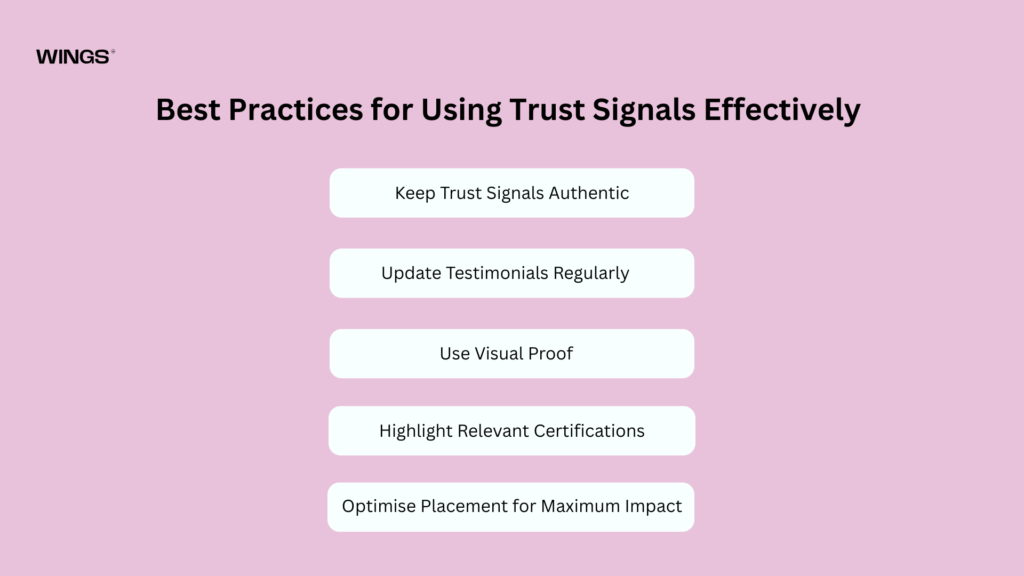
Best Practices for Using Trust Signals Effectively
Using trust signals strategically maximises their impact on customer confidence and conversion rates.
Keep Trust Signals Authentic
Authenticity is essential. Only display genuine reviews, verified testimonials, and legitimate certifications. Honest communication builds lasting credibility.
Update Testimonials Regularly
Fresh customer experiences demonstrate ongoing business activity and customer satisfaction. Encourage happy customers to provide reviews after successful purchases.
Use Visual Proof
Images, videos, and customer photos make testimonials more believable. Visual content creates stronger emotional connections and increases authenticity.
Highlight Relevant Certifications
Choose certifications and awards that matter most to your target audience. Industry-specific recognition often carries more influence than generic achievements.
Optimise Placement for Maximum Impact
Position trust signals near call-to-action buttons, pricing information, and checkout sections where customers make important decisions. Relevance and visibility increase effectiveness.
Real-World Examples of Effective Trust Signals
Businesses across different industries use trust signals successfully to increase customer confidence and improve conversion rates.
E-commerce Websites
Online retailers display verified customer reviews, secure payment badges, free return policies, and delivery guarantees. These elements reassure shoppers throughout the purchasing process.
SaaS Companies
Software businesses often highlight customer testimonials, client success stories, industry awards, uptime statistics, and data security certifications. Free trials and money-back guarantees further reduce purchasing risk.
Service-Based Businesses
Consultants, agencies, and freelancers rely heavily on testimonials, certifications, professional memberships, and detailed case studies to demonstrate expertise and build credibility.
B2B Websites
Business-to-business organisations frequently showcase client logos, measurable case study results, awards, compliance certifications, and long-term partnerships to strengthen buyer confidence.

Explore the Web development process behind the Kind Energy
How to Create a Trust-Building Strategy for Your Website
Developing an effective trust strategy requires continuous improvement rather than one-time implementation.
Audit Your Current Website
Review every page from a customer’s perspective. Identify areas where visitors may feel uncertain or lack sufficient information before making decisions.
Identify Trust Gaps
Determine which trust signals are missing. Consider customer reviews, guarantees, contact information, certifications, and security features that could strengthen credibility.
Collect Customer Feedback
Ask satisfied customers for testimonials, reviews, and success stories. Encourage detailed feedback that highlights specific benefits and positive experiences.
Test and Optimise Trust Elements
Experiment with different trust signal placements using A/B testing. Measure how changes affect conversion rates and adjust accordingly.
Measure Conversion Improvements
Track important metrics such as conversion rate, bounce rate, average order value, cart abandonment, and customer retention. Monitoring performance helps identify which trust signals generate the greatest impact.
Conclusion
Trust is essential for increasing online conversions. By using genuine trust signals such as customer reviews, security badges, testimonials, and guarantees, businesses can reduce customer hesitation and build credibility. When implemented strategically and kept up to date, these trust-building elements encourage more purchases, improve customer loyalty, and support long-term business growth.

Prasanna M
WordPress Developer