

Before a potential customer books a meeting, sends an enquiry or speaks to your sales team, there is a good chance they have already visited your website. They have looked at your services, explored your work, read a few lines about your business and formed an opinion. Sometimes, that decision happens within seconds. Your website is doing the job of a salesperson long before anyone from your team enters the conversation.
But here is the question: is it making the right impression?
A website can look visually impressive and still fail to communicate what makes a business valuable. It can list every service, showcase years of experience and feature impressive client logos, yet leave visitors uncertain about what the company actually offers or why they should choose it. The problem is rarely a lack of information. More often, it is how that information is presented, prioritised and experienced.
A high-performing website does more than introduce a business. It builds confidence, answers questions, demonstrates credibility and gives potential customers a reason to take the next step. In a competitive digital landscape, your website is not simply an online presence. It is one of your most important sales tools.
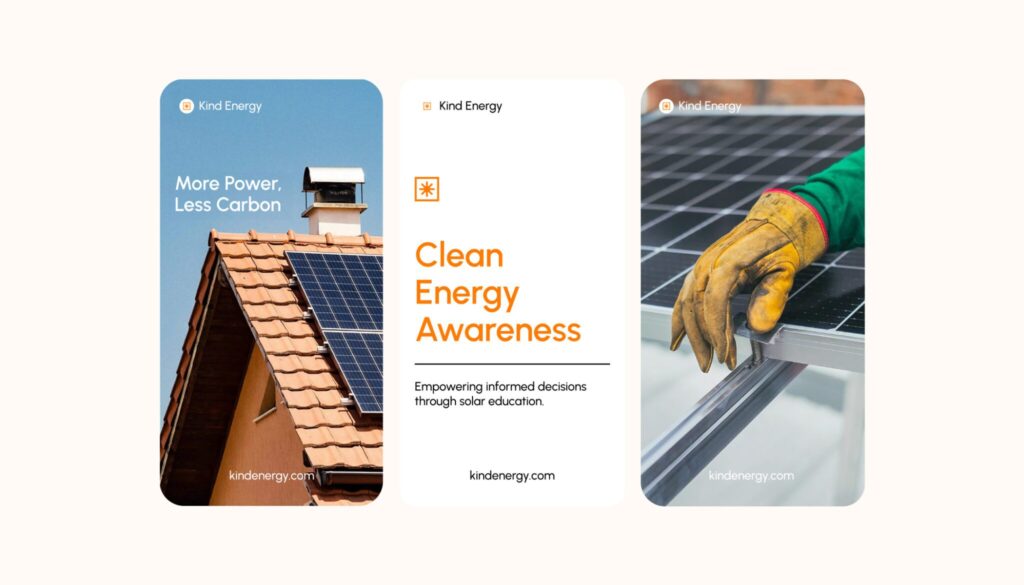
Explore Wings Design’s website design for Kind Energy, Mumbai, India.
1. First Impressions Influence Buying Decisions
Imagine a potential client comparing three businesses offering similar services. All three have relevant experience, capable teams and competitive offerings. They visit each website to understand what makes these businesses different. One has an outdated interface, another struggles to communicate its value, while the third presents its expertise through a clear message, thoughtful visuals and an intuitive experience.
Which business is more likely to earn their attention?
First impressions influence how people perceive credibility, professionalism and quality. While an attractive interface alone cannot guarantee a sale, a poorly structured or outdated website can create doubts before a conversation even begins. Visitors often use the quality of a company’s digital presence as an indication of how it approaches its work.
This is particularly important for businesses selling high-value services, complex solutions or premium products. Their customers are not simply evaluating what they offer. They are evaluating the confidence, expertise and experience behind the offering. Your website needs to communicate all three.
2. Your Value Proposition Should Be Impossible to Miss
One of the most common website mistakes is making visitors work too hard to understand what a business does. A homepage filled with generic statements such as “Delivering Excellence” or “Innovating for Tomorrow” might sound ambitious, but it rarely communicates a meaningful reason to choose that business.
Your value proposition should answer three fundamental questions: What do you offer? Who do you serve? Why should someone choose you? These answers need to be clear from the moment a visitor lands on your website. The headline, supporting copy and primary call to action should work together to establish this understanding without overwhelming the visitor with information.
Strong website messaging focuses on the customer’s needs rather than simply talking about the company. Instead of listing capabilities without context, explain how those capabilities solve real business challenges. When visitors can quickly connect your offering to their requirements, they have a stronger reason to explore further.
3. Good Design Builds Confidence Before a Conversation
Design is often treated as a visual layer added after the content and business strategy are established. In reality, it plays a much larger role in shaping how people understand and evaluate a business. Typography, colour, spacing, imagery, layout and interaction all contribute to the perception of a brand.
A considered visual system creates consistency across every page and touchpoint. It helps visitors navigate information, recognise important messages and understand the relationship between different offerings. Thoughtful use of whitespace, clear visual hierarchy and purposeful imagery can make even complex information easier to absorb.
For businesses targeting enterprise clients or premium markets, these details matter even more. A website should reflect the quality of the products, services and people behind the brand. When the digital experience feels disconnected from the value a business promises, it creates a credibility gap. Good website design closes that gap by making the experience feel as considered as the offering itself.
4. User Experience Determines Whether Visitors Stay or Leave
Getting someone to visit your website is only the beginning. What happens after they arrive determines whether they continue exploring or leave without taking action. Confusing navigation, inconsistent layouts, slow-loading pages and unclear information can create friction at every stage of the journey.
A well-planned user experience makes it easy for visitors to find what they need. Navigation should follow a logical structure, content should be organised around user intent, and important information should be accessible without unnecessary steps. Every interaction should feel natural, whether someone is exploring a service page, reviewing a case study or submitting an enquiry.
Mobile experience deserves equal attention. A significant share of website traffic comes from mobile devices, and visitors expect the same clarity and functionality across screen sizes. Responsive design is not simply about making elements fit smaller screens. It is about adapting the entire experience so that content remains readable, navigation remains intuitive and important actions remain accessible.
5. Show Your Work. Don’t Just Talk About It.
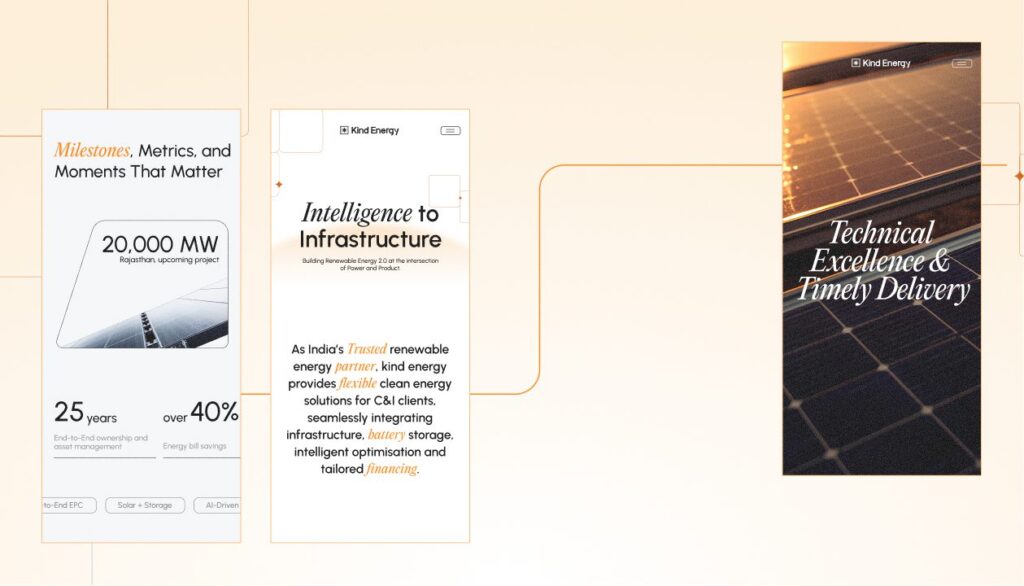
Anyone can claim to be experienced, creative or customer-focused. What makes those claims believable is evidence. This is where project showcases, case studies, testimonials, client relationships and measurable outcomes become important parts of a website’s sales journey.
Rather than presenting a collection of project images without context, explain the thinking behind the work. What was the challenge? What approach did the team take? How did the final solution address the business objective? These details help potential customers understand not just what you can create, but how you think and solve problems.
Case studies are particularly valuable for businesses offering specialised or high-value services. They provide tangible examples of expertise and help prospective clients imagine what working with your team could look like. A strong portfolio does not simply display past work. It demonstrates the value your business can bring to future projects.
6. Every Page Should Have a Purpose
A website is not a collection of independent pages. It is a connected journey that guides visitors from initial awareness towards a decision. Each page should contribute to that journey, whether by introducing the business, explaining a service, demonstrating expertise or encouraging an enquiry.
For example, a service page should go beyond describing what the company offers. It should explain the challenges the service addresses, the approach behind the solution, the expected value and why the business is qualified to deliver it. Similarly, an insights section should provide useful perspectives that establish expertise rather than exist simply to fill a content calendar.
Calls to action should also feel relevant to the visitor’s stage in the decision-making process. Someone exploring your services might want to see related projects before speaking to your team. Someone already evaluating your business might be ready to schedule a consultation. Thoughtful placement and clear messaging make these next steps easier to identify.
7. Performance and SEO Keep Your Sales Pitch Working
Even the most thoughtfully designed website cannot perform effectively if people cannot find it or if it takes too long to load. Website performance and search visibility are essential parts of the overall experience. They influence how visitors discover, access and interact with your business.
Search engine optimisation helps your website appear when potential customers are looking for relevant products, services or expertise. This involves more than inserting keywords into page content. A strong SEO foundation includes clear site architecture, relevant content, descriptive page titles, meaningful internal links, structured data where appropriate and technically sound implementation.
Performance matters just as much. Heavy images, unnecessary scripts and poorly optimised code can slow down pages and interrupt the browsing experience. A well-developed website balances visual quality with technical efficiency, ensuring that design decisions support rather than compromise usability.
When website design, development and SEO work together, your digital presence becomes more discoverable, accessible and effective at attracting relevant enquiries.
8. Your Website Should Grow With Your Business
A website should not be treated as a one-time project that remains unchanged for years. Businesses evolve. Their services expand, audiences change, markets become more competitive and customer expectations continue to shift. A website that once represented the business accurately may eventually become a limitation.
This is why scalability should be considered from the beginning. A flexible content management system, well-planned page architecture and reusable design components make it easier to introduce new services, publish insights, update projects and expand into new markets without rebuilding the entire experience.
Regular evaluation is equally important. Website analytics can reveal how visitors navigate the site, which pages attract attention, where users drop off and which channels generate enquiries. These insights help businesses identify friction points and make informed improvements over time.
The most effective websites are not necessarily the ones launched with the biggest visual impact. They are the ones designed to remain relevant, adaptable and useful as the business grows.
Is Your Website Helping You Win Business?
Your website is often the first meaningful interaction someone has with your business. It shapes expectations, communicates expertise and influences whether a potential customer decides to take the conversation further. Every headline, visual, interaction and page contributes to that impression.
But a successful website is not measured by appearance alone. It needs to connect business objectives with customer expectations, combine thoughtful design with intuitive user experience, and support its visual appeal with strong development and search foundations.
At Wings Design, we approach website design as an opportunity to create more than a digital storefront. We bring together strategy, UI/UX, branding and development to build digital experiences that communicate value, strengthen brand perception and support business growth.
Your next customer could already be on your website. Make sure they find a reason to stay.
Let’s build a website that works as hard as your business does.
Explore Wings Design and discover how strategic digital experiences can move your business forward.