
Natural resources companies operate in industries where credibility is built on expertise, operational strength and long-term reliability. Whether a business works in mining, mineral processing, natural diamonds, metals or energy, its digital presence needs to communicate more than a list of services. It must help buyers, investors, suppliers and other stakeholders understand what the company does, how it operates and why it deserves their confidence.
Yet many industrial and resource-sector websites still rely on conventional layouts, dense technical information and generic corporate messaging. They may contain everything a business wants to communicate, but not necessarily what its audience needs to understand. A well-planned natural resources website brings business information, technical capabilities and brand positioning together in a clear, engaging digital experience.
For companies looking to strengthen their market presence, website design is an opportunity to make complex businesses easier to understand, more credible and easier to engage with.
Why Natural Resources Companies Need a Strong Digital Presence
The natural resources sector is built around complex operations, specialised knowledge and significant business relationships. A potential buyer may want to understand material specifications and production capabilities, while an investor may be looking for company credentials, project information and long-term direction. Each audience arrives with a different objective.
A website needs to accommodate these different information needs without overwhelming visitors. Clear navigation, well-organised content and purposeful visual communication help stakeholders find relevant information quickly. More importantly, a consistent digital presence gives the business a professional platform to communicate its capabilities across markets.
For companies operating internationally, this becomes even more important. Their website may be the first point of contact for a global buyer or business partner who has never interacted with the company before. The experience should communicate the same confidence and attention to detail that the organisation brings to its operations.
1. Communicate Complex Operations Through Clear Website Design
Natural resources businesses often have processes that are difficult to explain through conventional corporate copy. Mining, extraction, refining, processing and distribution involve specialised workflows, equipment and technical capabilities. Presenting all this information in long blocks of text can make a website difficult to navigate.
A better approach is to organise information around the way stakeholders understand the business. Break down operations into clear stages, explain capabilities in accessible language and use diagrams, photography, process visuals or motion to support technical explanations. Visitors should be able to understand the company’s core operations without having to interpret pages of industry terminology.
The objective is not to simplify the business itself, but to make its expertise easier to recognise. A well-structured website gives technical information the context it needs, helping visitors understand both the process and the value behind it.
2. Build Credibility Through Project and Capability Showcases
In industries where business decisions involve significant investment, claims alone are rarely enough. Prospective buyers and partners want evidence of experience, production capabilities, quality standards and completed work. A website should make this information accessible rather than expecting visitors to request it separately.
A dedicated project or capability section can communicate the scale and nature of a company’s work. Depending on the business, this could include manufacturing processes, material expertise, operational facilities, certifications, export markets and project highlights. Photography and carefully structured descriptions can make these details more tangible.
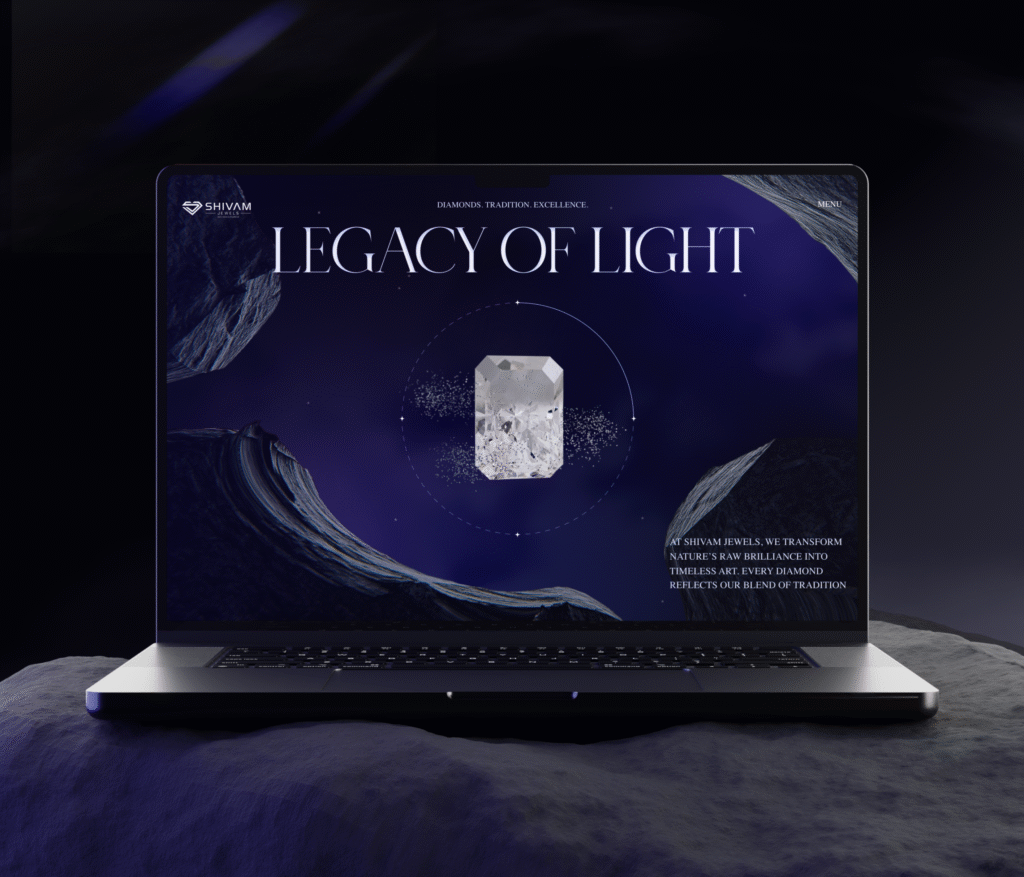
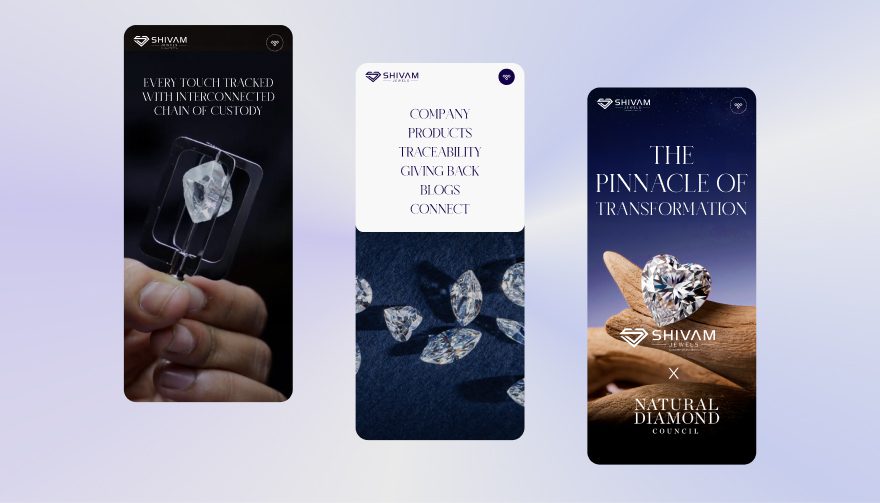
For example, Wings Design’s work for Shivam Jewels, a natural diamond manufacturer in Mumbai, demonstrates how a specialised manufacturing business can move beyond a conventional corporate website. The experience presents the journey of a diamond, from its origins through sorting, cutting and finishing, using an immersive digital narrative to communicate the company’s process and craftsmanship.
This approach makes the business more memorable while giving visitors a better understanding of what happens behind the finished product.
3. Use Visual Storytelling to Explain What Makes the Business Different
Many companies in the natural resources sector offer similar categories of products or services. Their websites can end up using familiar industry language, repetitive stock imagery and predictable layouts. When every company communicates in the same way, it becomes difficult for any one brand to stand apart.
Visual storytelling creates an opportunity to communicate a more distinctive point of view. Real operational photography, material close-ups, facility visuals, process animations and carefully art-directed imagery can give visitors a clearer sense of the company’s expertise. These elements should support a meaningful narrative rather than function as decoration.
For a diamond manufacturer, the story might focus on precision, craftsmanship and transformation. For a mining business, it could communicate the journey from exploration to processing. For a materials company, the emphasis might be on quality, application and supply capabilities. The most effective visual direction is one that reflects the actual business rather than relying on generic industry aesthetics.
4. Make Technical Information Easy to Find and Understand
Technical information is central to natural resources businesses. Product specifications, material grades, processing capabilities, certifications and operational details can influence purchasing decisions. If visitors cannot locate this information easily, even a visually impressive website may struggle to serve its business purpose.
Information architecture should be planned around the questions different audiences are likely to ask. Product and material categories should be organised logically, technical documents should be easy to access, and important specifications should be presented consistently. Where information is particularly detailed, downloadable documents, structured tables and dedicated technical pages can make the experience more useful.
The language also matters. Industry terminology should be retained where accuracy requires it, but explanations should remain direct and understandable. A website should help specialists find the detail they need while allowing first-time visitors to grasp the broader offering.
5. Present Sustainability and Responsible Operations With Substance
Environmental responsibility, resource management and operational transparency are increasingly important considerations across natural resource industries. Companies need to communicate their approach clearly, but generic sustainability statements do little to establish credibility.
A more effective website presents relevant policies, initiatives, certifications, reporting and measurable progress where available. Dedicated sections can explain how the organisation approaches responsible sourcing, environmental management, safety and community engagement. Supporting information should be specific, current and consistent with the company’s actual practices.
This is also a design consideration. Sustainability information should not be hidden in the footer or presented as an afterthought. Clear navigation and structured content help stakeholders find the information they need and understand how it relates to the company’s operations.
6. Design for Multiple Stakeholders, Not Just One Audience
A natural resources website rarely serves a single type of visitor. Buyers, investors, distributors, suppliers, potential employees and industry partners may all use the same platform, but their information needs are different.
The website experience should account for these different journeys. Buyers may look for product categories, specifications and enquiry options. Investors may need corporate information, leadership details and reports. Potential partners may want to understand operational capabilities, geographic reach and business credentials.
This does not mean creating a separate website for every audience. It means structuring the main navigation and page hierarchy so visitors can identify the information relevant to them. Clear calls to action, logical content grouping and consistent page layouts make the experience easier to use.
When the structure reflects real stakeholder needs, the website becomes a more useful business tool rather than simply an online company profile.
7. Build a Website That Supports Global Business
Natural resources companies frequently work across international supply chains, export markets and business networks. Their websites need to communicate effectively to audiences who may be unfamiliar with the company’s local market, operating environment or industry position.
A global-ready website should use clear language, consistent terminology and an intuitive navigation system. Company credentials, locations, export capabilities and contact information should be easy to identify. If the business serves multiple markets, relevant regional information and language requirements should also be considered during planning.
Performance is equally important. Pages should load reliably across devices and network conditions, while responsive layouts should preserve readability and functionality on mobile screens. A professional digital presence should not become difficult to use simply because a visitor is accessing it from another country or device.
8. Treat User Experience as Part of Business Development
A website may attract the right visitors, but its structure determines what they can do next. If product information is difficult to locate, enquiry forms ask for unnecessary details or contact options are buried, potential business opportunities can be lost.
Good UX design removes these obstacles. Navigation should reflect the company’s offering, important pages should be easy to reach and enquiry journeys should collect information that helps the business respond effectively. Calls to action should be relevant to the page rather than repeated without context.
For B2B organisations, this could mean making it easier to request a quotation, discuss supply requirements, download technical information or contact a relevant business team. Each interaction should have a clear purpose and help move the visitor towards a meaningful next step.
9. Choose a Scalable Website Development Approach
Natural resources companies evolve as their operations, product portfolios, markets and business priorities change. A website built only around today’s content may become difficult to maintain as the organisation grows.
A scalable website needs a flexible content management system, a consistent design system and a development architecture that supports future requirements. New product categories, project updates, technical resources and regional information should be possible to add without rebuilding the entire experience.
Development decisions should also account for search visibility, page performance, accessibility and security. Search-friendly page structures, descriptive metadata, optimised imagery and appropriate redirects during migrations help protect the website’s discoverability. These considerations are best addressed during planning and development, not treated as last-minute additions.
What Should a Natural Resources Company Website Include?
While the exact requirements depend on the business model, a well-planned website will typically cover:
- Company overview: Business background, expertise, operating locations and market presence.
- Products and materials: Clear categories, descriptions, specifications and applications.
- Operations and capabilities: Processing methods, facilities, technology and production expertise.
- Projects and experience: Relevant case studies, operational highlights and business credentials.
- Sustainability: Responsible practices, policies, certifications and supporting information.
- Leadership and governance: Relevant management, organisational and corporate information.
- News and insights: Company announcements, industry updates and useful resources.
- Contact and enquiries: Accessible contact details, quotation requests and relevant enquiry pathways.
The goal is to give every important audience a clear route to the information they need while maintaining a consistent brand experience.
Building Better Digital Experiences for Natural Resources Companies
A natural resources website should reflect the depth of the business behind it. It needs to make complex operations understandable, present technical expertise with clarity and create confidence among buyers, investors and business partners. Achieving this requires more than a visual refresh. It calls for a considered approach to brand positioning, information architecture, UX, content and website development.
At Wings Design, we bring strategy, branding, UI/UX design and website development together to create digital experiences for businesses across specialised industries. Our work for Shivam Jewels demonstrates how an established natural diamond manufacturer can communicate its process and expertise through a distinctive, immersive website experience.
Explore our Natural Resources industry solutions to see how thoughtful design can help resource-sector businesses build a stronger digital presence.
Have a complex business to communicate? Let’s build a digital experience that makes its value clear.