


A corporate website is no longer just a digital introduction to a business. It is where potential clients evaluate credibility, investors understand business direction, employees explore opportunities and stakeholders form their first impressions. As digital expectations continue to evolve, businesses need websites that do more than present information. They need platforms that communicate value, support decision-making and create meaningful interactions.
In 2027, corporate website design will be shaped by a combination of strategic thinking, intelligent technology, intuitive user experiences and stronger brand communication. Businesses can no longer rely on outdated layouts, generic messaging or websites that simply list their services. Every digital interaction needs to reflect the organisation’s capabilities, positioning and ambitions.
For companies preparing to compete in increasingly digital markets, getting the fundamentals right is becoming a business priority. Here are seven areas modern businesses should focus on when building their next corporate website.
1. Build Around Business Strategy, Not Just Visual Appeal
An impressive website may attract attention, but its real value lies in how effectively it supports business objectives. Before exploring colours, typography or layouts, organisations need to establish what their website should achieve.
For some businesses, the priority may be generating qualified enquiries. Others may need to communicate complex capabilities, attract enterprise clients, strengthen investor confidence or establish credibility in new markets. Each objective influences how the website should be structured and experienced.
A strategic approach begins with understanding the business, its audiences, competitive positioning and communication priorities. This informs the information architecture, page hierarchy, messaging and conversion pathways. Rather than treating every page as an independent design exercise, the website becomes a connected experience built around clearly defined goals.

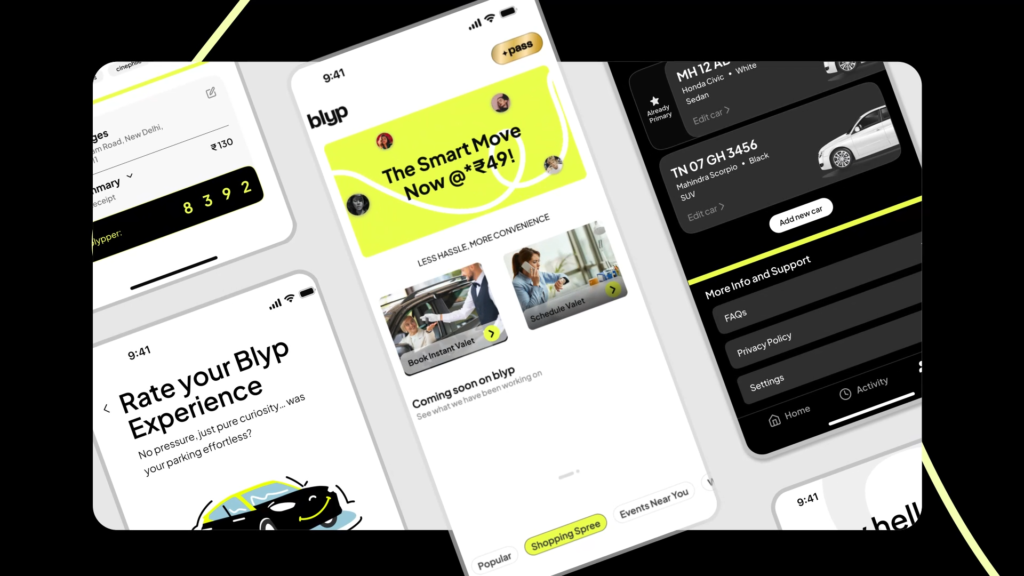
Blyp – Brand Identity and Website Design for Blyp in Delhi, India.
2. Create a Distinctive Digital Brand Experience
Corporate websites often fall into the same visual patterns. Predictable layouts, generic stock photography, familiar colour combinations and interchangeable messaging make it difficult for businesses to establish a recognisable digital presence.
A distinctive website should translate the company’s brand identity into a consistent digital experience. Typography, colour, imagery, graphic elements, motion and content presentation should work together to communicate the organisation’s personality and positioning.
This is particularly important for businesses operating in competitive industries where credibility and differentiation influence purchasing decisions. A technology company, financial institution and manufacturing enterprise should not necessarily communicate through the same visual language.
The goal is not to make a website visually complicated. It is to create a design system that feels recognisable, intentional and appropriate to the business. When branding and website design are developed together, the result is a more coherent experience across every digital touchpoint.
3. Make User Experience Simple, Intuitive and Purposeful
Corporate websites frequently serve multiple audiences, each arriving with different questions and expectations. A prospective client may be looking for services, an investor may want financial information, and a potential employee may be exploring the company’s culture.
If these visitors cannot find relevant information quickly, the website creates unnecessary friction.
Good UX design starts with understanding how different audiences interact with the business. This involves mapping user journeys, organising information logically and creating navigation that makes important content easy to discover.
Clear page structures, descriptive navigation labels, meaningful calls to action and consistent interface patterns help visitors move through the website without confusion. Complex organisations may also benefit from audience-specific pathways that direct different user groups towards relevant information.
The best corporate websites make sophisticated businesses easier to understand without making the experience feel oversimplified.
4. Design for Mobile Without Compromising the Experience
Mobile responsiveness should be a fundamental part of corporate website development, not an adjustment made after the desktop experience is complete.
Business decision-makers increasingly access websites across different devices and environments. A potential client might discover a company through a search result on their phone, explore its services on a tablet and return later through a desktop browser.
The experience should remain consistent throughout these interactions.
This requires more than resizing desktop layouts. Content hierarchy, navigation, image proportions, typography, spacing and interactive elements need to be considered specifically for smaller screens. Important information should remain accessible, forms should be easy to complete and calls to action should be comfortable to interact with.
A mobile-first design approach helps businesses create digital experiences that adapt naturally to different screen sizes while maintaining the integrity of the brand.
5. Treat Website Performance as Part of the Brand Experience
A slow website can undermine the credibility that a carefully designed corporate identity is intended to establish. Visitors expect pages to load quickly, interactions to respond smoothly and content to remain accessible across devices.
Performance is influenced by several factors, including image optimisation, efficient code, hosting infrastructure, third-party scripts and content delivery. These considerations need to be addressed during development rather than treated as post-launch improvements.
Businesses should pay attention to Google’s Core Web Vitals, particularly:
- Largest Contentful Paint (LCP): Measures how quickly the main content becomes visible.
- Interaction to Next Paint (INP): Measures how responsive a page feels when visitors interact with it.
- Cumulative Layout Shift (CLS): Measures unexpected movement in the page layout.
A technically well-built website creates a smoother experience while supporting search visibility and accessibility. Performance should be considered an essential part of the overall digital experience, not simply a technical benchmark.
6. Prepare for AI-Driven Search and Content Discovery
The way people discover businesses online is evolving. Traditional search engines now coexist with AI-powered search experiences, conversational interfaces and answer engines that summarise information from multiple sources.
Corporate websites need to make their content easy to understand, navigate and interpret across these environments.
This starts with a strong content structure. Clear headings, descriptive page titles, meaningful internal links, structured data and well-organised information help search engines and other discovery systems understand what a business offers.
Equally important is the quality of the content itself. Generic statements about being innovative, customer-focused or industry-leading rarely establish meaningful differentiation. Businesses should communicate specific expertise, explain their processes, demonstrate experience and provide useful information that addresses genuine audience questions.
A strong SEO foundation, supported by helpful content and technically accessible pages, gives corporate websites a better opportunity to remain discoverable as search behaviour changes.
7. Build a Website That Can Evolve With the Business
A corporate website should not become difficult to manage the moment the business expands. New services, market entries, acquisitions, leadership changes and evolving brand priorities all create the need for regular updates.
This makes scalability an important consideration during the initial design and development process.
A flexible content management system, reusable page components and a well-defined design system allow teams to introduce new content and functionality without rebuilding the entire website. Platforms such as Webflow can support this approach through structured CMS collections, reusable components and flexible content management.
Businesses should also consider how their website connects with CRM platforms, marketing automation tools, analytics systems and other essential business applications.
A scalable website is not simply one that can accommodate more pages. It is one that can adapt to changing business requirements while maintaining consistency, performance and usability.
Building Corporate Websites That Move Businesses Forward
Corporate website design in 2027 is ultimately about creating a digital experience that reflects where a business is today and where it intends to go. The strongest websites combine strategic positioning, distinctive visual identity, intuitive user experience and dependable technology to create something that serves both the organisation and its audiences.
For businesses planning a new website or considering a redesign, the opportunity goes beyond refreshing the interface. It is a chance to rethink how the organisation communicates its value, presents its capabilities and builds relationships through digital channels.
At Wings Design, we approach website design and development as a connected discipline. From brand-led digital experiences and user experience strategy to bespoke website design and Webflow development, we help businesses create digital platforms built around clarity, credibility and growth.
Explore our website design and development services or discover how our Webflow development team builds scalable digital experiences for modern businesses.
Ready to rethink your corporate website? Let’s Move //Forward.