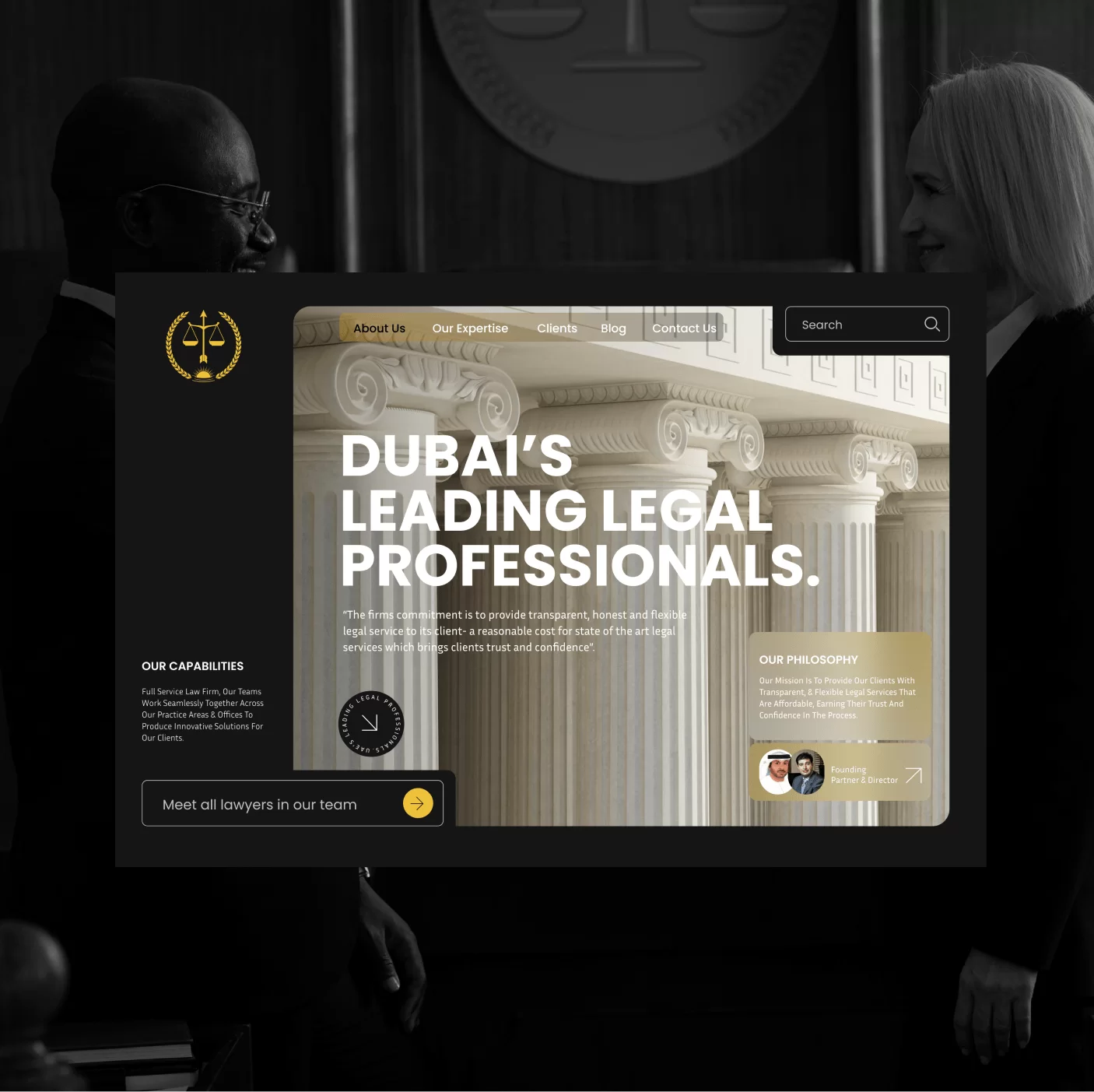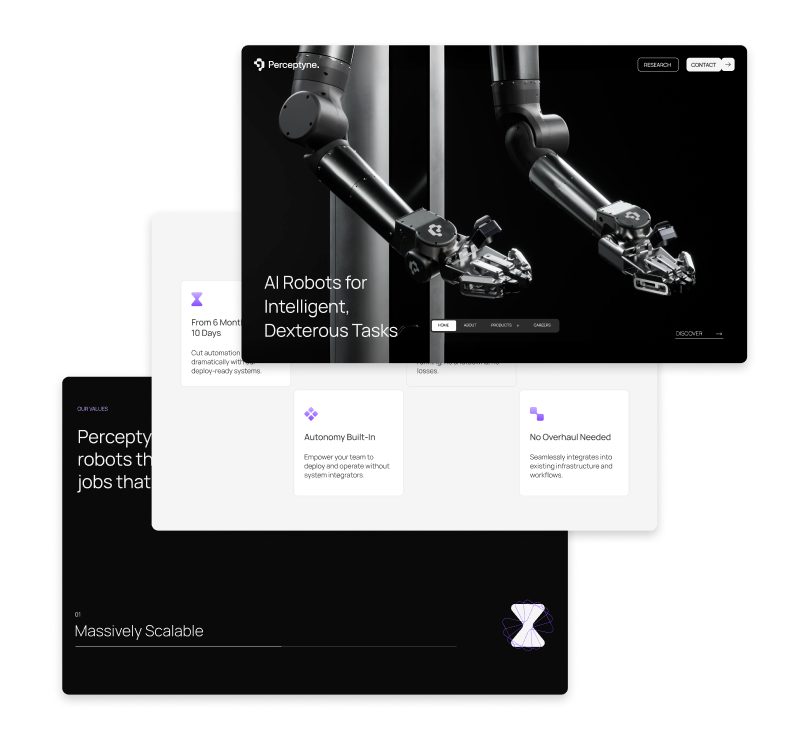


When someone needs legal representation, choosing a law firm is rarely an impulsive decision. Whether they are looking for corporate legal counsel, litigation support, intellectual property services or personal legal assistance, they want confidence before making contact. Their research often begins online, where a firm’s website becomes one of the first places they evaluate its credibility, expertise and professional standing.
This makes website development an important consideration for modern legal practices. A website should do more than list practice areas and display contact information. It should communicate the firm’s approach, make complex information easier to understand and help prospective clients identify the right legal expertise. Every interaction, from navigating service pages to submitting an enquiry, contributes to how people perceive the firm.
For law firms competing in increasingly digital markets, a well-developed website is no longer simply a marketing asset. It is an extension of the firm’s professional identity and an important part of its client acquisition strategy.
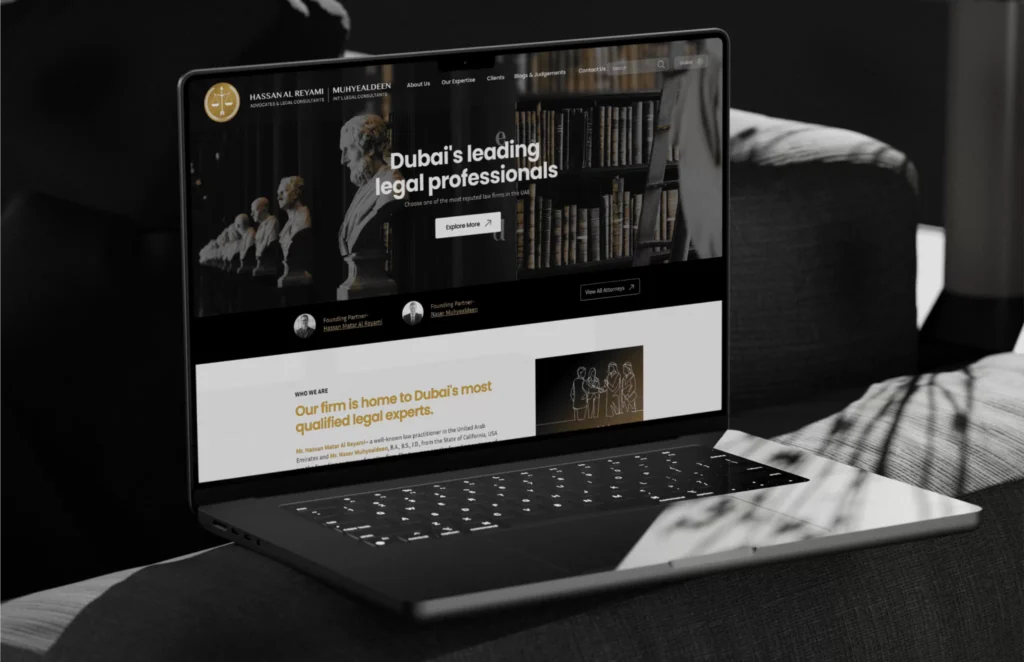
Explore Wings Design’s website design and development work for Alriyami Advocates, Dubai, UAE
Why Website Development Matters for Modern Law Firms
Legal services are built on expertise, reputation and trust. However, these qualities can be difficult to communicate through a digital experience that feels outdated, confusing or impersonal. A poorly structured website can make even an established law firm appear less credible than its competitors.
Strategic law firm website development addresses this gap by bringing together brand positioning, user experience, content architecture and technology. The objective is to create a digital environment where prospective clients can understand what the firm does, explore its areas of expertise and take the next step without unnecessary friction.
A professionally developed website also gives firms greater control over how they present their capabilities. Instead of relying entirely on third-party directories or professional listings, they can build a central digital destination that communicates their expertise, showcases their legal professionals and supports long-term visibility through search engines.
What Makes an Effective Law Firm Website?
1. A Professional Identity That Reflects the Firm’s Expertise
First impressions matter considerably in the legal sector. A website’s visual language should reflect the firm’s positioning, whether it is a boutique practice specialising in intellectual property or a large corporate law firm serving multinational businesses.
Typography, colour systems, imagery, layout and visual hierarchy all contribute to this perception. An overly generic template may communicate little about what makes a firm different. A considered design approach, on the other hand, can establish a distinct identity while maintaining the professionalism expected from a legal practice.
The objective is not to make a law firm website visually complicated. It is to create a confident, refined experience that communicates authority without overwhelming visitors. Consistency across practice area pages, attorney profiles and other key sections reinforces this identity.
2. Clear Navigation Across Practice Areas
Legal websites often contain extensive information covering multiple practice areas, industries, jurisdictions and professional services. Without a well-planned information architecture, visitors can struggle to find relevant information.
A strong website structure organises this complexity into intuitive navigation. Practice areas should be clearly categorised, with individual pages explaining the firm’s expertise, the legal matters it handles and the audiences it serves. Attorney profiles, publications, case studies where appropriate and contact information should also be easy to access.
This is particularly important for firms with diverse service offerings. Someone looking for employment law assistance should not have to navigate through unrelated corporate litigation content to understand whether the firm can help.
Thoughtful information architecture improves usability while creating a stronger foundation for search engine optimisation.
3. Attorney Profiles That Establish Credibility
People do not simply choose legal services based on a list of practice areas. They also want to know who will represent them and what experience those professionals bring to the table.
Attorney profile pages provide an opportunity to introduce the people behind the firm. Beyond names and photographs, these pages can communicate professional qualifications, specialisations, industry experience, notable achievements and relevant publications.
A well-designed profile makes this information accessible without turning the page into a lengthy professional résumé. Clear content hierarchy, readable typography and consistent layouts help visitors evaluate expertise while developing a better understanding of the firm’s people and culture.
For corporate clients and individuals alike, this human element can make a significant difference in the decision-making process.
4. Mobile-First Design for Changing User Behaviour
Prospective clients may discover a law firm through a Google search, a professional referral, a LinkedIn post or a shared article. Increasingly, these interactions happen on mobile devices.
A website that looks impressive on a desktop but performs poorly on mobile creates an unnecessary barrier. Visitors should be able to explore practice areas, read attorney profiles, access contact information and submit enquiries comfortably across different screen sizes.
Mobile-first development considers more than responsive layouts. It also accounts for navigation patterns, readable content, touch-friendly interactions, page loading performance and simplified enquiry journeys.
For law firms, these details contribute to an experience that feels accessible and dependable, regardless of how someone discovers the website.
The Role of SEO in Law Firm Website Development
A visually impressive website has limited value if potential clients cannot find it. Search engine optimisation should therefore be considered during the planning and development stages rather than treated as a separate activity after launch.
People searching for legal services often use specific, intent-driven queries. These may include searches for a particular legal specialisation, a law firm in a specific city or an attorney with experience in a particular industry. A well-structured website creates opportunities to address these searches through relevant service pages and informative content.
Each practice area should have a dedicated page with a clear subject, useful information and appropriate keyword targeting. Page titles, meta descriptions, headings, internal links and descriptive URLs should reinforce the relevance of each page.
Technical considerations matter just as much. Search-friendly website development should account for crawlability, indexation, XML sitemaps, canonical URLs, structured data where appropriate and Core Web Vitals. These elements help search engines understand the website and provide a stronger technical foundation for organic visibility.
Legal content also falls within a category where expertise and trust are particularly important. Articles, legal updates and professional insights should demonstrate subject knowledge, provide accurate information and clearly identify the professionals or organisation responsible for publishing them.

Essential Features Every Law Firm Website Should Consider
The right functionality depends on the firm’s size, practice areas, audience and operational requirements. However, several features can make a meaningful difference to the overall digital experience.
Dedicated Practice Area Pages: Individual pages for each legal service help visitors understand the firm’s expertise while supporting targeted SEO strategies.
Professional Attorney Profiles: Structured profiles introduce legal professionals, their qualifications, experience and areas of specialisation.
Enquiry Forms: Well-designed forms allow prospective clients to share relevant details and initiate contact without unnecessary steps. Forms should collect only the information required at the initial enquiry stage.
Secure Communication: Websites should use HTTPS and appropriate security measures. Where confidential client communication or document exchange is required, dedicated secure systems should be implemented rather than relying on ordinary website forms.
Insights and Legal Resources: Articles, legal commentary, industry updates and FAQs help demonstrate expertise while creating opportunities to attract relevant organic traffic.
Accessibility: Readable typography, sufficient colour contrast, keyboard navigation, descriptive links and properly structured content help make the website usable by a wider audience.
Performance Optimisation: Efficient code, optimised images, reliable hosting and appropriate caching contribute to faster loading and a smoother browsing experience.
These features should work together as part of a cohesive digital experience rather than exist as disconnected additions.
Choosing the Right Technology for Law Firm Website Development
Technology decisions influence how easily a law firm can manage content, expand its website and maintain performance over time. The right platform depends on the firm’s requirements, internal resources and long-term digital strategy.
Content management systems such as WordPress offer flexibility, extensive integrations and a broad ecosystem of tools. They can be suitable for firms with large content libraries or specific functional requirements.
Webflow offers a design-led approach to website development, allowing businesses to build visually sophisticated websites with structured content management and greater control over the front-end experience. It can be particularly suitable for firms prioritising brand presentation, content flexibility and a refined digital presence.
For larger legal organisations with complex integrations, multiple regional websites or specialised operational requirements, custom development may provide greater flexibility.
There is no universally correct platform. The decision should be guided by the website’s purpose, functionality, scalability, security requirements and the firm’s ability to manage it after launch.
Common Mistakes to Avoid When Building a Law Firm Website
Even established legal practices can overlook important aspects of their digital presence. Some of the most common issues are not necessarily technical. They often come down to how the website communicates and supports its audience.
One common mistake is treating the homepage as a digital brochure. Listing the firm’s history, services and achievements without establishing a clear user journey makes it harder for visitors to identify relevant information.
Another is relying on generic legal imagery and templated layouts. Stock photographs of gavels, courtrooms and law books may establish a familiar visual association, but they rarely communicate a firm’s individual positioning. A more considered visual identity creates a stronger and more memorable impression.
Many firms also underestimate the importance of content structure. Long paragraphs, unclear practice area descriptions and inconsistent page layouts can make valuable expertise difficult to navigate. Similarly, placing contact information in a single location rather than making it accessible across the website can create unnecessary friction.
Finally, launching without considering ongoing maintenance can affect website security, performance and content accuracy. A law firm’s digital presence should evolve alongside its services, expertise and business priorities.
Turning a Law Firm Website Into a Long-Term Business Asset
A law firm website should not be evaluated only by how it looks at launch. Its real value becomes apparent through how effectively it supports the firm’s professional reputation and business objectives over time.
This requires a digital strategy that connects design, development, content and performance. Analytics can help identify which practice areas attract attention, how visitors navigate the website and where prospective clients leave before completing an enquiry. These insights can guide improvements to page structure, content and conversion journeys.
The website should also accommodate growth. New practice areas, additional attorneys, regional offices, legal publications and changing client expectations should be easy to incorporate without requiring a complete redesign.
For firms looking to strengthen their digital presence, investing in scalable website development creates a foundation that can support brand building, organic visibility and client engagement for years to come.
Build a Digital Presence That Reflects Your Firm’s Expertise
In a profession where credibility influences every business relationship, a law firm’s website should communicate the same level of precision and professionalism as its legal services. It needs to make expertise accessible, simplify complex information and create a dependable experience from the first interaction.
At Wings Design, we approach website development through the intersection of strategy, design and technology. We create considered digital experiences that help businesses communicate their value, strengthen their positioning and build for future growth.
Whether you are establishing a new legal practice or rethinking the digital presence of an established firm, the right website can become an important part of how your organisation is discovered, understood and remembered.
Looking to build a website that reflects your firm’s expertise?
Explore our website design and development services or connect with Wings Design to discuss your next digital experience.