

A website redesign can give your business a stronger digital presence, improve user experience, and create a more effective path from discovery to conversion. But a redesign also introduces risks that are easy to overlook. Changing URLs, removing existing content, altering internal links, or overlooking technical SEO can affect the organic visibility your website has built over time.
The challenge is not simply to create a better-looking website. It is to improve the experience without losing the search performance that already brings potential customers to your business. That requires SEO to be part of the redesign process from the beginning, rather than a final checklist before launch. With the right planning, businesses can modernise their websites while protecting valuable rankings, traffic, and existing search equity.
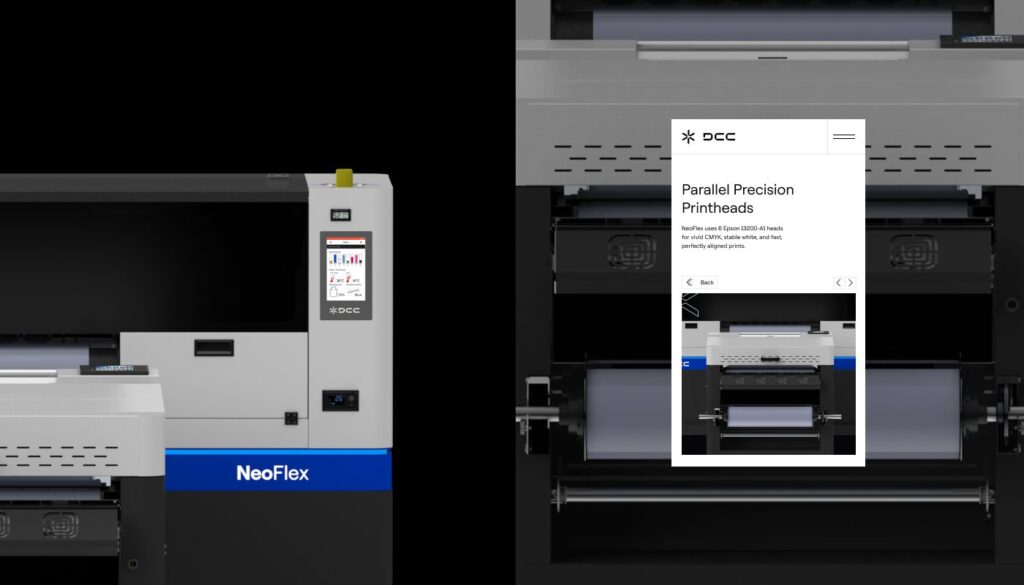
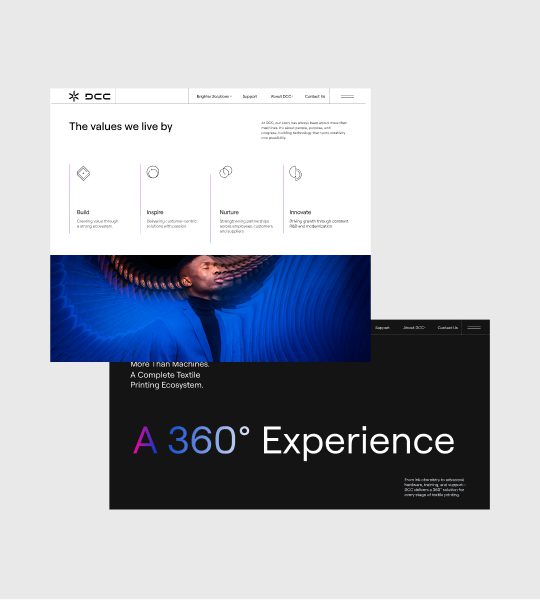
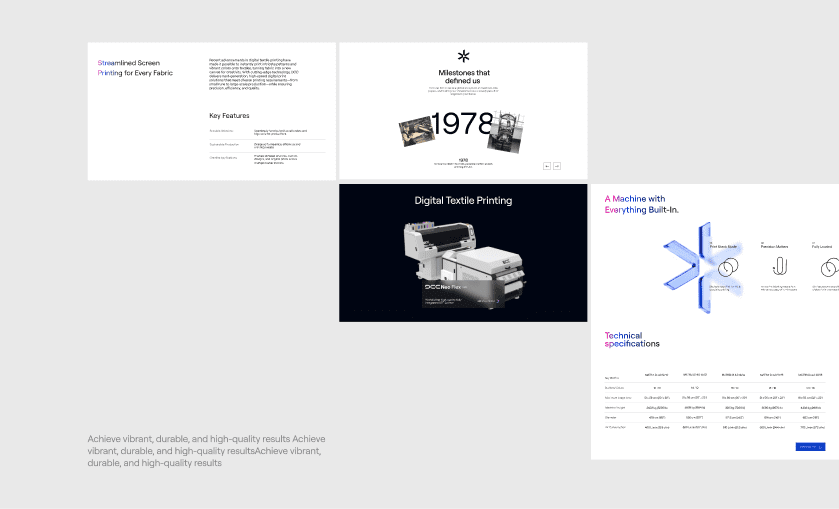
Explore Wings Design Studio’s website redesign work for DCC, a global textile printing technology leader based in Mumbai, India.
1. Start with an SEO Audit Before Redesigning Your Website
Before changing your website’s structure or visual design, understand what is already working. Your existing website may contain pages that consistently attract organic traffic, generate enquiries, earn backlinks, or rank for valuable commercial keywords. Redesigning without identifying these assets can result in the accidental loss of performance that took months or years to build.
Start by reviewing Google Search Console and Google Analytics 4 to understand which pages attract organic visitors, what queries bring users to your website, and which landing pages contribute to conversions. A technical SEO audit can also reveal indexing issues, broken links, duplicate content, and other problems that should be addressed during the redesign. Use these findings to establish a baseline against which the redesigned website can be measured.
The objective is to distinguish between pages that need improvement, pages that should be retained, and pages that can be consolidated or retired. This gives your design and development teams a clearer understanding of the website’s existing value before they begin making changes.
2. Preserve Your Existing URL Structure Wherever Possible
One of the most common risks during a website redesign is changing URLs without a clear reason. Search engines use URLs to discover and understand pages, while external websites may link to those URLs as references. If an established page disappears or moves without the appropriate handling, users and search engines can encounter errors, and the page may lose some of its accumulated search value.
Whenever possible, retain existing URLs, particularly for pages that generate organic traffic, rank for relevant keywords, or have valuable backlinks. A redesign does not automatically require a new URL structure. If changes are necessary to improve navigation, content organisation, or the overall website architecture, document every affected URL before development begins.
Create a comprehensive URL mapping document that connects each old URL to its corresponding new destination. When a page’s URL changes, implement a permanent server-side 301 redirect to the most relevant replacement. Avoid redirecting every retired URL to the homepage, as this can confuse visitors and fail to provide a meaningful destination. URLs without a suitable replacement should be evaluated individually to determine the appropriate response.
3. Protect High-Performing Content During the Redesign
A new design often comes with a desire to simplify content. Long service pages may be shortened, older articles may be removed, and entire sections may be reorganised to create a cleaner interface. While these changes can improve readability, removing useful information without assessing its SEO value can weaken a page’s ability to rank.
Review your existing content before rewriting it. Identify pages that perform well in organic search, attract relevant backlinks, answer important customer questions, or support commercial search intent. Preserve their essential information, relevant keywords, useful headings, and internal links unless there is a clear strategic reason to change them.
This does not mean every existing paragraph must remain untouched. A redesign is an opportunity to improve outdated information, remove unnecessary repetition, strengthen calls to action, and make content more useful to visitors. The key is to retain the information and relevance that help search engines and users understand the page. When combining multiple pages, make sure the new destination addresses the important topics and intent of the original pages.
4. Build the New Website Around Search Intent and User Experience
Website redesign and SEO should work together, not compete for attention. A website may look visually impressive but still underperform if users struggle to find information, service pages are difficult to navigate, or important content is buried too deeply within the structure.
Plan the information architecture around how potential customers search for your services and evaluate their options. Organise pages into clear categories, create intuitive navigation, and ensure that important commercial pages can be reached easily. Service pages should explain what you offer, who it is for, and how it addresses specific business needs. Supporting articles can answer informational queries and guide readers towards relevant services.
User experience also influences how effectively a website turns visitors into leads. Clear page hierarchy, readable typography, accessible interactions, fast-loading content, and well-placed calls to action can make it easier for visitors to take the next step. The goal is to create a website that satisfies search intent while making the experience more useful for the people arriving through search.

5. Carry Over Essential On-Page SEO Elements
A redesigned website can lose important SEO signals when page titles, meta descriptions, headings, image attributes, or internal links are overlooked during development. These elements may seem minor compared with the visual interface, but together they help search engines interpret your pages and help users understand what to expect from search results.
Prepare an on-page SEO checklist for every important page. Review title tags, meta descriptions, H1 headings, subheadings, image alt text, canonical tags, and contextual internal links. Ensure each page has a clear topic and purpose, with content aligned to the search intent it is designed to serve. Where the new design changes page layouts or content blocks, confirm that important information remains accessible in the rendered page.
Structured data should also be reviewed where relevant. If your existing website uses valid schema markup for services, organisations, articles, or other supported content types, determine how it should be implemented on the new site. Do not automatically copy outdated markup or add structured data that does not accurately describe the page. The objective is to preserve and improve the website’s technical and on-page signals, not simply reproduce every previous setting.
6. Make Technical SEO Part of Development
Technical SEO should be addressed while the redesigned website is being built. Waiting until launch to check crawlability, indexability, page speed, and mobile usability can turn relatively simple fixes into urgent post-launch problems.
Start by ensuring that the staging website is configured appropriately. Development environments are commonly blocked from indexing to prevent unfinished pages from appearing in search results. That protection must be reviewed carefully during launch so the production website is not accidentally left with a sitewide noindex directive or crawler restriction. Equally, the staging environment should not become an unintended source of duplicate, indexable content.
Test mobile layouts, page loading behaviour, navigation, forms, and key user interactions across relevant devices. Review Core Web Vitals, image optimisation, redirects, canonical tags, XML sitemaps, and robots.txt. Check for broken internal links and ensure that important pages return the correct HTTP status codes. A technically sound launch helps search engines discover the new website and helps visitors use it without unnecessary friction.
7. Test the Website Before It Goes Live
A successful launch depends on more than checking whether the new website looks correct. Pre-launch testing should verify that important SEO elements, functionality, and user journeys work as intended. This is especially important for websites with many service pages, blog articles, landing pages, or complex navigation structures.
Compare the existing website’s URL inventory with the new version and confirm that redirects are in place for every URL that has moved. Crawl the staging website to identify broken links, missing metadata, duplicate titles, incorrect canonical tags, orphaned pages, and unexpected indexing directives. Check important pages manually as well, since automated tools may not catch every content or interaction issue.
Test lead-generation forms, contact buttons, downloads, analytics events, and conversion tracking. Confirm that Google Analytics 4 and Google Search Console are configured correctly for the production website. If the redesign changes the website’s domain, subdomain, or analytics setup, plan the measurement changes in advance so performance comparisons remain meaningful after launch.
8. Monitor SEO Performance After Launch
Publishing the redesigned website is the beginning of the monitoring phase, not the end of the project. Search engines need time to crawl and process changes, and some fluctuations in rankings and traffic can occur during this period. What matters is identifying significant problems early and understanding whether the website is moving towards its intended business goals.
After launch, verify that the new XML sitemap has been submitted where appropriate and that important pages are crawlable and indexable. Use Google Search Console to monitor indexing status, search impressions, clicks, average positions, and any emerging crawl or page-experience issues. In Google Analytics 4, compare organic landing-page traffic, engagement, and conversions against the baseline established before the redesign.
Pay particular attention to important service pages and URLs that have changed. If a page experiences a significant decline, investigate potential causes such as missing redirects, content reductions, accidental indexing restrictions, broken internal links, or changes in search demand. Avoid making multiple reactive changes without understanding the issue. A structured monitoring process makes it easier to distinguish normal fluctuations from technical problems that require immediate attention.
Common Website Redesign SEO Mistakes to Avoid
Even well-planned redesigns can encounter problems when teams prioritise visual delivery over search continuity. The following mistakes are worth checking throughout the project:
- Changing URLs without redirects: This can leave users and search engines facing broken links.
- Removing content without performance analysis: Valuable pages may lose relevance or disappear entirely.
- Launching with staging restrictions: An accidental
noindexdirective or crawler block can prevent pages from being indexed. - Ignoring internal links: Navigation changes can make important pages harder to discover.
- Overlooking mobile performance: A visually polished desktop experience does not guarantee a usable mobile website.
- Failing to test tracking: Missing analytics events can make it difficult to measure the redesign’s business impact.
- Assuming rankings will remain unchanged: SEO performance must be monitored, even when the migration is carefully managed.
Addressing these risks early is usually more efficient than trying to recover from preventable problems after launch.
Conclusion: Make Your Website Redesign an SEO Opportunity
A website redesign should create room for your business to grow without discarding the digital value your existing website has accumulated. Protecting organic search performance requires collaboration between strategy, design, development, and SEO teams, with clear responsibilities at every stage. When content, URLs, technical requirements, and performance data are considered from the start, a redesign becomes a structured improvement rather than an unnecessary risk.
At Wings Design Studio, we approach website design and development as connected parts of a broader digital experience. A successful redesign should reflect your brand more effectively, make information easier to navigate, and support measurable business goals. By combining thoughtful design with an SEO-conscious process, businesses can build a website that looks more relevant today while remaining better prepared for what comes next.
Planning a website redesign? Explore Wings Design Studio to discover how strategy, design, and development can work together to create a more effective digital presence.