

A Shopify store can have great products, competitive pricing and a strong marketing strategy, yet struggle to convert visitors into customers. The problem often lies in the digital experience. From confusing navigation and inconsistent branding to slow-loading pages and complicated checkout processes, small design decisions can create significant barriers to purchase.
Effective Shopify website design goes beyond creating an attractive storefront. It brings together user experience, visual identity, product presentation and conversion-focused functionality to make shopping easier. For businesses looking to scale their ecommerce operations, the right combination of design and development can turn a basic online store into a powerful sales channel.
1. First Impressions Start with Strong Visual Design
Customers form an impression of an online store within seconds of landing on it. A cluttered layout, inconsistent typography or generic product imagery can weaken brand credibility before visitors even explore the products.
A well-designed Shopify store establishes trust through a consistent visual language. Typography, colour palettes, imagery, spacing and layout should work together to communicate the brand’s personality and product positioning. Premium brands, for instance, may benefit from minimal layouts and refined typography, while lifestyle and consumer brands might use expressive visuals and stronger colour systems.
The objective is not simply to make the website look attractive. It is to create a storefront that feels credible, recognisable and relevant to its target audience.
2. Simplify Navigation and Product Discovery
Customers should never have to work hard to find what they want. Complicated navigation, unclear product categories and excessive menu options can interrupt the shopping journey and increase the likelihood of visitors leaving the website.
A structured Shopify website design makes product discovery intuitive. Organise products into meaningful collections, use descriptive category labels and introduce search functionality that helps customers find products quickly. Filters for size, colour, price, availability and other relevant attributes can further improve browsing, particularly for stores with extensive catalogues.
A well-planned information architecture also makes it easier for customers to move between categories, product pages and related collections without losing context.
3. Create Product Pages That Answer Buying Questions
Product pages play a critical role in ecommerce conversions. They are where browsing turns into buying decisions. If customers cannot understand the product, evaluate its value or find essential information, they may hesitate to complete their purchase.
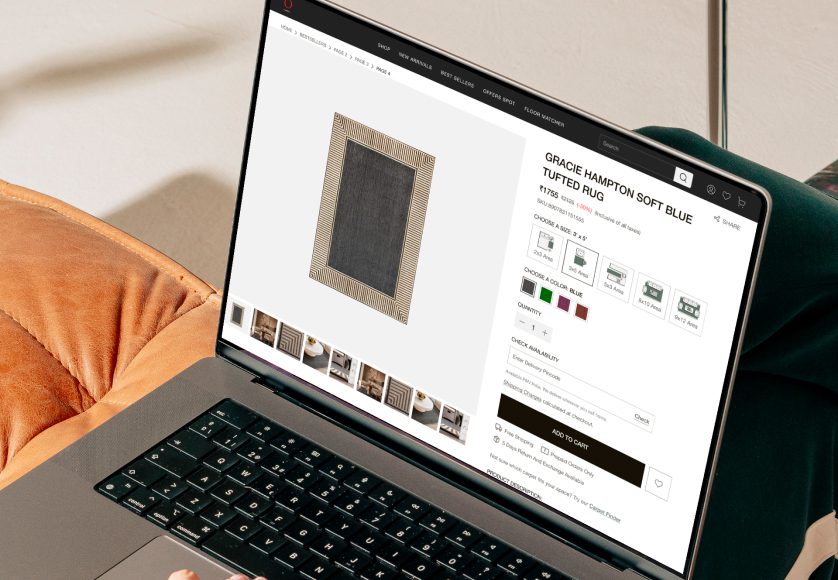
An effective Shopify product page should combine high-quality photography, clear product descriptions, pricing, available variants and prominent calls to action. Product videos, zoom functionality and lifestyle imagery can help customers understand how an item looks and works in real-world settings.
For products with multiple variations, make selection straightforward. Display relevant information such as dimensions, materials, specifications, delivery details and return policies close to the buying decision. Customer reviews and ratings can provide additional reassurance.
4. Make Mobile Shopping a Priority
Mobile commerce is an essential part of modern ecommerce. Many customers discover products, compare options and make purchases directly from their smartphones. A desktop-first design that simply shrinks to fit smaller screens can create unnecessary friction.
A mobile-first Shopify design considers how customers interact with the store on smaller devices. Buttons should be easy to tap, product images should remain clear, navigation should be accessible and important information should be visible without excessive scrolling.
Mobile layouts should also account for practical details such as sticky add-to-cart buttons, simplified menus and streamlined forms. These improvements make the shopping experience more convenient and help customers complete purchases across devices.
5. Build Trust Through Brand Consistency
Customers are more likely to purchase from brands that appear credible and consistent. A poorly presented storefront can create uncertainty, particularly when customers are unfamiliar with the business.
Brand consistency should extend across every part of the Shopify store, including the homepage, product pages, collection pages, checkout and transactional communication. The tone of voice, photography, typography and visual elements should reinforce the same brand identity.
Trust signals also matter. Clearly displayed contact information, transparent shipping policies, accessible return information, secure payment options and genuine customer reviews help customers feel more confident about purchasing.
For businesses investing in long-term ecommerce growth, branding and website design should work together rather than operate as separate activities.
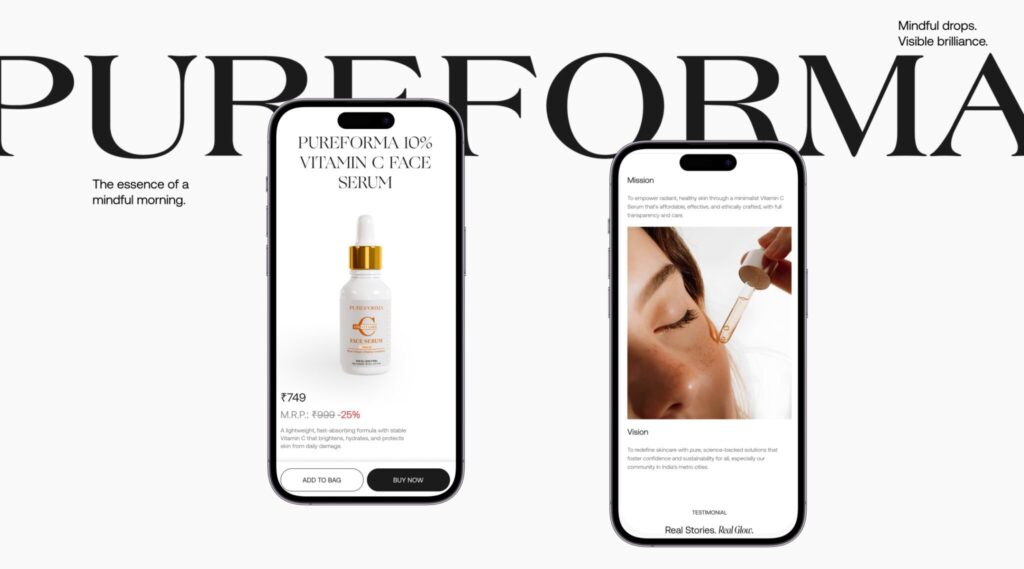
Pureforma: Explore Wings Design’s branding and website design for Pureforma, India.
6. Improve Website Speed and Performance
Website performance has a direct influence on the shopping experience. Slow-loading pages can frustrate visitors, interrupt product discovery and create unnecessary barriers to purchase.
Shopify stores should be designed with performance in mind from the beginning. Oversized images, unnecessary applications, excessive animations and poorly optimised third-party scripts can affect loading times.
A performance-conscious Shopify development approach includes:
-
Optimising product and banner images.
-
Using lightweight design components.
-
Limiting unnecessary applications and scripts.
-
Reducing unused code and excessive animations.
-
Testing Core Web Vitals and mobile performance.
-
Monitoring performance after new features are introduced.
A visually impressive website should not come at the expense of usability or speed.
7. Simplify the Checkout Experience
Getting customers to add products to their carts is only part of the conversion journey. The checkout experience determines how easily they can complete their purchase.
Unexpected charges, complicated forms, unclear delivery information and limited payment options can lead to abandoned carts. A well-structured checkout should minimise unnecessary steps and communicate essential information clearly.
Consider offering guest checkout where available, displaying shipping costs early, supporting relevant payment methods and providing clear order summaries. Reduce distractions during checkout so customers can focus on completing their purchases.
The fewer unnecessary obstacles customers encounter, the easier it becomes to move from intent to purchase.
8. Use Strategic Calls to Action
Calls to action guide customers towards the next step. Whether the goal is exploring a collection, viewing product details or completing a purchase, each CTA should communicate a clear purpose.
Generic labels can make the shopping journey less intuitive. Instead, use action-oriented language that reflects the customer’s stage in the buying process.
For example:
-
Explore Collection for category discovery.
-
View Product for product exploration.
-
Add to Cart for purchase intent.
-
Buy Now for direct purchase actions.
-
Discover More for brand storytelling.
Visual hierarchy matters just as much as the wording. Primary actions should stand out without competing with too many secondary elements.
9. Personalise the Shopping Experience
Customers increasingly expect online stores to provide relevant recommendations and convenient shopping experiences. Personalisation can help Shopify stores make product discovery more engaging.
Features such as recently viewed products, related product recommendations, complementary product suggestions and personalised collection displays can encourage customers to explore more of the catalogue.
For example, a fashion store might recommend matching accessories alongside a product, while a beauty brand could suggest complementary skincare products. These experiences can support product discovery and create opportunities for cross-selling.
The key is to make recommendations useful rather than overwhelming. Personalisation should improve the shopping experience, not interrupt it.
10. Design for Continuous Conversion Improvement
Launching a Shopify store should not be the end of the design process. Customer behaviour changes, product catalogues evolve and new business priorities emerge. Regular evaluation helps identify opportunities to improve the shopping experience.
Businesses can use analytics and user behaviour tools to understand where customers drop off, which products receive the most attention and which parts of the website need improvement.
Useful areas to monitor include:
-
Product page engagement.
-
Add-to-cart rate.
-
Checkout abandonment.
-
Mobile versus desktop conversion rates.
-
Landing page performance.
-
Traffic sources and purchasing behaviour.
A/B testing different layouts, product page structures, CTA placements and promotional messaging can help businesses make more informed design decisions.
Why Shopify Website Design Needs the Right Strategy
Shopify provides businesses with a flexible ecommerce platform, but the platform alone does not guarantee sales. The quality of the storefront, the clarity of the customer journey and the overall brand experience influence how effectively a store performs.
This is where strategic design and development become important. A successful ecommerce website needs to balance business objectives with customer expectations. It should communicate the brand clearly, make products easy to discover, simplify purchasing and support future growth.
At Wings Design, we approach digital experiences through a combination of brand thinking, user experience design and development. From creating distinctive ecommerce interfaces to building scalable digital storefronts, our focus is on making every interaction meaningful.
Explore our website design and development services and branding services to see how a considered digital experience can strengthen your business.
Final Thoughts
A high-performing Shopify store is built around more than attractive visuals or a collection of products. It requires a thoughtful combination of usability, brand consistency, performance and conversion-focused design.
Every interaction, from the first homepage visit to the final checkout step, influences how customers experience a brand. Businesses that invest in a well-planned Shopify website design can create more intuitive shopping journeys, build customer confidence and establish a stronger foundation for ecommerce growth.
The question is not simply whether your Shopify store looks good. It is whether it makes customers confident enough to buy.