

The Website Decision That Can Make or Break Your Growth
Building websites has evolved, and with millions of businesses online, having a well designed website is essential. Whether you are a startup or an established brand, your website plays a key role in how you present yourself and connect with your audience. Choosing between a custom and template website is an important decision and this guide will help you find the right option.
This article explains the differences between custom and template websites, covering key concepts, advantages, limitations, and real world scenarios. By the end, you will have clear insights to confidently choose the best option for your business needs.
Understanding the Basics (Without the Jargon)
Before making a comparison, it is important to understand what each option actually means. Simplifying these concepts helps you make a clearer and more informed decision. Let’s break down both options in an easy way.
What is a Template Website?
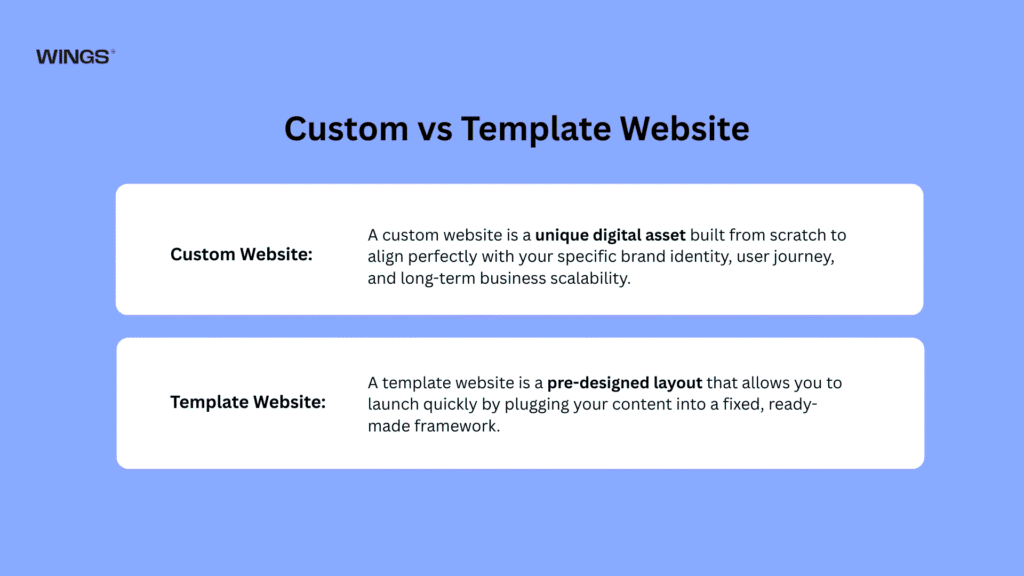
A template website uses a pre-designed structure that allows you to quickly choose a layout that fits your needs. You can customize it by adding your own content, colors, and images, making it easy to set up without starting from scratch. It is designed for speed and convenience, which makes it an ideal choice for beginners or businesses that need to launch quickly. However, customization is limited by the constraints of the template, which can restrict more advanced features or unique design elements.
Think of it like this:
- It works within a fixed framework or structure.
- The layout and design are already predefined.
- You can customize content like text, images, and colors.
- Flexibility is limited compared to custom website
- Major design or functional changes are often restricted.
What is a Custom Website?
A custom website is designed and built specifically for your business from the ground up. Every element including layout, features, user flow, and branding is tailored to your goals and audience. Unlike templates, it offers complete flexibility, allowing you to create a unique online experience that can grow and evolve with your business. This makes it ideal for companies looking to maximize performance, conversions, and long term impact.
Everything is designed intentionally:
- Layout
- User flow
- Features
- Branding
The Core Differences That Actually Matter
Let’s move beyond surface-level differences and look at what really impacts your business.
| Factor | Template Website | Custom Website |
|---|---|---|
| Flexibility | Limited to predefined layouts | Fully adaptable to your needs |
| Speed to Launch | Quick setup | Requires planning and development |
| Uniqueness | Often looks similar to others | Completely unique |
| Performance | Can be heavier and slower | Optimized for speed and efficiency |
| SEO Potential | Basic structure | Built with search visibility in mind |
| Scalability | Basic structure | Designed for future growth |
| Control | Platform-dependent | Full ownership and control |
Template websites are quick and easy to launch, making them a good choice for beginners or small projects. However, they often come with limitations in flexibility, uniqueness, and scalability. Custom websites, while requiring more time and effort to develop, provide greater control, better performance, and the ability to grow alongside your business.
How This Choice Affects Your Business Outcomes
Most businesses tend to underestimate this aspect when building a website. The type of website you choose does not only influence how it looks, but also how effectively it performs. It plays a crucial role in shaping user experience, functionality, and overall business results
01. Conversion Rates
Visitors interact with your website in several ways. They might fill out a form to request information, book a call to speak with your team, or make a purchase directly online. Each action represents a valuable step in their journey. The design and functionality of your site should guide them smoothly toward these actions. Optimizing for these behaviors helps improve overall conversions.
Template websites:
Template websites often use generic layouts that are not tailored to your specific audience, which limits their effectiveness. They are typically not optimized for the unique needs and behaviors of your visitors, and they provide only a limited ability to test and improve performance over time.
Custom websites:
Custom websites are designed around your customer journey, ensuring that every step is intentional and user-focused. They are built to remove friction, making it easy for visitors to navigate and complete desired actions. Additionally, these sites are optimized for conversions, guiding users toward filling forms, booking calls, or making purchases effectively.
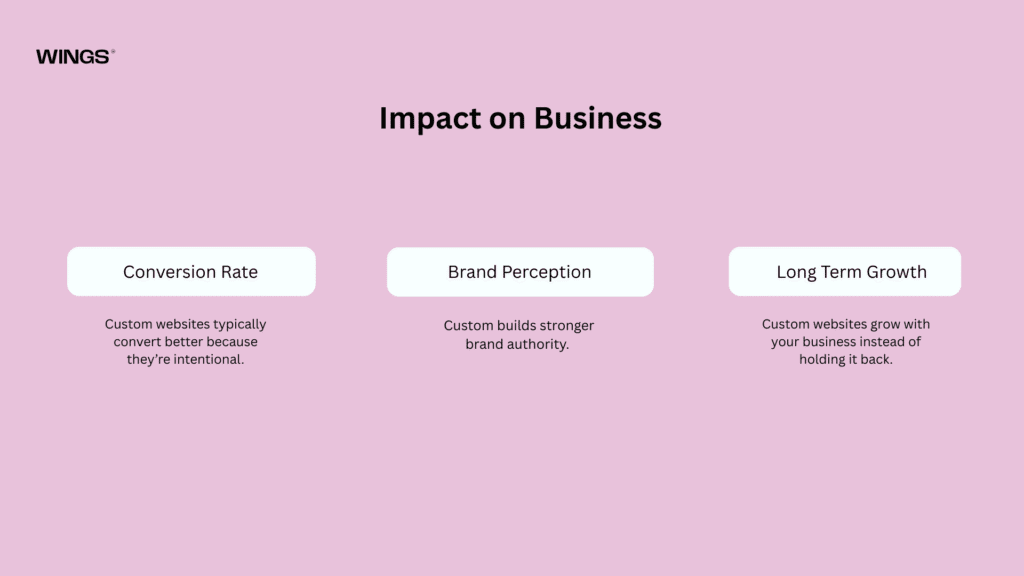
Result: Custom websites typically convert better because they’re intentional.
02. Brand Perception
Your website shapes how people perceive your business within seconds. First impressions are formed almost instantly when someone lands on your site. A well designed website can build trust, while a poor one can drive visitors away.
Template websites:
Template websites can sometimes feel generic and may look similar to competitors, making it harder for your brand to stand out. Their design limitations also reduce the ability to create a memorable and distinctive user experience, which can impact how visitors perceive your business.
Custom websites:
Custom websites clearly reflect your brand identity, creating a unique and memorable experience for visitors. By showcasing your business’s personality, values, and style, they help build trust and credibility, making it easier to establish a strong connection with your audience.
Result: Custom builds stronger brand authority.
03. Long-Term Growth
Growth changes everything as your business evolves over time. What works well for you today may not be effective tomorrow. Your website needs to adapt to new goals, features, and user expectations. Without flexibility, it can quickly become outdated and limit your progress.
Template websites:
Template websites can become restrictive over time, making it difficult to add new features or adapt to changing business needs. As your business grows, these limitations often mean that you may need to rebuild or significantly redesign your site to keep up with evolving goals and user expectations.
Custom websites:
Custom websites are built with scalability in mind, allowing your site to grow and evolve alongside your business. They make it easier to add new features, expand functionality, and adapt to changing needs, all while supporting your long-term strategy and ensuring your online presence remains effective and future-proof.
Result: Custom websites grow with your business instead of holding it back.
When a Template Website Makes Sense
Fast to Launch
Template websites use pre-designed layouts, allowing you to go live quickly without building everything from scratch. They are ideal for businesses that need an immediate online presence without waiting weeks for development. When speed is a priority, templates are a practical solution.
Ideal for Early-Stage Businesses
For businesses just starting out, template websites offer a simple and functional platform. They make it easy to showcase services, products, or portfolios without unnecessary complexity. This lets you focus on validating your business model instead of building advanced features.
Great for Testing New Ideas or Markets
Templates are perfect for experimentation. Whether you’re launching a new campaign, testing a product, or targeting a new audience, they require less investment than custom-built websites. This reduces risk and helps you gather insights before committing to a long-term strategy.
Suitable When the Website Isn’t the Main Revenue Driver
If your website is mainly for sharing information rather than generating direct sales, templates are a great fit. They offer a clean and professional look with minimal setup required. This makes it easy to establish an online presence without investing too much time or effort. It’s a simple and effective solution for maintaining visibility.
Common Use Cases
- Freelancers building a portfolio
- Small local businesses needing a basic online presence
- Startups validating a concept
Why It Works
- Fast execution helps you get online quickly
- Lower complexity reduces setup challenges
- Minimal decision-making makes implementation easier
- Practical starting point, even if it may not scale long-term
When a Custom Website Becomes the Better Choice
Critical for Lead Generation and Sales
Custom websites are built to guide users through a carefully planned journey that increases conversions. When your website plays a major role in generating revenue, a custom design ensures every element is optimized to drive results.
Supports Unique Features and Workflows
Businesses that need advanced functionality, integrations, or specific workflows benefit greatly from custom websites. Unlike templates, custom builds give you full flexibility without being limited by predefined structures.
Helps You Stand Out in Competitive Markets
A custom website allows you to fully showcase your brand identity, creating a unique and memorable experience for your audience. It helps your business stand out clearly in competitive markets and builds a stronger connection with potential customers
Essential for Marketing and Growth Investment
If you’re investing in paid ads, SEO, or other growth strategies, a custom website provides the foundation needed to handle traffic and convert visitors effectively. It ensures better performance, scalability, and long-term results.
Common Use Cases
- Scaling startups
- Established service businesses
- E-commerce brands
- Companies running paid advertising or SEO campaigns
Why It Works
- Designed for performance and speed
- Aligned with business goals for maximum impact
- Scalable and future-ready for long-term growth
- Acts as a strategic business tool, not just a website
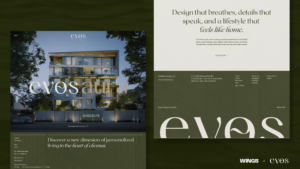 Explore the design process behind the EVOS
Real-World Scenarios: Businesses Focused on Growth
Understanding the impact of your website becomes easier when you look at practical situations. Here are two examples that show how the choice between template and custom websites can affect outcomes.
Scenario 1: Launching a New Business Online
A startup or newly established company often needs to establish a credible digital presence quickly. At this stage, they aren’t running large-scale marketing campaigns and don’t require complex features. The main priority is to appear professional and be easily discoverable by potential customers. Speed, cost-efficiency, and simplicity are key, providing a solution that works immediately without requiring a heavy investment.
They start with a template website:
- Clearly presents services or offerings
- Includes company information and team bios
- Features simple contact forms and calls-to-action
Why this works at this stage:
- Fast setup allows the business to start attracting inquiries immediately
- Professional design helps establish trust with early clients
- Costs and complexity are kept manageable
Limitations:
- The layout may feel generic and similar to competitors
- Custom workflows or advanced features are hard to implement
- Scaling or expanding features may require a rebuild later
Goal: Establish a credible online presence and start generating initial leads efficiently.
Scenario 2: Scaling an Established Business
A growing company already has an established client base, website traffic, and ongoing marketing efforts. They are actively running campaigns, investing in content, and focused on converting more leads while improving operational efficiency. At this stage, their digital presence needs to support scalability, advanced features, and a seamless user experience to maximize growth and ROI.
Their existing template website starts to show limitations:
- Pages don’t load quickly under higher traffic
- Messaging isn’t optimized for the sales journey
- Advanced lead capture forms or automated workflows are difficult to implement
They upgrade to a custom website:
- Landing pages and workflows designed for specific campaigns
- Clear messaging structured around the customer journey
- Faster, optimized performance for increased traffic
- Advanced features like booking systems or automated lead handling
Results:
- More inquiries and leads generated from the same marketing efforts
- Improved clarity and trust in messaging
- Marketing campaigns are more efficient and measurable
- The website can grow alongside the business without needing a full rebuild
Impact: The website transforms from a digital presence into a strategic business tool that supports growth and revenue goals.
Pros and Cons (Balanced View)
Template Website: Pros
Quick to Launch
Template websites use pre-built layouts that allow businesses to launch quickly without starting from scratch. They reduce development time and effort significantly. This makes them ideal for startups or businesses needing a fast online presence. You can focus more on content rather than technical setup. It’s a practical solution when speed is a priority.
Easy to Manage
Most templates come with simple editors or content management systems that are easy to use. You can update content, images, and pages without technical knowledge. This reduces dependency on developers for small updates. It allows teams to manage websites independently. It’s perfect for businesses with limited resources.
Suitable for Simple Needs
Templates are effective for basic needs like showcasing services, portfolios, or contact details. They offer clean and structured layouts without complexity. This makes them easy to set up and maintain. You don’t need advanced functionality to get started. It’s a cost-effective solution for simple websites.
Template Website: Cons
Limited Flexibility
Templates have fixed structures that limit customization and advanced functionality options. Creating unique layouts or adding complex features can be difficult. This restricts your ability to adapt as your business grows. You may struggle to meet evolving requirements. Over time, these limitations can become a major challenge.
Generic Design
Since templates are widely used, many websites look similar in design and layout. This reduces uniqueness and weakens brand identity. It becomes harder to stand out in competitive markets. Your website may not create a strong impression. This can impact how customers perceive your brand.
Harder to Optimize for Conversions
Templates are designed for general use rather than specific audiences or goals. User journeys and calls-to-action may not be fully optimized. This can reduce your ability to convert visitors into leads or sales. You may miss opportunities to improve performance. As a result, growth potential can be limited.
Can Become Restrictive Over Time
As your business grows, templates may not support new features or integrations. Expanding functionality can become difficult within set limitations. This often leads to inefficiencies and workarounds. You may face challenges when scaling your website. Many businesses eventually switch to custom solutions.
 Explore the design process behind the Shivam Jewels
Custom Website: Pros
Tailored to Your Business
Custom websites are built around your business goals, audience, and brand identity. They allow full control over design, features, and messaging. This helps create a unique and personalized experience. You can align every element with your strategy. It ensures your website reflects your brand effectively.
Strong Performance and Speed
Custom websites are developed with clean and optimized code for better performance. This improves loading speed and responsiveness across devices. Faster websites enhance user experience significantly. They also support better search engine rankings. This gives your business a competitive advantage online.
Better User Experience
Custom design allows you to create clear navigation and optimized user journeys. Visitors can easily find information and take action. This improves engagement and reduces drop-offs. You can guide users toward specific goals effectively. It leads to higher satisfaction and conversions.
Scalable and Future Ready
Custom websites are flexible and can grow with your business over time. You can add new features and integrations as needed. This ensures your website stays relevant as you scale. It supports long-term growth and adaptability. Your investment remains valuable in the future.
Custom Website: Cons
Takes Longer to Build
Custom websites require more time for planning, design, and development processes. They cannot be launched as quickly as template-based solutions. This may delay your initial online presence. You need to account for longer timelines. It can be challenging when speed is critical.
Requires Planning
A clear strategy is needed before starting a custom website project. This includes defining goals, content, and functionality. Without proper planning, delays and revisions may occur. You must invest time in preparation. Careful planning ensures better outcomes.
Needs Professional Expertise
Custom websites require skilled designers and developers for proper execution. This increases overall cost and coordination efforts. Businesses often need to hire professionals or agencies. It involves more resources compared to templates. This makes it a higher initial investment.
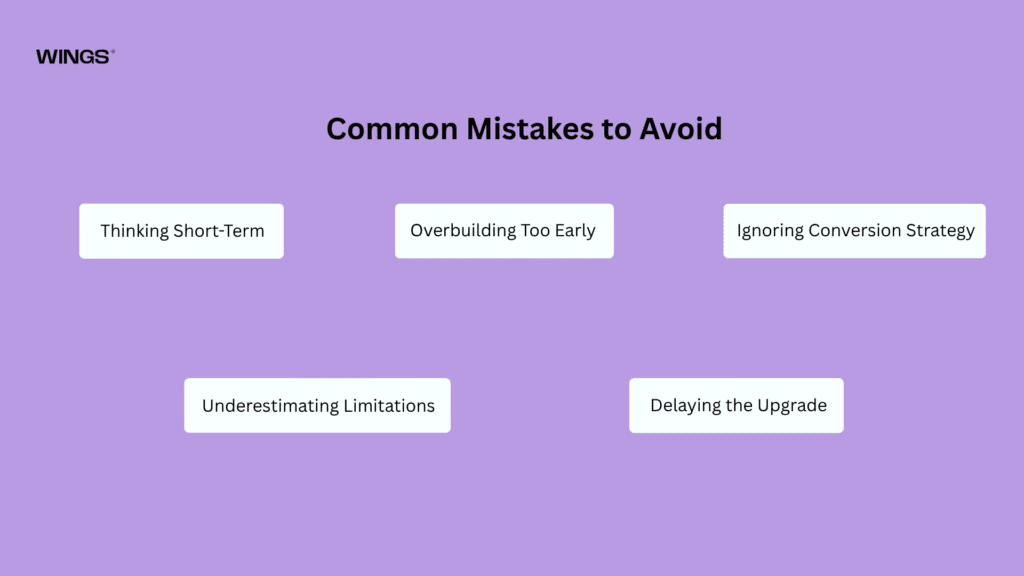
Common Mistakes to Avoid
Many businesses make avoidable mistakes when choosing the type of website they need, and these decisions can impact their growth more than they expect.
01. Thinking Short Term
One of the most common mistakes is choosing a template purely for convenience without considering future needs. While templates are quick and affordable, they may not support your business as it grows. This short term thinking often leads to limitations later, forcing businesses to rebuild their website sooner than expected, which can cost more time and money in the long run.
02. Overbuilding Too Early
On the other hand, some businesses go in the opposite direction and invest heavily in a complex custom website before their business model is fully validated. This can lead to unnecessary expenses and features that are not yet needed. In the early stages, simplicity and flexibility are often more valuable than advanced functionality.
03. Ignoring Conversion Strategy
Another critical mistake is focusing only on how the website looks rather than how it performs. A visually appealing website is important, but it should also be designed to guide visitors toward taking action whether that is making a purchase, filling out a form, or contacting your business. Without a clear conversion strategy, even a beautiful website may fail to deliver real results.
04. Underestimating Limitations
Many businesses underestimate how restrictive template websites can become over time. As needs evolve, limitations in design, functionality, or integrations can start to hold the business back. What seemed like a quick solution in the beginning can turn into a barrier when trying to scale or differentiate from competitors.
05. Delaying the Upgrade
Finally, some businesses continue using a template even when it is clearly no longer meeting their needs. Delaying the move to a more capable solution can result in missed opportunities, lower conversion rates, and difficulty keeping up with competitors. Recognizing the right time to upgrade is essential to maintaining momentum and supporting ongoing growth.
A Practical Decision Framework
If you’re still unsure, use this simple approach.
Step 01: Define Your Goal
Start by understanding what you want your website to achieve. Decide if your goal is just to have an online presence or to drive real results. Template websites are suitable for basic needs like sharing information or portfolios. Custom websites are better for generating leads, sales, and business growth. Choose the option that aligns with your overall goals.
Step 02: Evaluate Your Growth
Your business stage plays an important role in your website choice. Early stage businesses can use templates to launch quickly and affordably. They are easy to manage and require less effort to maintain. As your business grows, your website needs to become more complex. A custom website supports scaling and advanced features.
Step 03: Consider Your Marketing Plans
Think about how you plan to promote your business online. Marketing efforts require a strong and flexible website. Template websites may struggle with performance as traffic increases. Custom websites are built for speed and better conversions. This helps improve your marketing results effectively.
Step 4: Think 1–2 Years Ahead
It is important to plan for your future business growth. Consider where your business will be in the next one to two years. Check if your website can support more traffic and features. Template websites may become limiting over time. Planning ahead helps avoid costly redesigns later.
 Explore the design process behind the Mercellinie
Conclusion
Your website is one of the few assets in your business that works for you 24/7.
It attracts.
It communicates.
It converts.
Choosing the right type of website is a strategic decision that impacts how your business grows and performs online, not just about cost or speed. Template websites are ideal for getting started, helping you launch quickly with minimal effort while building a basic online presence. As your business grows and your needs become more complex, a custom website becomes essential for better flexibility, branding, and performance. While templates are enough to get online, they may limit your ability to scale and stand out. Ultimately, templates help you exist online, while custom websites help you win online by driving results and improving user experience.

Mugesh Kanna
Junior Web developer