


For a business owner, good ecommerce website design is not simply about colours, typography or beautiful product images. It is about creating an experience that helps customers discover your products, understand their value, trust your brand and complete a purchase without unnecessary friction.
The right e commerce website design ideas bring together UX, visual design, product presentation, mobile usability and conversion strategy. When these elements work together, your website becomes more than an online catalogue. It becomes a digital sales channel built around how your customers actually shop.
Whether you are launching a new D2C brand, redesigning an existing store or scaling an established ecommerce business, these 10 ideas can help you create a website that looks distinctive and works harder for your business.
1. Start With a Clear Value Proposition
Visitors should understand what your business sells and why it matters within seconds.
Your homepage does not need multiple banners competing for attention. Start with one strong message, a compelling visual and a clear next step. Tell customers what makes your products different and give them an obvious path to explore.
For business owners, this is one of the most important ecommerce design decisions. If visitors have to figure out what you sell, who it is for or why they should care, there is a good chance they will leave before exploring your products.
Your homepage should create interest without creating confusion.
Design for clarity before decoration.
2. Make Product Discovery Effortless
A good ecommerce website should make finding products feel natural.
Organise navigation around how customers actually shop rather than how your internal inventory is structured. Use relevant categories, collections, search, filters and recommendations to reduce the effort required to find the right product.
For larger ecommerce stores, features such as predictive search, sorting and product filters can make a significant difference. Customers who already know what they want should be able to find it quickly, while customers who are browsing should have enough guidance to discover something relevant.
The objective is simple:
Customers should spend their time choosing what to buy, not figuring out where to find it.
3. Turn Product Pages Into Sales Tools
Your product page is often where the purchase decision happens.
A product page should do more than display a product image, price and description. It should answer the questions customers have before they spend their money.
Think about:
- What exactly is this product?
- What problem does it solve?
- Who is it for?
- Why is it different?
- How does it work?
- What does it look like?
- When will it arrive?
- Can I return it?
- What do other customers think?
Strong product pages combine clear descriptions, high-quality imagery, benefits, reviews, pricing, delivery information and a prominent purchase action.
Think of the product page as your digital salesperson. Its job is to remove hesitation and make the next step obvious.
4. Use Visual Storytelling to Create Desire
Customers cannot physically experience your products through a screen. Your ecommerce website needs to bridge that gap.
Product photography, lifestyle imagery, video and purposeful interactions can help customers understand not just what they are buying, but how the product fits into their lives.
This is particularly important for fashion, beauty, furniture, interiors and lifestyle brands, where emotional appeal can be just as important as product specifications.
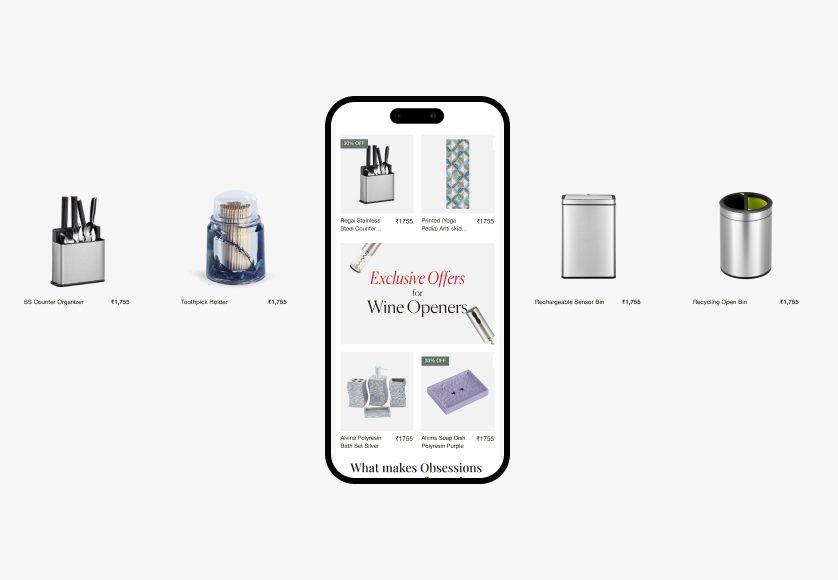
Ecommerce design example: Obsessions
For Obsessions, the ecommerce experience was designed around product discovery while maintaining the brand’s connection to interiors and everyday living. Instead of presenting the website as a basic product catalogue, the experience gives customers more opportunities to explore products visually and understand how they can fit into their spaces.
Explore the Obsessions ecommerce project
The takeaway for business owners is straightforward:
Don’t just show customers what you sell. Help them imagine owning it.
5. Let Your Hero Product Lead the Experience
If one product is central to your business, don’t make customers search for it.
A hero product can become the anchor of your homepage, product storytelling and conversion journey. Instead of presenting visitors with too many choices immediately, guide them through the product’s value, benefits and reasons to buy.
This approach works especially well for new D2C brands launching with a flagship product.
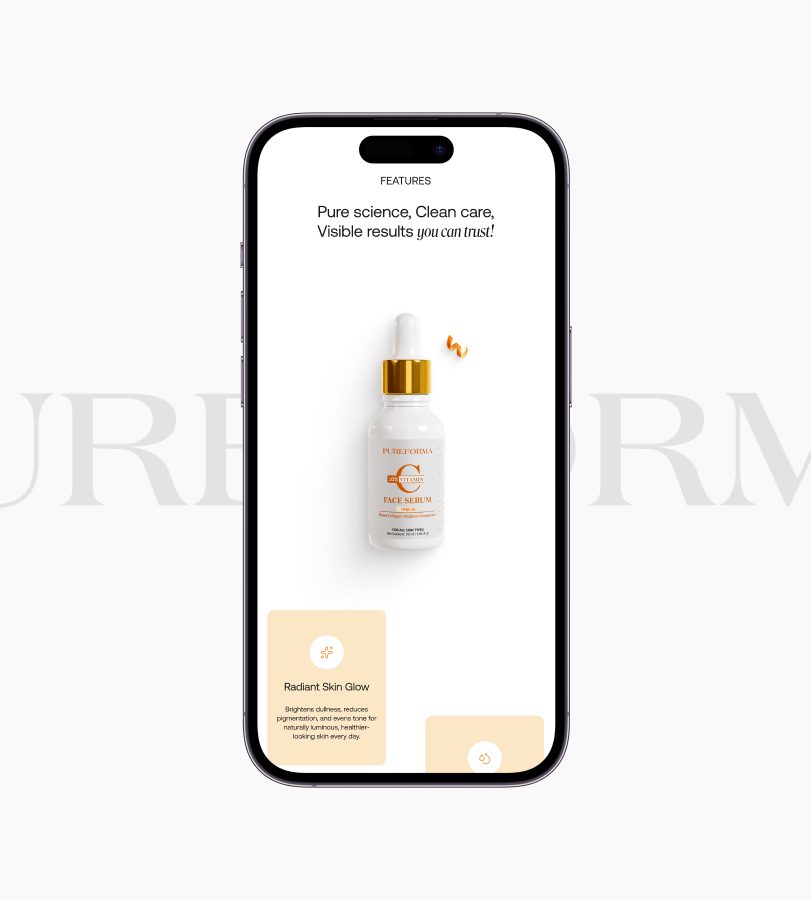
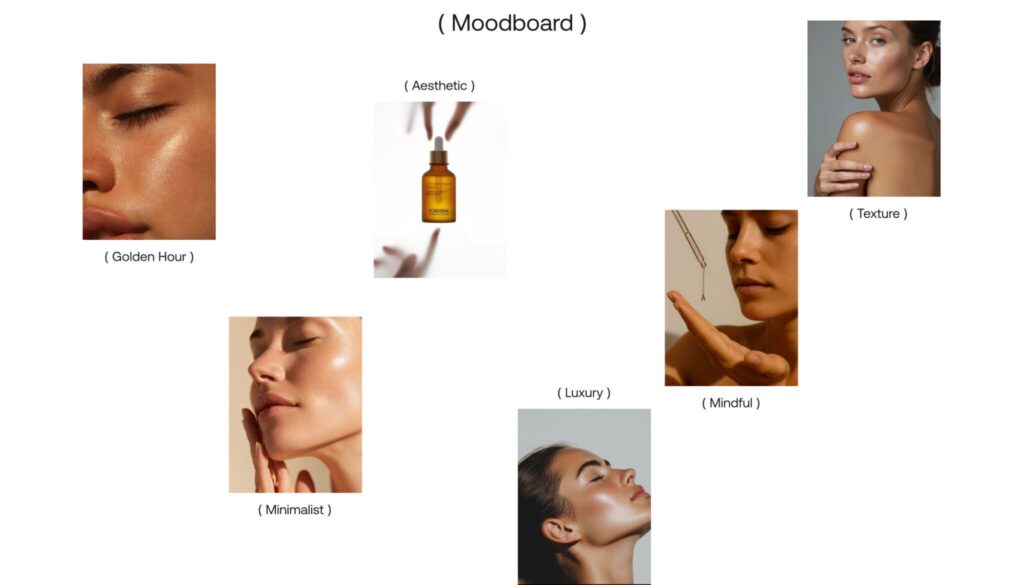
Ecommerce design example: Pureforma
Pureforma launched around a Vitamin C serum, so its ecommerce website needed to do more than display the product. The experience had to introduce the brand, explain the product and build confidence around the purchase.
The design uses focused layouts, visual storytelling and interaction to make the product the centre of the experience.
Explore the Pureforma ecommerce project
For business owners, the lesson is valuable:
If you have a product worth talking about, give it the space to tell its story.
6. Design for Mobile From the Start
Mobile ecommerce is not simply desktop ecommerce made smaller.
Navigation, product imagery, buttons, filters, forms and checkout all need to work comfortably on a smaller screen. Customers should be able to browse, compare, add to cart and purchase without fighting the interface.
A mobile-first approach also forces businesses to prioritise what matters most.
Keep important information accessible. Make interactions easy to tap. Reduce unnecessary content and keep the buying journey focused.
Your mobile website should feel intentionally designed, not like an afterthought.
If the mobile experience is difficult, customers don’t have to complain. They can simply leave.
7. Build Trust Into the Design
A customer who has never heard of your brand has a reason to hesitate.
Your ecommerce website should address that hesitation through visible proof. Reviews, testimonials, product information, return policies, shipping details, certifications and secure payment options can all help reduce uncertainty.
Trust should not appear only at checkout. It should be built throughout the customer journey.
For newer ecommerce brands, this is particularly important. Your website may be the first serious interaction a potential customer has with your business, so every detail contributes to whether the brand feels credible.
Good ecommerce design doesn’t just make customers interested.
It gives them reasons to believe.
8. Keep Checkout Simple
The closer customers get to purchasing, the less friction you should create.
Avoid unnecessary fields, confusing navigation and unexpected costs. Make pricing clear, provide relevant payment methods and give customers a straightforward path from cart to confirmation.
Your website has already done the hard work of creating interest. Don’t lose the sale because checkout makes buying difficult.
A useful principle is:
Create excitement before checkout. Remove friction during checkout.
9. Make Your Brand Impossible to Confuse
Many ecommerce websites follow the same formula: navigation, hero banner, product grid, promotional strip and footer.
It may be functional, but functionality alone does not make a brand memorable.
Your ecommerce website should feel like an extension of your brand. Typography, photography, colour, layouts, interactions and content should work together to create a recognisable digital experience.
This is especially important in crowded ecommerce categories where customers have dozens of alternatives.
The goal isn’t to make the website complicated or unusual for the sake of being different.
It is to make the experience distinctive without sacrificing usability.
10. Design for Business Growth, Not Just Launch Day
An ecommerce website should be built to evolve with your business.
As you grow, you may add products, enter new markets, launch campaigns, introduce subscriptions or expand your customer base. Your website needs enough flexibility to support those changes without requiring a complete redesign every time.
Before launching, ask:
- Can we add new products easily?
- Can customers still discover products as the catalogue grows?
- Can we create campaign landing pages?
- Can the website support new markets?
- Can we improve the experience using analytics?
- Can the platform scale with our business?
Great ecommerce website design considers both today’s customer and tomorrow’s business.
What Makes an Ecommerce Website Design Successful?
There is no single ecommerce website layout that works for every business.
A beauty brand with one hero product may need a storytelling-led experience. A home décor business with hundreds of products may need stronger discovery and filtering. A fashion store may prioritise imagery, collections and mobile browsing.
The right approach depends on four things:
Products + Customers + Brand + Business Goals
That is why copying another ecommerce website rarely produces the same results.
Take inspiration from other brands, but build the experience around how your customers discover, evaluate and purchase your products.
Ecommerce Website Design Checklist
Before launching or redesigning your online store, ask:
| Area | What to check |
|---|---|
| Homepage | Is the value proposition immediately clear? |
| Navigation | Can customers find products quickly? |
| Product pages | Do they answer key purchase questions? |
| Visuals | Do images communicate the product effectively? |
| Mobile | Is the complete shopping journey easy on mobile? |
| Trust | Do customers have enough reasons to believe the brand? |
| Checkout | Is the purchase process simple and transparent? |
| Branding | Does the website feel distinctive? |
| Performance | Does the site remain fast and responsive? |
| Scalability | Can the website grow with the business? |
Final Thoughts
Great ecommerce website design isn’t about adding more features or following every new design trend.
It is about removing uncertainty, making products easier to discover and giving customers enough confidence to buy.
The best e commerce website design ideas connect design decisions to business outcomes. They help a customer discover a product faster, understand its value, trust the brand and complete the purchase with less friction.
Whether you are building a new D2C store or redesigning an established ecommerce website, start with one question:
What does my customer need to feel confident enough to buy?
Build the experience around that answer, and your website has a much better chance of becoming a genuine growth channel rather than just another attractive online store.
Building an Ecommerce Website That Does More Than Look Good?
Your ecommerce website should make it easier for customers to discover your products, trust your brand and complete a purchase.
At Wings, we bring strategy, UX, UI and ecommerce development together to create digital shopping experiences built around real business goals.
Have an ecommerce idea in mind? Let’s talk.

Mugesh Kanna
Junior Web developer