


What Is Branding?
Branding is the process of creating a unique identity, image, and emotional connection between a company and its customers. It represents how people recognize, remember, and feel about a business. A brand is not only a company name, logo, or product; it is the overall perception that customers develop through their experiences, interactions, and opinions.

Explore the Branding behind the Shivam.
Importance of Branding
Branding plays a major role in business success. It helps companies create recognition, attract customers, and build long-term relationships. A strong brand can:
- Create Recognition: A consistent brand identity helps customers easily identify a company among competitors.
- Build Trust: Professional branding creates confidence and shows customers that a company is reliable.
- Increase Customer Loyalty: Customers are more likely to return to brands they trust and feel connected to.
- Create Competitive Advantage: Strong branding helps a company stand out in a crowded marketplace.
- Support Business Growth: A powerful brand can attract new customers, partnerships, and opportunities.
Key Elements of Branding
01. Brand Identity
Brand identity is how a company presents itself to the world. It includes elements such as the logo, colours, typography, packaging, website design, visual style, and brand voice. A strong identity helps customers easily recognize the brand and distinguish it from competitors. It creates a unique image and builds familiarity in the minds of customers.
02. Brand Purpose
Brand purpose explains the reason a company exists beyond earning money. It focuses on the problems the company solves, the values it represents, and the positive impact it aims to create. A clear purpose helps customers connect emotionally with the brand and understand its mission.
03. Brand Personality
Brand personality gives human qualities to a brand and influences how customers relate to it. A brand may be friendly, professional, innovative, premium, affordable, fun, or reliable. A clear personality makes the brand more relatable and helps customers understand what kind of experience they can expect.
04. Brand Positioning
Brand positioning refers to the place a brand occupies in the customer’s mind compared to competitors. It highlights the unique qualities and benefits that make the brand different. Positioning can be based on factors such as quality, price, innovation, convenience, or sustainability, helping customers choose the brand over others.
05. Brand Values
Brand values are the principles and beliefs that guide a company’s actions and decisions. Values such as trust, honesty, quality, creativity, responsibility, and customer satisfaction shape how a brand operates. Strong values create customer confidence and help develop long-term loyalty.
06. Brand Experience
Brand experience includes every interaction customers have with a company, including product usage, customer service, website experience, advertising, packaging, and social media communication. A positive experience improves customer satisfaction and strengthens the relationship between the customer and the brand.
07. Brand Consistency
Brand consistency means maintaining the same identity, message, and quality across all platforms and customer interactions. Consistent branding helps customers recognize the company easily and builds trust because they know what to expect from the brand.
08. Brand Loyalty
Brand loyalty occurs when customers repeatedly choose a brand because of trust, satisfaction, and positive experiences. Loyal customers often recommend the brand to others and develop an emotional connection with it. Strong loyalty helps a company maintain long-term success and growth.
What Is Marketing?
Marketing is the process of identifying customer needs, promoting products or services, and creating value for customers. It helps businesses communicate with their target audience, increase awareness, attract customers, and achieve business goals. Marketing is not only about selling products; it focuses on understanding customer expectations and building long-term relationships.
Importance of Marketing
Marketing plays an important role in business success. It helps companies understand customers, promote their offerings, and build strong relationships. Effective marketing can:
Create Awareness: Marketing helps customers learn about a company’s products, services, and benefits.
Attract Customers: Promotional activities help businesses reach potential customers and encourage them to make purchasing decisions.
Build Trust: Consistent communication and positive customer experiences create confidence in a company.
Increase Sales: Marketing strategies help businesses promote products and increase revenue.
Create Competitive Advantage: Effective marketing helps a company stand out from competitors and highlight its unique benefits.
Support Business Growth: Strong marketing attracts new customers, improves customer retention, and expands business opportunities.
Key Elements of Marketing
01. Market Research
Market research helps companies understand customer needs, preferences, buying behaviour, competitors, and market trends. It involves collecting and analyzing information to identify what customers want and how they make purchasing decisions. Market research helps businesses create better products, reduce risks, and develop effective marketing strategies.
02. Product Strategy
Product strategy focuses on planning, developing, and improving products or services to meet customer expectations. It includes decisions related to product design, features, quality, packaging, and benefits. A strong product strategy helps businesses create value, satisfy customers, and differentiate themselves from competitors.
03. Pricing Strategy
Pricing strategy determines the amount customers pay for a product or service. Businesses choose pricing methods based on customer needs, competition, product value, and business goals. Common pricing strategies include affordable pricing, premium pricing, value-based pricing, and luxury pricing. The right pricing strategy helps attract customers and increase profitability.
04. Promotion
Promotion includes activities used to communicate with customers and increase awareness of products or services. It helps businesses share information, attract potential customers, and encourage purchases. Promotion methods include advertising, social media campaigns, influencer marketing, events, content marketing, and public relations. Effective promotion improves brand visibility and builds customer relationships.

Explore the Branding behind the Diamensions.
Branding vs Marketing: The Core Difference
| Aspect | Branding | Marketing |
|---|---|---|
| Definition | Creating a unique identity, image, and emotional connection with customers. | Promoting products or services to reach and attract customers. |
| Primary Purpose | To give customers a reason to choose and trust your business. | To help customers discover your business and encourage purchases. |
| Simple Difference | Branding is the reason customers choose you. | Marketing is how customers discover you. |
| Focus | Identity, values, personality, reputation, and customer experience. | Promotion, communication, advertising, and customer acquisition. |
| Key Questions Answered | Who are we? What do we represent? Why should customers trust us? | How do we reach customers? How do we create awareness? How do we encourage people to buy? |
| Main Activities | Defining brand values, mission, visual identity, messaging, and customer experience. | Advertising, social media, content marketing, email campaigns, sales promotions, and public relations. |
| Goal | Build long-term relationships, trust, and customer loyalty. | Generate awareness, attract customers, and increase sales. |
| Customer Impact | Shapes how customers perceive and feel about the company. | Encourages customers to engage with and purchase from the company. |
| Time Horizon | Long-term strategy focused on lasting reputation. | Short- to medium-term strategy focused on customer acquisition and revenue growth. |
| Outcome | Strong brand recognition, loyalty, and emotional connection. | Increased visibility, leads, conversions, and sales. |
| Relationship Between Them | Provides the foundation and identity for the business. | Communicates the brand’s identity and delivers it to the target audience. |
| Business Success | Creates a lasting connection with customers. | Drives business growth by attracting and converting customers. |
Branding Focuses on Long-Term Identity
- Branding is the process of shaping how a company is perceived over time.
It creates a unique identity that distinguishes a business from its competitors. Rather than focusing only on products or services, branding builds a lasting impression in the minds of customers and influences how they think and feel about the company. - Branding defines what the business stands for.
It represents the company’s mission, vision, values, personality, and purpose. These elements help customers understand the company’s beliefs, goals, and the value it offers beyond its products. - Branding answers important questions, such as:
- Who are we as a company?
- What values and principles do we represent?
- What makes us different from competitors?
- Why should customers trust and choose us?
These questions help establish a clear brand identity and communicate it consistently to customers.
- Branding builds recognition and trust.
A strong brand enables customers to recognize a company instantly through its name, logo, colors, messaging, and overall presentation. Consistent branding builds trust by delivering reliable products, services, and customer experiences. - Branding creates customer loyalty and emotional connections.
Customers are more likely to remain loyal to brands they trust and relate to emotionally. Positive experiences and shared values encourage repeat purchases and long-term relationships. - Branding strengthens a company’s reputation.
A well-established brand is associated with quality, reliability, and credibility. A strong reputation increases customer confidence and provides a competitive advantage in the marketplace. - Key elements of branding include:
- Company name
- Logo and visual identity
- Brand colors and typography
- Brand values and mission
- Brand voice and communication style
- Customer service and overall customer experience
- Product and service quality
- Company culture and reputation
- Branding is a long-term investment.
Building a successful brand takes time, consistency, and continuous effort. Every customer interaction contributes to shaping the brand’s image and strengthening its relationship with customers.
Marketing Focuses on Customer Reach and Action
- Marketing is the process of promoting products and services to target customers.
It helps businesses communicate their offerings to the right audience and encourages customers to take actions such as making a purchase, requesting information, or engaging with the brand. - Marketing connects businesses with their target market.
It identifies customer needs, preferences, and behaviors to deliver the right message through the most effective communication channels. - Marketing focuses on creating awareness.
One of its primary objectives is to introduce customers to a company’s products, services, or brand. Increased awareness helps businesses reach new audiences and expand their customer base. - Marketing generates customer interest.
By highlighting product features, benefits, and unique selling points, marketing encourages potential customers to learn more about the business and consider its offerings. - Marketing influences purchasing decisions.
Through persuasive communication, promotional campaigns, and attractive offers, marketing motivates customers to choose one product or service over competing alternatives. - Marketing drives customer action and business growth.
Successful marketing campaigns generate leads, increase sales, improve customer engagement, and contribute to higher revenue and market share. - Common marketing activities include:
- Advertising through television, radio, newspapers, and digital media
- Social media marketing
- Content marketing such as blogs, videos, and articles
- Email marketing campaigns
- Search engine optimization (SEO)
- Pay-per-click (PPC) advertising
- Product launches
- Sales promotions and discounts
- Public relations and events
- Influencer and affiliate marketing
- Marketing measures performance using business metrics.
Businesses evaluate marketing effectiveness through website traffic, customer engagement, lead generation, conversion rates, sales growth, and return on investment (ROI). - Marketing combines both short-term and long-term strategies.
Some campaigns are designed to generate immediate sales, while others focus on building customer relationships and supporting long-term business growth.
Branding Is Strategic, Marketing Is Tactical
- Branding is strategic, while marketing is tactical.
- Branding focuses on long-term business direction and identity.
- Marketing focuses on implementing strategies through specific actions and campaigns.
- Branding defines the long-term direction of a company.
- Shapes the company’s identity and market position.
- Builds reputation and customer perception over time.
- Establishes the company’s core values and purpose.
- Branding answers key strategic questions:
- Who are we?
- What do we stand for?
- How do we want customers to perceive us?
- What promise do we make to customers?
- What makes us different from competitors?
- Branding creates the foundation for business success.
- Builds trust and credibility.
- Creates customer loyalty.
- Strengthens emotional connections.
- Supports consistent business decisions.
- Example of branding:
- A company decides, “We want customers to see us as the most trusted healthcare provider.”
- This is a branding decision because it defines the company’s long-term identity and reputation.
Marketing Is Tactical and Action-Oriented
- Marketing converts brand strategy into action.
- Promotes products and services.
- Reaches target customers.
- Encourages immediate customer responses.
- Marketing focuses on execution and measurable results.
- Creates awareness.
- Generates customer interest.
- Increases leads and sales.
- Improves customer engagement.
- Marketing answers key tactical questions:
- How do we reach customers?
- Which marketing channels should we use?
- What message should we communicate?
- How can we encourage customers to take action?
- Common marketing activities include:
- Advertising
- Social media campaigns
- Email marketing
- Content marketing
- Product launches
- Sales promotions
- Public relations
- Example of marketing:
- A campaign stating “Book your health check-up today” is a marketing activity because it encourages customers to take immediate action and supports business growth.
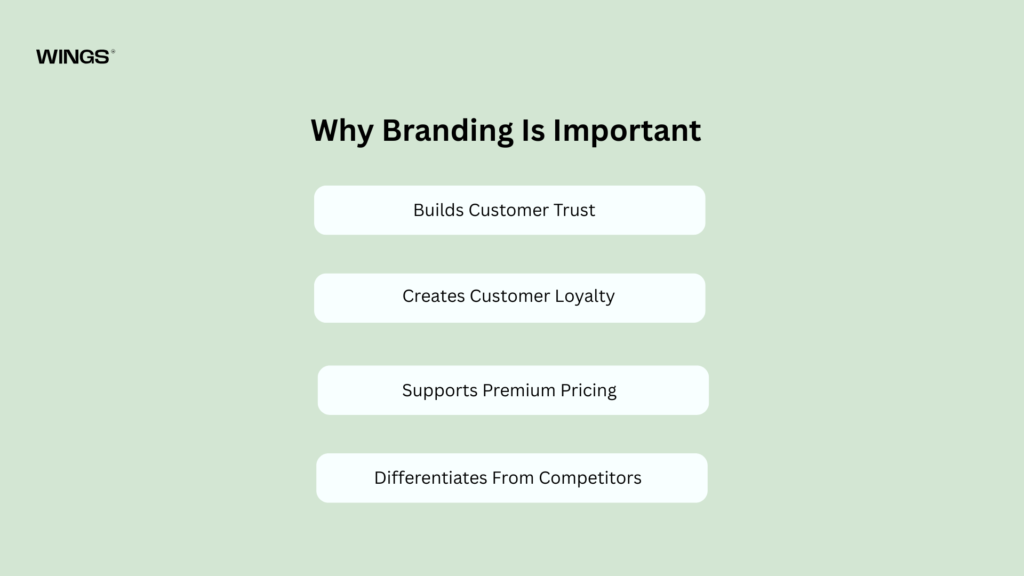
Why Branding Is Important
Branding is essential for business success because it helps companies build a strong identity, develop meaningful relationships with customers, and stand out in competitive markets. A powerful brand influences how people think, feel, and behave toward a business.
01. Builds Customer Trust
Branding plays a major role in creating trust between a business and its customers. People are more likely to choose companies they recognize and feel confident about. A strong brand reduces uncertainty and makes customers feel safe when making a purchase decision.
Trust is especially important in industries such as healthcare, finance, education, and technology, where customers need assurance of quality and reliability. A trusted brand gives customers confidence that they are making the right choice.
02. Creates Customer Loyalty
Branding helps build long-term relationships with customers. While marketing may bring a customer for a single purchase, branding encourages them to stay connected with the business over time.
Loyal customers are more likely to:
- Continue buying from the same brand
- Recommend the brand to others
- Forgive small mistakes
- Prefer the brand over competitors
Strong branding creates emotional connections, which turn regular customers into loyal supporters.
03. Supports Premium Pricing
A strong brand allows businesses to charge higher prices because customers perceive greater value in the product or service. People do not always choose the cheapest option; they often choose brands they trust and believe offer better quality.
Customers are willing to pay more for:
- Quality
- Reliability
- Experience
- Confidence
- Status
This shows that branding directly increases a company’s value in the market.
04. Differentiates From Competitors
In competitive markets, many businesses offer similar products or services. Branding helps a company stand out and occupy a unique place in the customer’s mind.
Even when products are similar, customers may prefer one brand because of:
- Strong reputation
- Better customer experience
- Shared values
- Emotional connection
Branding creates identity and meaning, making a business more memorable than its competitors.
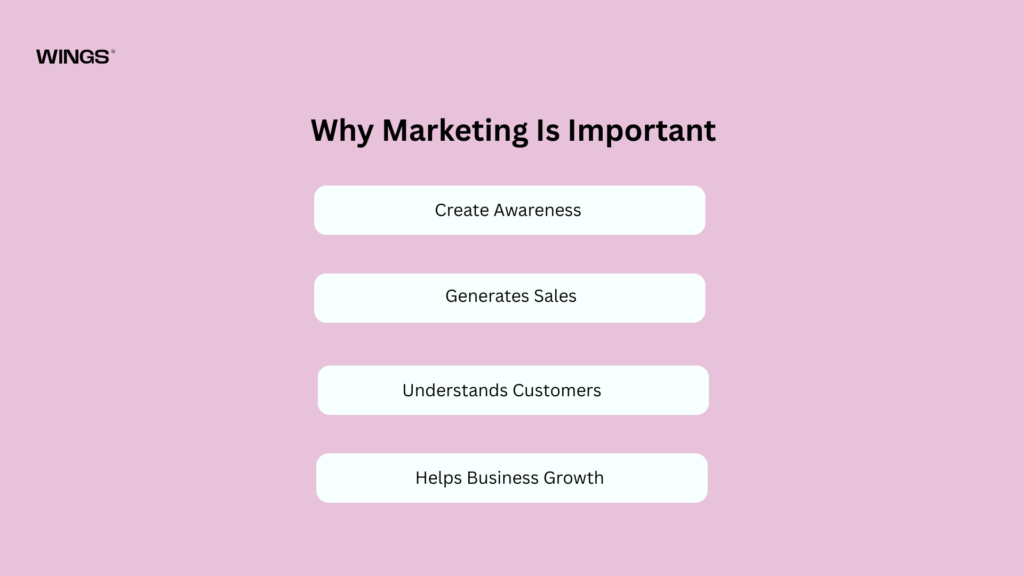
Why Marketing Is Important
Marketing plays a crucial role in helping businesses connect with customers, build awareness, and achieve sustainable growth. Without marketing, even the best products or services may go unnoticed.
01. Creates Awareness
A business cannot succeed if customers do not know about its products or services. Marketing helps spread information and introduce a brand to potential customers.
It ensures that people understand what the business offers and why it is valuable.
Examples of awareness-building activities include:
- Advertising campaigns
- Social media presence
- Content creation (blogs, videos, posts)
- Public relations activities
Through these methods, marketing makes sure the right audience becomes aware of the brand.
02. Generates Sales
Marketing plays a direct role in converting interest into actual sales. It encourages customers to take action, such as buying a product or using a service.
It helps guide customers through the buying journey, from awareness to decision-making.
Examples of actions driven by marketing:
- Website visits
- Product purchases
- Customer enquiries
- App downloads
- Subscriptions or sign-ups
Effective marketing increases conversion rates and helps businesses grow revenue.
03. Understands Customers
Marketing is not just about promotion; it is also about understanding customers. It helps businesses gather valuable information about customer needs, preferences, and behaviour.
This information allows companies to:
- Improve product quality
- Enhance customer experience
- Develop better communication strategies
- Make informed business decisions
By understanding customers, businesses can offer more relevant and effective solutions.
04. Helps Business Growth
Marketing supports long-term business growth by expanding reach and improving performance in competitive markets.
It helps companies:
- Enter new markets
- Attract new customers
- Build stronger customer relationships
- Increase brand visibility
- Improve revenue and profitability
Strong marketing strategies ensure that businesses continue to grow and stay competitive over time.
Relationship Between Branding and Marketing
- Branding comes first, and marketing follows.
A business must first establish its identity, values, and positioning through branding before developing marketing campaigns. - Branding provides the strategic direction for marketing.
It determines the company’s message, personality, and promise, ensuring that all marketing activities remain consistent with the brand identity. - Marketing communicates the brand to customers.
It uses various communication channels and promotional techniques to make customers aware of the brand, its products, and its value proposition. - Branding focuses on long-term identity, while marketing focuses on short-term execution.
Branding builds trust, loyalty, and reputation over time, whereas marketing creates awareness, generates leads, encourages purchases, and delivers measurable business results. - Both branding and marketing are essential for business success.
Branding creates a strong foundation that differentiates the company from competitors, while marketing ensures that the right audience discovers the brand and responds to its offerings. Together, they help businesses build lasting customer relationships, increase market presence, and achieve sustainable growth.
Branding vs Marketing
Branding
- Branding is about creating identity and perception
- It defines who the company is
- It builds long-term image and reputation
- It focuses on trust, loyalty, and emotional connection
- It includes logo, values, brand voice, and customer experience
- Branding is consistent and long-term
- It makes people remember and recognize the company
Marketing
- Marketing is about promotion and communication
- It focuses on how to reach customers
- It creates awareness and interest
- It helps in selling products or services
- It includes advertising, social media, campaigns, and promotions
- Marketing is short-term and action-focused
- It makes people notice and respond to the company

Explore the Branding behind the Blyp.
Common Mistakes Businesses Make in Branding and Marketing
01. Confusing Marketing with Branding
Many businesses treat marketing and branding as the same thing, but they are fundamentally different. Marketing is focused on driving attention, traffic, and conversions in the short term, while branding is about shaping how people perceive the business over time. When companies only run ads and promotions without defining a clear identity, they may gain visibility but fail to build recognition or trust. As a result, customers might know the business exists but still not understand what it truly stands for.
02. Inconsistent Brand Messaging
A common mistake is delivering mixed messages across different channels. A brand might sound formal on its website, casual on social media, and overly promotional in advertisements. This inconsistency confuses customers and weakens trust because people expect a single, clear identity. Since customers experience the brand as one continuous presence, even small differences in tone, promises, or visuals can make the brand feel unreliable.
03. Focusing Only on Customer Acquisition
Many businesses invest heavily in acquiring new customers but neglect existing ones. They spend on ads, discounts, and lead generation while ignoring retention strategies like customer support, loyalty programs, and post-purchase engagement. This creates a “leaky bucket” effect where new customers keep coming in but existing ones leave just as quickly, preventing long-term growth.
04. Weak or Unclear Positioning
Some brands fail because they do not clearly define what makes them different. When a business tries to appeal to everyone, its message becomes too generic and forgettable. Without strong positioning, customers cannot easily understand why they should choose one brand over another. Successful brands are remembered for a specific strength or identity, not for trying to be average in everything.
05. Overdependence on Trends
Chasing trends without a long-term strategy is another major mistake. Businesses often jump onto viral content styles, platforms, or campaigns just to stay relevant, but this rarely builds a strong brand identity. While trends may bring temporary attention, they do not create lasting value if they are not aligned with a consistent brand direction.
06. Ignoring Customer Psychology
Many marketing strategies focus too much on what the company wants to say rather than what the customer actually feels or needs. Businesses often overlook emotional drivers like trust, fear, aspiration, or convenience, which heavily influence buying decisions. Without understanding customer psychology, even well-designed campaigns can fail to connect or convert effectively.
07. Lack of a Strong Brand Story
A brand without a clear story often feels like just a collection of products or services. Many businesses focus only on features and pricing while ignoring the deeper purpose behind their existence. A strong brand story helps customers emotionally connect with the business by explaining its mission, values, and reason for being, making it more memorable and meaningful.
08. Poor Use of Data
Some businesses either ignore data completely or misuse it by focusing on the wrong metrics. Instead of analyzing meaningful insights like customer behavior, retention, and lifetime value, they often track vanity metrics such as likes or impressions. Without proper data interpretation, businesses struggle to make informed decisions and end up optimizing for short-term visibility rather than long-term growth.
09. Treating All Platforms the Same
Another mistake is using the same content and strategy across all marketing channels without adapting to their unique purpose. For example, what works on Instagram may not work on LinkedIn, and email marketing requires a different approach altogether. Each platform has different user expectations, and failing to adjust messaging reduces engagement and effectiveness.
10. Misalignment Within the Organization
A brand is not only shaped by marketing but by every part of the organization, including sales, product, and customer support. When internal teams are not aligned with the brand promise, customers experience inconsistency. For example, if marketing promises premium service but support delivers a poor experience, trust is quickly lost.
11. Measuring the Wrong Metrics
Many businesses focus on surface-level metrics like likes, followers, or clicks, which do not necessarily reflect real business growth. These vanity metrics can create the illusion of success while hiding deeper issues like poor retention or low customer satisfaction. Strong marketing focuses on meaningful indicators such as customer lifetime value, retention rate, and repeat purchases.
12. Lack of Long-Term Brand Thinking
One of the biggest mistakes is focusing too much on short-term campaigns instead of long-term brand building. Businesses often prioritize immediate sales over building trust and recognition over time. However, strong brands are built through consistency,repetition, and long-term value creation, not just one-time marketing efforts.

Explore the Branding behind the Blyp.
Future of Branding and Marketing
01. From Campaigns to Continuous Brand Systems
The future of branding and marketing is moving away from short-term campaigns toward always-on brand systems. Instead of launching isolated ads or seasonal campaigns, brands will operate as continuous ecosystems of content, experiences, and interactions. Every touchpoint, social media, product usage, customer support, and even packaging, will function as part of an ongoing brand narrative that evolves in real time.
02. AI-Driven Personalization at Scale
Artificial intelligence will reshape how brands communicate with individuals. Marketing will no longer rely on one message for a mass audience but on dynamically generated content tailored to each user’s behavior, preferences, and intent. This means two customers may see completely different versions of the same brand experience. The challenge will be maintaining consistency while delivering deep personalization.
03. Rise of Experience-Based Branding
Brands will be judged less by what they say and more by what they make people feel during actual interactions. Product experience, onboarding, customer support, and usability will become central to branding. In many cases, the product itself will become the primary marketing channel, reducing the gap between marketing promise and real-world delivery.
04. Community as the Core Growth Engine
The future of marketing is shifting from audience building to community building. Instead of broadcasting messages to passive consumers, brands will cultivate active communities where customers interact with each other. These communities will influence product development, shape brand perception, and even act as marketing channels themselves through user-generated content and advocacy.
05. Data-Led but Human-Centered Decision Making
While data will become more advanced and real-time, successful brands will not rely on data alone. The future belongs to companies that combine analytics with strong human insight. Understanding psychology, emotion, and cultural context will remain essential, because data can show what is happening, but not always why it is happening.
06. Brand Trust Becomes the Main Currency
In an environment of information overload and AI-generated content, trust will become the most valuable brand asset. Customers will gravitate toward brands that are transparent, consistent, and ethically responsible. Any gap between promise and delivery will be amplified quickly through digital platforms, making trust management a core function of brand strategy.
07. Content Will Become Infinite but Attention Scarce
As AI makes content creation faster and cheaper, the internet will be flooded with marketing material. This will make attention even more limited and valuable. Brands will need to focus less on producing more content and more on creating meaningful, distinctive, and emotionally resonant content that stands out in a saturated environment.
08. From Brand Control to Brand Facilitation
Traditional branding focused on controlling messaging tightly. In the future, brands will have less control over how they are perceived because customers, communities, and AI-generated content will shape narratives. The role of marketers will shift toward facilitating and guiding brand perception rather than strictly controlling it.
09. Integration of Physical and Digital Experiences
The boundary between offline and online branding will continue to disappear. Retail spaces, digital platforms, mobile apps, and even augmented reality experiences will merge into a single connected journey. Customers will expect seamless transitions between physical and digital interactions without any break in brand identity or experience.
10. Marketers as System Thinkers and Relationship Designers
Future marketers will not just create ads; they will design entire systems of interaction. Their role will combine psychology, data interpretation, storytelling, technology, and community management. Instead of focusing only on acquisition, they will focus on long-term relationships, loyalty, and lifetime value.
Conclusion
Branding and marketing are both essential for business success but serve different purposes. Branding creates a company’s identity, builds trust, and develops long-term customer loyalty, while marketing creates awareness, attracts customers, and drives sales. A strong brand makes marketing more effective by giving customers confidence in the business. Successful companies combine branding and marketing to build lasting customer relationships and achieve sustainable growth. In simple terms, branding creates the promise, and marketing delivers the message.

Akshita Shivani Sundar
Senior Graphic Designer