


In a highly competitive business environment, branding is no longer a luxury, it is a necessity. Customers are exposed to countless brands every day through websites, advertisements, social media, emails, mobile applications, packaging, and physical stores. Amid this constant noise, businesses must do more than simply sell products or services. They must create memorable experiences, establish trust, and build meaningful relationships with their audiences.
However, despite the growing importance of branding, many organizations still misunderstand one of its most fundamental concepts: the difference between visual identity and brand identity. These terms are often used interchangeably, leading many businesses to focus heavily on logos, colors, and design elements while overlooking the strategic foundation that truly defines their brand.
A visually appealing logo may help a company gain attention, but it cannot communicate purpose, values, or personality on its own. Likewise, a business may have a strong mission and compelling values, but without a recognizable visual presence, it may struggle to stand out in the marketplace.
Successful brands understand that brand identity and visual identity are not the same thing. Rather, they are two interconnected elements that work together to shape customer perceptions and experiences. Brand identity defines who a company is, while visual identity determines how that company presents itself visually to the world.
Understanding this distinction is essential for business owners, marketers, designers, and entrepreneurs seeking to build brands that resonate with customers and create lasting impact.
Understanding Brand Identity
Brand identity is the complete personality, character, and essence of a business. It represents what a company stands for, what it believes in, and how it wants to be perceived by its audience.
Unlike logos or visual assets, brand identity is not something customers can immediately see. Instead, it is something they experience through interactions, communications, products, services, and company behavior.
At its core, brand identity answers critical questions:
- Why does the company exist?
- What problems does it solve?
- What values guide its decisions?
- What makes it unique?
- How should customers feel when interacting with it?
The answers to these questions form the foundation of every branding decision.
A strong brand identity creates consistency throughout an organization. It influences everything from marketing campaigns and product development to customer service and company culture. It acts as a strategic framework that ensures every touchpoint reflects the same values and personality.
Modern consumers increasingly support brands that align with their beliefs and lifestyles. They are not simply purchasing products; they are buying into experiences, communities, and values.
As a result, businesses with clearly defined brand identities often develop stronger customer relationships, higher loyalty, and greater long-term success.
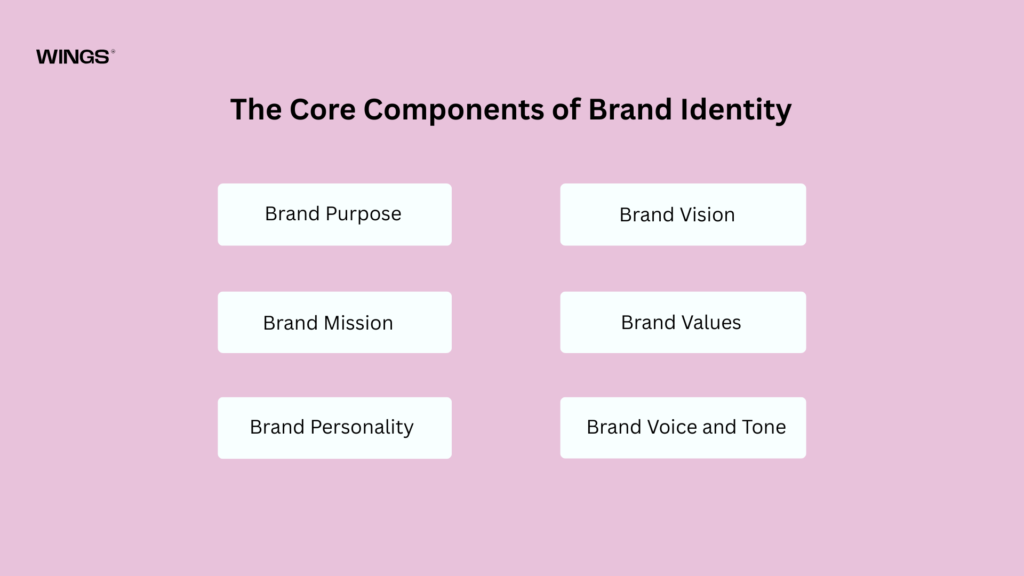
The Core Components of Brand Identity
Brand identity consists of several strategic elements that work together to define the organization.
Brand Purpose
Vision represents the future a company hopes to create and serves as a statement of its long-term aspirations. It provides a clear picture of what the organization aims to achieve over time, helping stakeholders understand the company’s desired direction and ultimate goals.
A compelling vision inspires and motivates employees by giving them a shared sense of purpose and direction. It also attracts customers, investors, and partners by communicating the company’s ambition and commitment to growth, innovation, and positive impact. A strong vision guides strategic decision-making and helps ensure that all efforts contribute to achieving future success.
Brand Mission
Brand mission describes how a company intends to achieve its vision. It defines the organization’s core purpose by outlining what it does, who it serves, and how it delivers value to customers. The mission focuses on the company’s present activities and serves as a guide for daily operations and decision-making.
A strong mission provides clarity and direction for employees, helping them align their efforts with organizational goals. It also communicates the company’s purpose and commitment to customers, partners, and other stakeholders, creating a clear understanding of how the business operates and creates value.
Brand Values
Brand Personality
Brand personality refers to the set of human characteristics and traits associated with a brand. Just like people, brands can be perceived as friendly, professional, sophisticated, adventurous, playful, innovative, or trustworthy. These traits help create a unique identity and differentiate the brand from its competitors.
A well-defined brand personality influences how the brand communicates and interacts with its audience across all touchpoints. It shapes customer perceptions, builds emotional connections, and creates a consistent experience that makes the brand more relatable, memorable, and appealing to its target market.
Brand Voice and Tone
Understanding Visual Identity
Visual identity is the collection of visual elements that communicate a brand’s personality and values. If brand identity is the soul of a business, visual identity is its face.
Visual identity translates abstract ideas into tangible experiences that customers can see, recognize, and remember. It includes everything that contributes to a brand’s visual appearance, such as:
- Logos
- Color palettes
- Typography
- Photography
- Illustrations
- Graphic elements
- Website design
- Packaging
- Marketing materials
Because humans process visual information rapidly, visual identity often creates the first impression customers have of a brand.A strong visual identity helps businesses stand out, reinforce their positioning, and build recognition.
However, visual identity is not merely about aesthetics. Effective design should reflect the brand’s underlying strategy, values, and personality. Without strategic alignment, visual identity becomes decoration rather than communication.
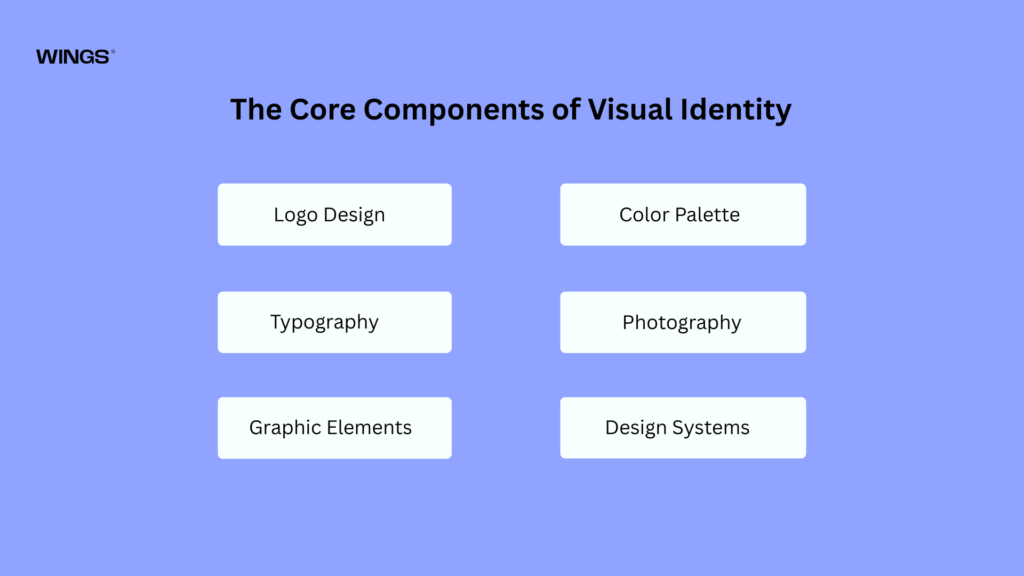
The Core Components of Visual Identity
A visual identity is the collection of visual elements that represent a brand and communicate its personality, values, and purpose. It creates a cohesive and recognizable appearance across all customer touchpoints, helping audiences instantly identify and connect with the brand. The key components of a visual identity work together to establish consistency, build trust, and strengthen brand recognition.
Logo Design
The logo is the cornerstone of a brand’s visual identity and serves as its primary visual symbol. It is often the first element people associate with a company, making it one of the most important assets in branding.
An effective logo should be:
- Memorable – Easy to recognize and recall.
- Simple – Clear, uncluttered, and easy to understand.
- Scalable – Effective at both small and large sizes.
- Relevant – Reflective of the brand’s personality, values, and industry.
- Timeless – Designed to remain effective and recognizable for years.
A well-designed logo communicates the essence of a brand while maintaining consistency across websites, packaging, advertising, social media, business cards, and other applications. It acts as a visual anchor that ties all branding elements together.
Color Palette
Color is one of the most powerful tools in visual identity because it influences emotions, perceptions, and decision-making. The colors a brand chooses can shape how customers feel about its products, services, and overall image.
Different colors commonly evoke different associations:
| Color | Common Associations |
| Blue | Trust, reliability, professionalism |
| Green | Sustainability, health, growth |
| Red | Energy, passion, excitement |
| Yellow | Optimism, creativity, friendliness |
| Black | Luxury, sophistication, authority |
| Purple | Innovation, creativity, premium quality |
A carefully selected color palette helps reinforce a brand’s personality and values. Consistent use of color across all communication materials strengthens recognition and creates a cohesive brand experience. For example, financial institutions often use blue to convey trust and stability, while environmentally focused organizations frequently use green to symbolize sustainability and growth.
Typography
Typography refers to the selection and use of typefaces, fonts, and text styles within a brand’s visual identity. Although often overlooked, typography plays a significant role in shaping how a brand is perceived.
Different typefaces communicate different characteristics:
- Serif Fonts – Often associated with tradition, credibility, professionalism, and trustworthiness.
- Sans-Serif Fonts – Convey modernity, simplicity, clarity, and accessibility.
- Script Fonts – Suggest elegance, creativity, sophistication, and personal expression.
- Display Fonts – Create uniqueness, personality, and visual impact when used strategically.
Consistent typography enhances readability, strengthens brand recognition, and contributes to a unified visual appearance across all platforms. A strong typographic system establishes clear hierarchies for headings, subheadings, and body text, improving both aesthetics and user experience.
Imagery and Photography
Visual content such as photography, illustrations, and graphic imagery helps brands tell stories, communicate emotions, and create deeper connections with their audiences.
The style of imagery used should align with the brand’s identity and target audience. For example:
- A luxury fashion brand may use polished, high-end editorial photography.
- A nonprofit organization may focus on authentic, human-centered images that emphasize impact and community.
- A technology company may use clean, futuristic visuals that highlight innovation.
- A travel brand may rely on vibrant, immersive photography that inspires exploration.
Consistency in image style, composition, color treatment, and subject matter helps create a recognizable visual language and strengthens emotional engagement with the brand.
Graphic Elements
Graphic elements are supporting visual components that enhance a brand’s identity and make it more distinctive. These elements may include:
- Icons
- Patterns
- Shapes
- Textures
- Illustrations
- Decorative motifs
- Visual frames and borders
While a logo serves as the primary identifier, graphic elements provide additional flexibility and visual interest across various brand materials. They help create a unique visual language that differentiates the brand from competitors and reinforces its personality.
For example, geometric patterns may communicate innovation and precision, while hand-drawn illustrations may emphasize creativity and authenticity.
Design Systems
A design system is a structured framework that defines how visual identity elements should be applied consistently across all brand touchpoints. It ensures that everyone involved in creating brand materials follows the same standards and guidelines.
Design systems typically include rules for:
- Layouts and spacing
- Typography usage
- Color application
- Photography style
- Iconography
- User interface components
- Logo placement and sizing
- Accessibility considerations
By establishing clear guidelines, design systems help maintain visual consistency across websites, mobile applications, advertisements, social media, packaging, presentations, and other communication channels.
Benefits of Design Systems
- Improve brand consistency.
- Increase efficiency in design and development processes.
- Strengthen brand recognition.
- Enhance user experience.
- Maintain professionalism across all customer interactions.

Explore the Branding behind the Diamensions.
Visual Identity vs Brand Identity: The Fundamental Difference
The easiest way to understand the difference is through a simple analogy. Imagine meeting a person for the first time.
Their clothing, hairstyle, and appearance represent their visual identity. Their beliefs, values, personality, and behavior represent their true identity.
Brands function in a similar way. Visual identity influences first impressions. Brand identity shapes long-term perceptions. The distinction can be summarized as follows:
| Brand Identity | Visual Identity |
| Defines who the brand is | Defines how the brand looks |
| Strategic and conceptual | Visual and tangible |
| Includes mission, vision, values, and personality | Includes logos, colors, typography, and imagery |
| Influences customer perception | Influences visual recognition |
| Guides business decisions | Guides design decisions |
| Creates emotional meaning | Creates visual consistency |
| Builds reputation | Builds recognition |
Brand identity exists beneath the surface. Visual identity exists on the surface. One provides meaning. The other provides visibility. Both are essential.
Why Businesses Often Confuse the Two
Many organizations mistakenly believe branding begins with design. When launching a business, leaders frequently focus on:
- Designing a logo
- Creating a website
- Selecting brand colors
- Developing marketing materials
While these activities are important, they represent only the visual layer of branding. The misconception occurs because visual identity is immediately visible. People can see logos and colors instantly. Brand identity, however, requires deeper strategic thinking and is less tangible. As a result, businesses often invest heavily in design without first establishing a clear purpose, positioning, or personality. This approach can lead to inconsistent branding, weak differentiation, and limited emotional connection with customers.
Why Brand Identity Should Come First
Strong brands are built from the inside out. Before creating visual assets, organizations should define:
- Purpose
- Mission
- Vision
- Values
- Target audience
- Personality
- Positioning
These strategic elements act as a blueprint for design decisions. Without a clear brand identity, visual design becomes subjective and disconnected from business goals. For example, a sustainability-focused company may choose earthy colors, organic shapes, and nature-inspired imagery because those elements align with its values. A luxury brand, on the other hand, may emphasize minimalist design, elegant typography, and premium visual experiences. When strategy comes first, visual identity becomes more meaningful and effective.
How Visual Identity Brings Brand Identity to Life
Visual identity serves as the bridge between strategy and perception. Without visual expression, brand identity remains abstract. Visual identity transforms ideas into experiences.
Communicating Personality
Design choices communicate personality immediately.
A playful brand may use:
- Bright colors
- Rounded typography
- Fun illustrations
A premium brand may use:
- Minimalist layouts
- Sophisticated color palettes
- Elegant typography
Visual elements help customers understand a brand before reading a single word.
Building Recognition
Humans naturally remember visuals more easily than text. Consistent use of logos, colors, and design systems strengthens memory and recognition. Recognition contributes to familiarity, and familiarity often leads to trust.
Supporting Brand Storytelling
Every visual element tells part of the brand’s story.
Design helps communicate:
- Values
- Positioning
- Quality
- Personality
- Customer promise
When visual identity aligns with brand identity, storytelling becomes more authentic and impactful.
The Role of Emotional Connection
Successful brands do more than attract attention. They create emotional connections.
Brand identity determines the emotions a company wants customers to experience. Visual identity helps evoke those emotions.
For example:
A healthcare brand may aim to inspire trust and reassurance.
Its visual identity might feature:
- Soft blue tones
- Clean layouts
- Professional imagery
A children’s toy company may seek to create excitement and joy.
Its visual identity might incorporate:
- Vibrant colors
- Playful illustrations
- Dynamic typography
These emotional responses influence purchasing decisions, loyalty, and advocacy.
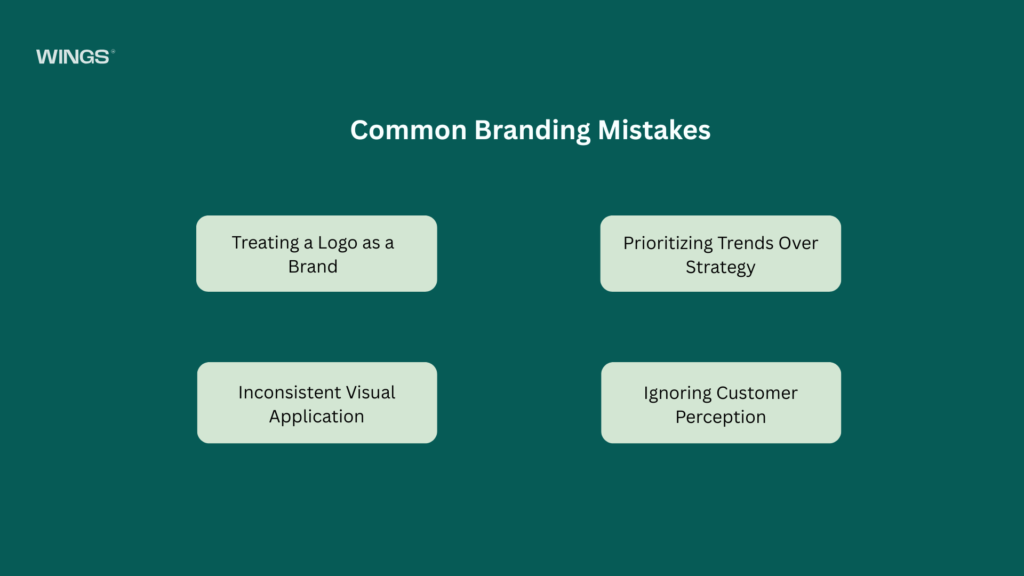
Common Branding Mistakes
Treating a Logo as a Brand

Explore the Branding behind the Shivam.
Building a Strong Brand Identity and Visual Identity
Creating a successful brand requires a balance of strategic planning and creative execution. While brand identity defines who a business is and what it stands for, visual identity translates those qualities into tangible design elements that customers can recognize and connect with.
Step 1: Define Brand Identity
The foundation of every strong brand begins with a clear understanding of its identity. Businesses should define their purpose, mission, vision, values, and personality to establish a consistent direction. These elements shape how the brand communicates, behaves, and connects with its audience. A well-defined identity provides a framework for all branding and marketing decisions.
Step 2: Understand Your Audience
Effective branding is built around a deep understanding of the target audience. Researching customer behaviors, needs, motivations, and expectations helps businesses create meaningful experiences and messages. By understanding what customers value, brands can develop stronger emotional connections and deliver solutions that resonate with their audience. Audience insights also guide visual and communication choices.
Step 3: Establish Market Positioning
Brand positioning defines how a business wants to be perceived in relation to its competitors. This involves identifying unique strengths, competitive advantages, and the specific value offered to customers. Clear positioning helps a brand stand out in crowded markets and creates a compelling reason for customers to choose it. A strong position strengthens both brand recognition and customer loyalty.
Step 4: Develop Visual Guidelines
Once the brand identity is established, visual elements should be designed to reflect its values and personality. This includes creating logos, color palettes, typography systems, imagery styles, and other design assets. Comprehensive visual guidelines ensure that all brand materials maintain a consistent look and feel. Well-crafted visuals help communicate professionalism, credibility, and brand character.
Step 5: Maintain Consistency
Consistency is critical for building trust and recognition over time. Brand elements should be applied uniformly across websites, social media platforms, packaging, advertising campaigns, and customer communications. Consistent presentation reinforces brand familiarity and makes the brand more memorable. It also ensures that customers receive a cohesive experience across every touchpoint.
Step 6: Evolve Strategically
Brands must adapt to changing markets, customer preferences, and business goals while remaining true to their core identity. Strategic evolution may involve refreshing visual elements, updating messaging, or modernizing brand experiences. However, these changes should support the brand’s long-term vision rather than follow temporary trends. Thoughtful evolution helps brands remain relevant while preserving the trust and recognition they have built over time.
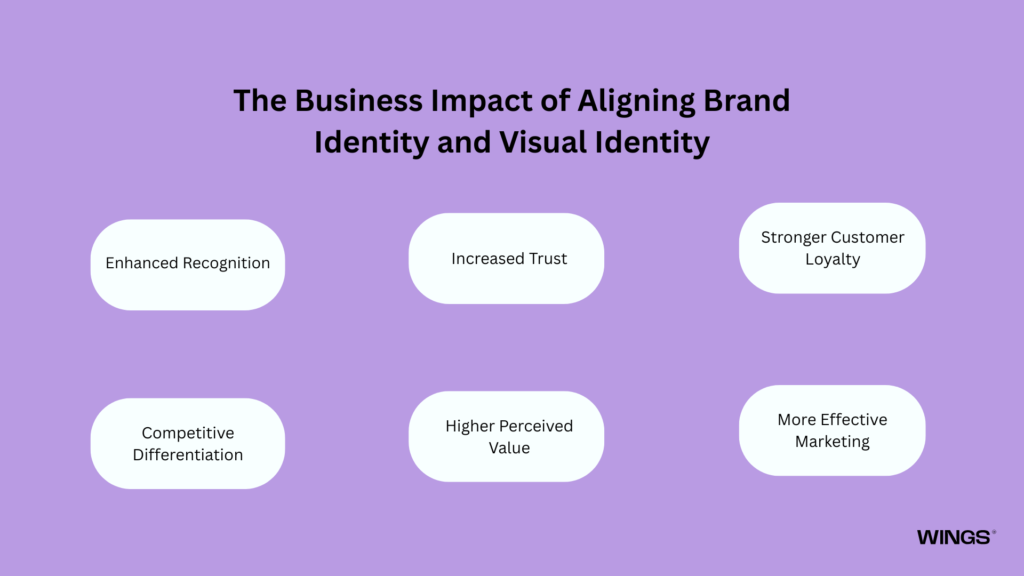
The Business Impact of Aligning Brand Identity and Visual Identity
When brand identity and visual identity work together effectively, they create a cohesive brand experience that strengthens customer relationships and supports long-term business growth. This alignment ensures that what a brand promises is consistently reflected in how it looks, communicates, and interacts with its audience.
Enhanced Recognition
Consistent branding makes it easier for customers to recognize and remember a business across different channels and touchpoints. Repeated exposure to the same visual elements, messaging, and brand personality builds familiarity over time. Strong recognition increases visibility in competitive markets and helps brands remain top-of-mind when customers are making purchasing decisions. As a result, businesses can achieve greater awareness and stronger market presence.
Increased Trust
Trust is built when a brand consistently delivers experiences that match its promises and visual presentation. When messaging, design, and customer interactions align, customers perceive the business as reliable and professional. Consistency reduces confusion and reinforces credibility, making customers more confident in their decisions. Over time, this trust becomes a valuable asset that strengthens the brand’s reputation.
Stronger Customer Loyalty
Customers are more likely to remain loyal to brands they understand, appreciate, and identify with. A clear brand identity combined with a consistent visual presence helps create emotional connections and a sense of familiarity. When customers repeatedly experience positive interactions that align with their expectations, loyalty naturally grows. Loyal customers often become repeat buyers and advocates who recommend the brand to others.
Competitive Differentiation
In crowded markets, distinctive branding helps businesses stand out from competitors offering similar products or services. A unique identity and recognizable visual system communicate what makes the brand different and valuable. Effective differentiation attracts the right audience and creates a stronger market position. It also reduces the likelihood of being overlooked or confused with competing brands.
Higher Perceived Value
Strong branding can significantly influence how customers perceive the quality and value of a product or service. A professional and cohesive brand presentation often creates the impression of greater expertise, reliability, and excellence. This enhanced perception can justify premium pricing and increase customer confidence in purchasing decisions. Businesses with strong brands are often able to command higher value in the marketplace.
More Effective Marketing
When branding is consistent across all marketing efforts, campaigns become more recognizable and impactful. Unified messaging and visuals help customers quickly connect advertisements, content, and promotions to the brand. This consistency improves engagement, strengthens communication effectiveness, and maximizes marketing investments. As a result, businesses can achieve better campaign performance and stronger customer response rates.
Conclusion
Although often confused, visual identity and brand identity play very different roles in branding success.
Brand identity defines the essence of a company, its purpose, values, mission, personality, and promise. It answers the question: Who are we? Visual identity translates that essence into recognizable visual elements such as logos, colors, typography, imagery, and design systems.
It answers the question: How do we look? Neither can succeed independently. A compelling visual identity without a strong brand foundation lacks meaning. A powerful brand identity without effective visual communication struggles to gain recognition.
The most successful brands understand that branding is not simply about aesthetics. It is about creating alignment between strategy, personality, values, and design.
When visual identity and brand identity work together, businesses create memorable experiences, build trust, foster loyalty, and establish lasting competitive advantages. Ultimately, great branding is not just about being seen, it is about being understood, remembered, and valued.

Akshita Shivani Sundar
Senior Graphic Designer