


For decades, the web has been defined by a simple compromise: users wanted information instantly, while developers battled the realities of network latency, server response times, rendering bottlenecks, and device limitations. Every click carried a hidden cost. Every page load represented a negotiation between user expectations and technological constraints.
Today, that compromise is rapidly disappearing.
We are entering the age of Zero-Lag Code, a development philosophy and technological movement focused on making digital experiences feel instantaneous. While achieving absolute zero latency is physically impossible, modern engineering practices have pushed perceived delays so close to zero that users often experience interactions as immediate.
The shift is profound. Users no longer compare websites against other websites. They compare every experience against the fastest application they use. If a streaming service responds instantly, users expect the same from e-commerce stores, banking platforms, educational portals, and enterprise software.
In this new landscape, speed is not merely a performance metric. It has become a product feature, a competitive advantage, and increasingly a business requirement.
This article explores the rise of Zero-Lag Code, the technologies enabling it, the design principles behind it, and how organizations can build web experiences that feel instant in an increasingly demanding digital world.
Understanding the Cost of Lag
Before discussing zero-lag systems, it is important to understand why latency matters. Human perception is surprisingly sensitive to delays. Research in human-computer interaction has consistently shown that:
- Responses under 100 milliseconds feel immediate.
- Delays between 100 and 300 milliseconds become noticeable.
- Beyond one second, users begin losing focus.
- Several seconds of waiting often result in abandonment.
What makes lag particularly damaging is that users rarely blame technology. Instead, they blame the product. When a website takes too long to load:
- Users perceive it as unreliable.
- Trust decreases.
- Engagement drops.
- Conversion rates decline.
- Retention suffers.
A delay of even a few hundred milliseconds can influence purchasing decisions, search behavior, and user satisfaction. The modern web economy is therefore built on an increasingly important question: How can developers eliminate waiting from digital interactions? The answer lies in Zero-Lag Code.
What Is Zero-Lag Code?
Zero-Lag Code refers to software architecture, development practices, and user experience strategies designed to minimize or hide latency so effectively that interactions feel instantaneous. It is not a single framework, programming language, or technology stack.
Instead, it combines multiple disciplines:
- Frontend optimization
- Edge computing
- Intelligent caching
- Predictive loading
- Real-time synchronization
- Efficient rendering
- AI-powered optimization
- Distributed infrastructure
The goal is simple:
Remove every unnecessary delay between user intent and system response. Zero-Lag Code focuses on both actual performance and perceived performance. Sometimes the fastest experience is achieved by reducing computation time. Other times it is achieved by intelligently presenting information before users even realize they need it.
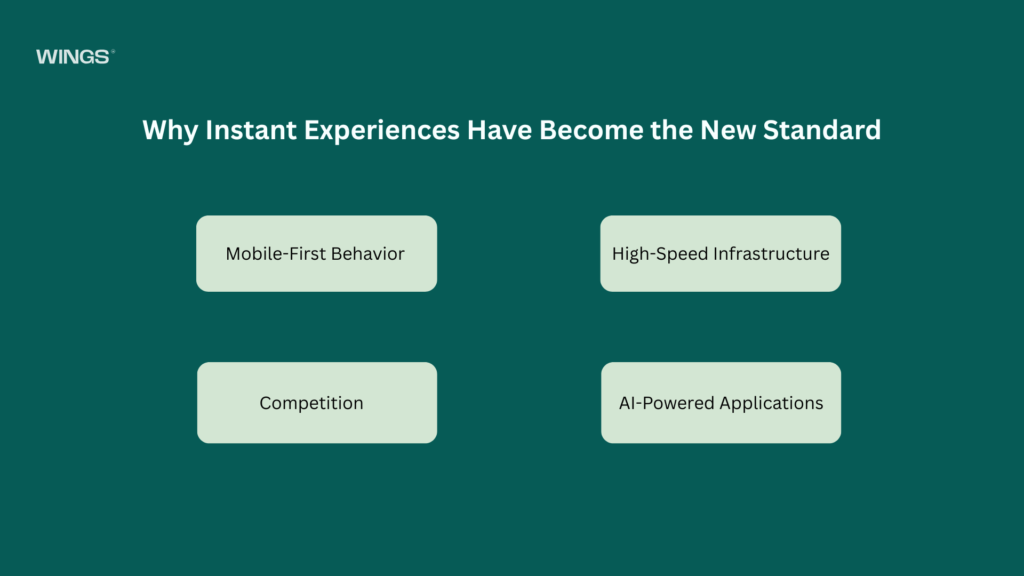
Why Instant Experiences Have Become the New Standard
Consumer expectations have changed dramatically over the past decade. What was once considered acceptable loading time is now viewed as a poor user experience. As technology has become faster and more accessible, users increasingly expect websites and applications to respond instantly. Several factors have contributed to this shift.
Mobile-First Behavior
Modern users spend much of their digital time on smartphones and tablets. Whether commuting, shopping, traveling, working, or consuming content, people expect information to be available immediately. Any delay disrupts the user experience and can lead to frustration or abandonment.
High-Speed Infrastructure
The widespread adoption of broadband internet, fiber-optic networks, 5G connectivity, and powerful devices has raised performance expectations. Since users regularly experience fast applications and services, slow-loading websites now feel outdated and inefficient.
Competition
The internet provides users with endless alternatives. If one application is slow or unresponsive, users can easily switch to a competitor. As a result, performance has become an important factor in customer satisfaction and overall brand perception.
AI-Powered Applications
The rise of AI assistants and intelligent systems has further increased expectations for instant responses. Users are becoming accustomed to receiving answers, recommendations, and assistance in real time, reducing their tolerance for delays across all digital experiences.
As technology continues to evolve, speed is no longer a luxury, it is a fundamental expectation. Organizations that fail to meet these expectations risk losing users to faster and more responsive alternatives.
The Core Principles of Zero-Lag Development
Creating instant digital experiences requires more than simply optimizing databases or upgrading servers. Zero-Lag systems are built on a set of core principles that focus on eliminating delays, reducing complexity, and improving both actual and perceived performance. These principles help developers design applications that feel fast, responsive, and seamless.
1. Compute Less
The fastest computation is the one that never needs to happen. Modern developers focus on eliminating unnecessary requests, removing redundant processing, reducing payload sizes, and simplifying workflows. By minimizing the amount of work a system performs, applications can respond faster and use resources more efficiently.
2. Move Closer to Users
Physical distance between users and servers creates unavoidable latency. Technologies such as Content Delivery Networks (CDNs), edge computing, regional data centers, and distributed caching bring content and computation closer to users. The shorter the distance data must travel, the faster the response time.
3. Predict User Behavior
Many Zero-Lag experiences begin before users even take action. Applications can analyze patterns and anticipate user needs by prefetching likely pages, loading probable resources, preparing anticipated data, and caching future interactions. This proactive approach transforms waiting time into preparation time.
4. Optimize Perception
User perception is just as important as actual performance. Even when some processing time is unavoidable, techniques such as skeleton screens, progressive loading, optimistic UI updates, and streaming content can make applications feel significantly faster. Users care most about responsiveness and smooth interactions rather than raw technical metrics.
Together, these principles form the foundation of Zero-Lag development, enabling applications to deliver faster, smarter, and more intuitive experiences.

Explore the Web development process behind the Chaitanya.
Caching: The Hidden Hero of Speed
Many of the fastest web experiences rely on caching to deliver content quickly and efficiently. Caching works by storing frequently accessed data so it can be retrieved instantly instead of being regenerated or downloaded repeatedly. By reducing the amount of processing and network communication required, caching significantly improves performance and helps applications feel more responsive.
Browser Cache
Browser caching stores assets such as images, stylesheets, JavaScript files, and fonts directly on a user’s device. When users revisit a website, these resources can be loaded from local storage instead of being downloaded again, resulting in faster page loads and reduced network usage.
CDN Cache
Content Delivery Networks (CDNs) distribute content across multiple geographic locations worldwide. Cached images, scripts, videos, and other static assets are served from the nearest available server, reducing latency and improving loading times for users regardless of their location.
Application Cache
Application-level caching stores frequently requested data in memory or high-speed storage. This allows applications to quickly retrieve information without repeatedly querying databases, reducing server workload and improving response times.
Edge Cache
Edge caching takes performance optimization even further by storing complete responses at edge locations close to users. Requests can often be served directly from these edge nodes without involving the origin server, dramatically reducing latency and improving scalability.
By combining these caching layers, modern applications can transform operations that might normally take several seconds into responses delivered within milliseconds. This makes caching one of the most effective and essential techniques for achieving Zero-Lag web experiences.
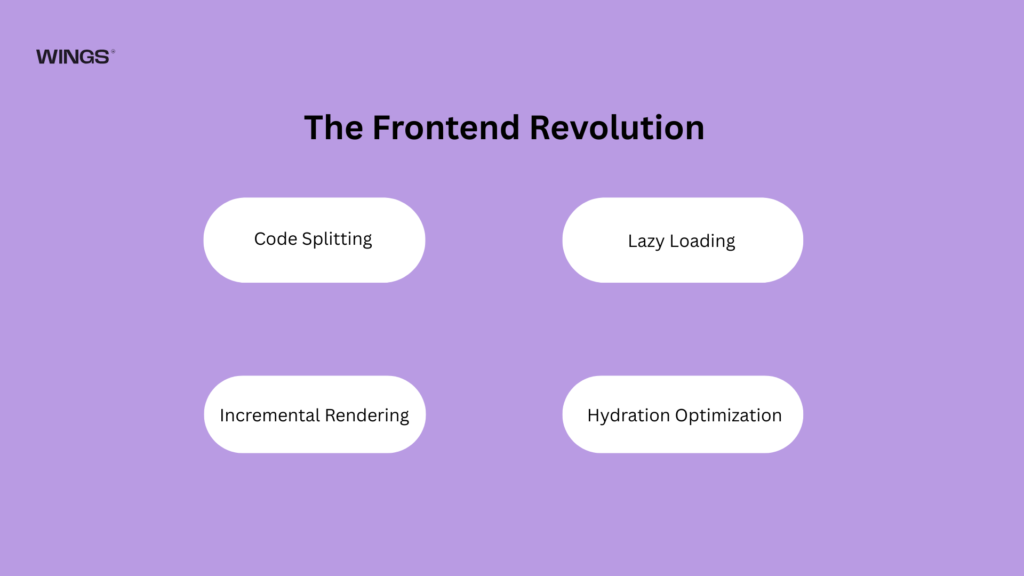
The Frontend Revolution
Historically, web performance optimization focused primarily on backend systems such as servers, databases, and APIs. While backend efficiency remains important, modern web applications have shown that frontend performance plays an equally critical role in user experience. Since users interact directly with the interface, even the fastest backend can feel slow if pages take too long to render or become interactive. As a result, frontend optimization has become a key component of Zero-Lag development.
Code Splitting
Code splitting helps reduce initial loading times by loading only the code required for the current page or feature. Instead of downloading an entire application upfront, unused components and modules are deferred until they are actually needed, resulting in faster startup performance.
Lazy Loading
Lazy loading ensures that resources such as images, videos, and application modules are loaded only when they enter the user’s view or become necessary. This reduces the amount of data loaded initially and improves both loading speed and resource efficiency.
Incremental Rendering
Incremental rendering allows content to appear progressively rather than waiting for the entire page to be fully constructed. Users can begin viewing and interacting with content immediately, creating a faster and more responsive experience.
Hydration Optimization
Modern JavaScript frameworks use hydration to make server-rendered pages interactive. Hydration optimization reduces the amount of JavaScript required to activate interfaces, improving responsiveness and minimizing delays before users can interact with page elements.
Together, these frontend optimization techniques significantly enhance perceived performance and user satisfaction. By delivering content faster and reducing unnecessary processing, they help create the seamless and responsive experiences that define the Zero-Lag web.
Real-Time Data Without Real-Time Delays
Users increasingly expect information to update instantly.
Examples include:
- Messaging platforms
- Financial dashboards
- Collaboration tools
- Gaming environments
- Analytics systems
Traditional request-response cycles often create delays.
Modern systems use:
- WebSockets
- Server-sent events
- Streaming architectures
- Event-driven systems
Rather than repeatedly asking for updates, applications receive information as it becomes available.
This creates fluid, responsive experiences.
The Role of AI in Zero-Lag Experiences
Artificial intelligence is becoming a major force in performance optimization. AI systems can analyze user behavior and predict future actions.
Applications increasingly use machine learning to:
- Preload content
- Optimize caching
- Prioritize resources
- Predict navigation paths
- Reduce server load
For example:
An online store might determine which products a customer is likely to view next. Relevant assets can be loaded before the customer clicks. The page appears instantly because preparation occurred in advance. AI transforms performance from reactive optimization into proactive optimization.
Streaming Interfaces: The Future of Responsiveness
Traditional applications often wait until all information is available before displaying anything. Streaming changes this approach. Instead of delivering complete responses, systems send information progressively.
Users begin receiving value immediately.
Examples include:
- AI-generated content
- Live analytics
- Search results
- News feeds
- Collaborative documents
Streaming reduces perceived latency because users see progress instead of waiting. Even when total processing time remains unchanged, the experience feels significantly faster.
Optimistic User Interfaces
One of the most powerful concepts in Zero-Lag design is the optimistic interface. Rather than waiting for confirmation, the interface assumes success. Consider social media interactions.
When users click a “like” button:
- The interface updates instantly.
- Server confirmation occurs afterward.
- Corrections happen only if necessary.
The interaction feels immediate. This approach removes visible delays while maintaining system integrity. Modern applications increasingly adopt optimistic patterns because they align with human expectations.

Explore the Website development process behind the Quint.
Performance as a Business Strategy
Zero-Lag Code is not just a technical objective, it is a business strategy that directly impacts customer satisfaction, revenue, and growth. Organizations that prioritize performance often gain a competitive advantage by delivering faster and more seamless digital experiences. In today’s digital economy, speed has become a key factor in business success.
Higher Conversion Rates
Faster websites and applications reduce user abandonment and encourage customers to complete transactions. Even small improvements in speed can significantly increase conversions and revenue.
Better User Retention
Users are more likely to return to applications that feel fast and effortless. Responsive experiences help build loyalty and improve long-term customer retention.
Improved Search Visibility
Website performance plays an important role in search engine rankings. Faster sites often achieve better visibility, attracting more visitors and potential customers.
Increased Productivity
Instantly responsive enterprise tools help employees complete tasks more efficiently. Reduced waiting times lead to smoother workflows and higher productivity.
Stronger Brand Perception
Fast digital experiences create a positive impression of reliability and quality. Users often associate speed with professionalism and trustworthiness.
Performance is no longer just an engineering concern, it is a business asset that influences customer behavior, operational efficiency, and overall growth.
Challenges in Building Zero-Lag Systems
Although modern technologies have significantly improved web performance, achieving truly near-instant digital experiences remains a complex challenge. Zero-Lag systems require careful planning, advanced infrastructure, and continuous optimization. As applications become more sophisticated and user expectations continue to rise, organizations face several obstacles that can impact responsiveness and performance.
Data Complexity
Modern applications generate and process vast amounts of data every second. From user interactions and analytics to real-time transactions and multimedia content, managing this information efficiently is becoming increasingly difficult. Large datasets often require extensive processing, storage, and synchronization, which can introduce delays if not properly optimized. Building systems that can handle growing volumes of data while maintaining fast response times requires sophisticated architectures, intelligent caching strategies, and efficient database management.
Global Scale
Serving users across different countries and regions presents another significant challenge. The physical distance between users and servers directly affects latency, making it difficult to provide consistent performance worldwide. A response that feels instant to users in one region may experience noticeable delays elsewhere. To overcome these limitations, organizations must invest in distributed infrastructure, content delivery networks, edge computing, and regional data centers that bring resources closer to users.
Security Requirements
Modern applications must prioritize security alongside performance. Features such as authentication, authorization, encryption, fraud detection, and data validation are essential for protecting users and sensitive information. However, these security measures often introduce additional processing overhead that can impact response times. The challenge lies in balancing robust security practices with the need for fast and seamless user experiences. Successful Zero-Lag systems are designed to integrate security efficiently without creating unnecessary friction.
Legacy Infrastructure
Many organizations continue to rely on older systems that were not designed for modern performance expectations. Legacy applications often contain outdated architectures, monolithic codebases, and infrastructure limitations that make optimization difficult. Implementing Zero-Lag principles may require significant modernization efforts, including system redesigns, cloud migrations, and architectural transformations. These changes can be time-consuming and costly but are often necessary to achieve substantial performance improvements.
Cost Considerations
Delivering ultra-fast experiences frequently requires additional investment in infrastructure, cloud services, edge networks, monitoring tools, and optimization technologies. While improved performance can generate significant business benefits, organizations must carefully balance these gains against operational costs. The challenge is to identify the most impactful optimizations while maintaining sustainable budgets and resource allocation.

Explore the Website development process behind the Kind Energy
Measuring What Matters
Zero-Lag development is impossible without effective measurement. Performance improvements must be guided by data rather than assumptions. By tracking key metrics, development teams can identify bottlenecks, understand user experiences, and prioritize optimization efforts where they will have the greatest impact.
Time to First Byte (TTFB)
Time to First Byte measures how quickly a server begins responding to a user’s request. It reflects the efficiency of server-side processing, network communication, and backend infrastructure. Lower TTFB values generally indicate faster initial responses and better overall performance.
First Contentful Paint (FCP)
First Contentful Paint tracks the moment users first see meaningful content appear on their screen. This metric is important because it directly affects perceived performance. Even if a page is not fully loaded, displaying content quickly reassures users that the application is responding.
Largest Contentful Paint (LCP)
Largest Contentful Paint measures how long it takes for the primary content of a page to become visible. It is one of the most important indicators of loading performance because it reflects when users can begin engaging with the most significant content on a page.
Interaction to Next Paint (INP)
Interaction to Next Paint evaluates how quickly an application responds to user actions such as clicks, taps, or keyboard input. A low INP score indicates a highly responsive interface, while higher values may suggest performance bottlenecks that negatively impact user experience.
Cumulative Layout Shift (CLS)
Cumulative Layout Shift measures the visual stability of a webpage. Unexpected movement of buttons, images, or text while a page loads can frustrate users and lead to accidental interactions. A low CLS score ensures a smoother and more predictable experience.
These metrics provide valuable insights into both actual and perceived performance. They help development teams identify weaknesses, validate optimization efforts, and continuously improve user experiences. Without meaningful measurement, performance optimization becomes little more than guesswork. In the Zero-Lag era, successful organizations rely on data-driven decisions to ensure their applications remain fast, responsive, and user-focused.
The Psychology of Instant Experiences
Performance is not purely a technical concern, it is deeply connected to human psychology. Users experience applications through emotions, and even small delays can influence how they perceive a product. Fast and responsive systems create a sense of comfort and reliability, while slow interactions can lead to frustration and impatience. Because people naturally expect immediate feedback, the way an application performs has a direct impact on user satisfaction and engagement.
Fast systems create feelings of:
- Confidence
- Control
- Satisfaction
- Trust
Slow systems generate:
- Frustration
- Doubt
- Confusion
- Abandonment
Zero-Lag Code succeeds because it aligns technology with the way people naturally think and interact. When software responds instantly and behaves as users expect, it feels intuitive and effortless to use. Users rarely notice or praise speed directly, but they quickly recognize when it is missing. The true achievement of Zero-Lag experiences is creating a seamless interaction where technology fades into the background, allowing users to focus entirely on their goals while simply enjoying the product.
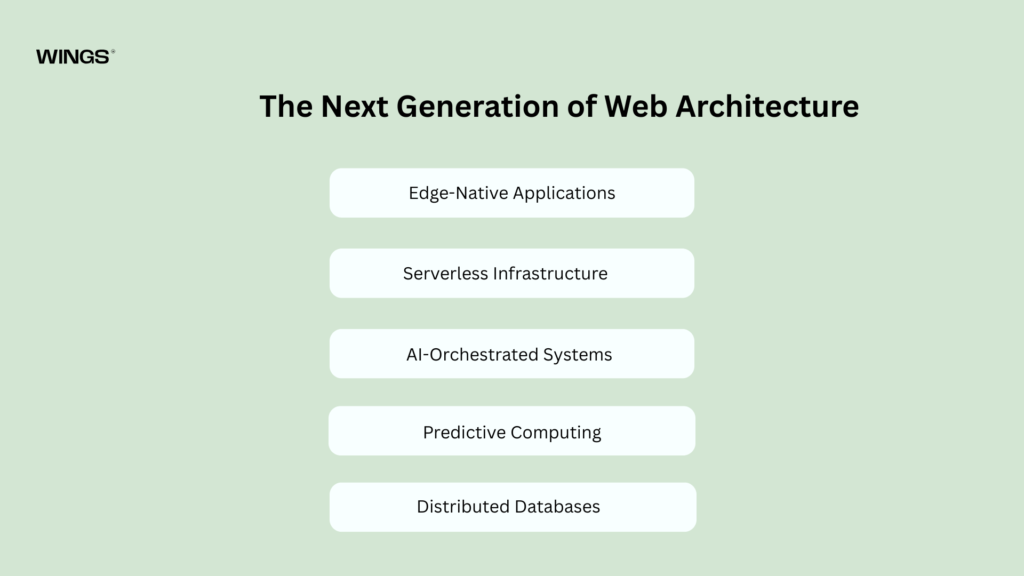
The Next Generation of Web Architecture
The future of Zero-Lag Code will be driven by a new generation of web architectures designed to minimize latency and deliver near-instant experiences. As user expectations continue to rise, traditional approaches to application development are evolving to prioritize speed, scalability, and responsiveness. Several emerging technologies and architectural trends are shaping this transformation, enabling applications to process data faster, respond more efficiently, and serve users from locations closer to where they are.
Edge-Native Applications
Edge-native applications are designed to execute application logic at the network edge rather than relying entirely on centralized servers. By processing requests closer to users, these applications significantly reduce network travel time, resulting in faster response speeds and improved user experiences. As edge infrastructure becomes more widely available, developers will increasingly build applications that leverage distributed computing environments.
Serverless Infrastructure
Serverless computing is changing how developers build and deploy applications. Instead of managing servers and infrastructure, development teams can focus entirely on creating features and business functionality. Cloud providers automatically handle resource allocation, scaling, and maintenance, allowing applications to respond efficiently to changing demand while reducing operational complexity.
AI-Orchestrated Systems
Artificial intelligence is expected to play a major role in future web architectures. AI-powered systems can continuously monitor application performance, predict traffic patterns, optimize resource allocation, and identify bottlenecks before they impact users. This level of automation enables applications to adapt dynamically and maintain optimal performance with minimal human intervention.
Predictive Computing
Predictive computing shifts performance optimization from reactive to proactive. By analyzing user behavior and usage patterns, systems can anticipate future actions and prepare resources before requests are made. Content, data, and application components can be preloaded in advance, reducing waiting times and creating experiences that feel almost instantaneous.
Distributed Databases
As applications serve increasingly global audiences, distributed databases are becoming essential. Instead of storing all data in a single location, information is replicated across multiple regions worldwide. This allows users to access data from the nearest available location, reducing latency and improving reliability while maintaining high levels of performance.
Together, these advancements represent the foundation of the next generation of web architecture. By combining edge computing, serverless technologies, artificial intelligence, predictive systems, and globally distributed data infrastructure, organizations can create faster, more resilient applications that move closer to the vision of truly instant digital experiences.
Beyond Websites: Instant Digital Ecosystems
The influence of Zero-Lag principles extends far beyond traditional websites. As digital transformation accelerates across industries, organizations are increasingly adopting technologies that deliver real-time information, seamless interactions, and instant responses. Speed is no longer just a feature of consumer-facing applications, it has become a critical requirement for entire digital ecosystems. Industries around the world are leveraging Zero-Lag technologies to improve efficiency, enhance user experiences, and enable faster decision-making.
Healthcare
Healthcare organizations are using real-time patient monitoring systems, connected medical devices, and AI-powered diagnostics to deliver faster and more accurate care. Instant access to patient data allows healthcare professionals to make critical decisions quickly, improving treatment outcomes and patient safety.
Finance
The financial sector relies heavily on speed and responsiveness. Instant payment processing, real-time fraud detection, digital banking services, and live trading platforms require low-latency systems capable of handling transactions and delivering information within milliseconds.
Education
Modern educational platforms provide interactive learning experiences through live virtual classrooms, instant assessments, and personalized feedback systems. Immediate responses help students stay engaged, improve learning outcomes, and create more effective digital learning environments.
Manufacturing
Manufacturing industries use responsive monitoring systems, IoT devices, and predictive analytics to track equipment performance and production processes in real time. Instant insights enable businesses to identify issues early, reduce downtime, and optimize operational efficiency.
Entertainment
Entertainment platforms depend on low-latency technologies to deliver immersive user experiences. Video streaming services, online gaming platforms, and virtual reality applications require instant content delivery and seamless interactions to meet growing consumer expectations.
Enterprise Software
Modern workplaces rely on collaborative software that updates instantly across teams and devices. Real-time communication tools, shared workspaces, project management platforms, and cloud-based applications enable employees to work together efficiently regardless of their location.
As digital ecosystems continue to evolve, responsiveness is becoming a fundamental expectation across every industry. Organizations that embrace Zero-Lag principles can deliver faster, smarter, and more engaging experiences, positioning themselves for success in an increasingly connected world.

Explore the Website development process behind the Franck muller.
Developer Mindset in the Zero-Lag Era
Building instant web experiences requires more than adopting new technologies, it demands a fundamental shift in how developers think about software. In the Zero-Lag era, performance is no longer viewed as a final-stage optimization task that happens after features are completed. Instead, it becomes a core design principle that influences every architectural and development decision from the very beginning. Developers must constantly evaluate whether a request is necessary, whether an operation can occur earlier, whether computation can be moved closer to users, and whether data can be delivered more efficiently. The focus shifts from simply making applications work to making them feel instantaneous.
Successful engineering teams increasingly recognize that latency is not just a technical challenge but also a user experience challenge. Every millisecond of delay affects how users perceive a product, making responsiveness a critical part of design thinking. Questions such as
“Can this response be streamed?
“Can this interaction feel immediate?
“Can we predict user needs in advance?
become essential during development. By embedding performance considerations into the entire product lifecycle, teams can create applications that not only function efficiently but also deliver the seamless, frictionless experiences that modern users expect.
The Future: Invisible Computing
The ultimate destination of Zero-Lag Code is Invisible Computing, a future where technology becomes so seamless and responsive that users barely notice it. Instead of interacting with complex interfaces, people simply focus on their goals while systems work effortlessly in the background. Information appears exactly when it is needed, actions happen instantly, and digital experiences flow naturally without interruptions. As applications become faster, smarter, and more context-aware, the gap between user intention and system response continues to shrink.
This vision is being driven by advancements in artificial intelligence, edge computing, real-time data processing, and predictive technologies. Modern applications are already moving in this direction by anticipating user needs, automating repetitive tasks, and delivering personalized experiences with minimal effort. While truly invisible computing may still be evolving, every improvement in speed and responsiveness brings us closer to a world where technology feels less like a tool and more like a natural extension of human thought and action.
Conclusion: Building for the Speed of Expectation
The web is entering a new era. Users no longer judge applications solely by features, design, or functionality. They judge them by how quickly those capabilities become available.
Zero-Lag Code represents a fundamental shift in software development. It is the pursuit of experiences so responsive that waiting disappears from the user journey. Through edge computing, intelligent caching, predictive loading, streaming architectures, AI-driven optimization, and thoughtful design, developers are redefining what digital speed means.
The organizations that embrace this philosophy will create products that feel effortless, intuitive, and modern. Those that ignore it risk falling behind as expectations continue to rise. The future of the web is not simply faster applications. It is applications that feel instant.
In that future, performance is no longer a technical benchmark hidden inside developer dashboards. It becomes part of the experience itself, a silent feature that users may never consciously notice, yet one that shapes every interaction they have.
The era of Zero-Lag Code has arrived, and it is transforming the web from a place where users wait into a place where experiences simply happen.

Mugesh Kanna
Junior Web developer