


What is Rebranding?
Rebranding is the strategic process of changing how a company, product, or organisation is perceived by its target audience. It may involve updating the brand’s name, logo, visual identity, messaging, positioning, values, or overall customer experience to better reflect changing business goals, market conditions, or customer expectations. The objective of rebranding is to strengthen brand relevance, differentiate from competitors, improve brand perception, or reach new audiences while maintaining or increasing customer trust and loyalty. Successful rebranding aligns both the brand’s identity and the customer experience to create a consistent and compelling market presence.
Why Companies Decide to Rebrand
Rebranding is rarely a random decision. It often results from strategic business needs and long-term goals.
A company may decide to rebrand because its original identity no longer reflects its offerings. For example, a startup that began by selling a single product may have expanded into multiple markets, making its original branding feel limiting. Similarly, a business that was founded decades ago may find that its visual identity appears outdated compared to modern competitors.
In some cases, companies rebrand after mergers, acquisitions, or major organizational changes. Others do so to repair their reputation following negative publicity or to appeal to a younger generation of consumers.Whatever the reason, the goal remains the same: to create a brand identity that better supports future growth.
Yet growth comes with risks. Every brand has customers who have developed an emotional attachment to its image, values, and personality. These customers often view the brand as more than a business, they see it as part of their lifestyle or identity. When that familiar identity suddenly changes, customers can feel disconnected.
Why Loyal Users Resist Rebranding
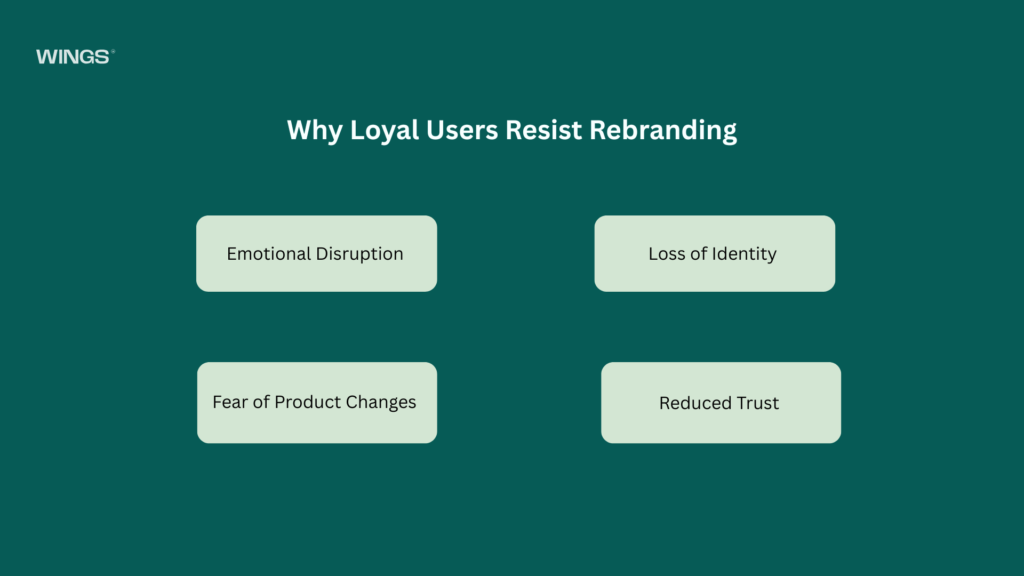
Customers form emotional connections with brands. These connections are built through repeated interactions, positive experiences, shared values, and familiarity. When a brand changes significantly, loyal users may experience:
Emotional Disruption
Customers often develop strong emotional attachments to a brand through years of positive experiences and familiarity. When a company changes its logo, colors, messaging, or overall identity, loyal users may feel a sense of loss because the brand no longer looks or feels the same. This emotional disruption can create initial resistance, even if the rebrand is intended to improve the customer experience.
Loss of Identity
Many consumers view their favorite brands as reflections of their personality, values, and lifestyle choices. A significant rebrand can make loyal customers feel disconnected if the new identity no longer aligns with what originally attracted them to the brand. As a result, users may struggle to maintain the same emotional connection they once had.
Fear of Product Changes
Rebranding often leads customers to wonder whether changes are also happening behind the scenes. Loyal users may worry that the company is altering product quality, pricing, customer service, or core values along with its visual identity. Without clear communication, these concerns can create uncertainty and hesitation among existing customers.
Reduced Trust
Trust is built through consistency, and a sudden or poorly explained rebrand can raise questions about a company’s direction and decision-making. Customers may wonder why the change was necessary and whether the business still understands their needs. Transparent communication and reassurance are essential to maintaining trust throughout the rebranding process.
The Emotional Side of Brand Loyalty
- Customers often form emotional connections with brands, not just their products or services.
- Brand loyalty is influenced by shared values, communication style, brand history, and positive experiences.
- Rebranding involves more than changing a logo or visual identity—it can change the symbols and messages customers associate with the brand.
- Customers may feel a sense of loss when a familiar brand identity is replaced.
- Even well-designed rebrands can face negative reactions if they disrupt customers’ emotional attachment.
- Customer backlash is often driven by the loss of familiarity and trust, rather than the quality of the new design.
- Successful rebranding balances modernisation with preserving the brand elements that customers value most.

Explore the Branding behind the Blyp.
The Danger of Radical Transformation
One of the most common mistakes companies make is treating rebranding as a complete reinvention.
Executives may become excited about attracting new audiences and decide to replace every aspect of the brand at once. They launch a new logo, introduce a different tone of voice, redesign products, update packaging, and change marketing messages simultaneously.From an internal perspective, this may seem like a bold and exciting move.
From a customer’s perspective, it can feel like interacting with an entirely different company. Sudden transformations often create confusion. Customers begin asking questions:
- Has the company changed its priorities?
- Will product quality remain the same?
- Does the brand still understand its original audience?
- Is the company abandoning its core values?
When these questions remain unanswered, trust begins to decline.
The most effective rebrands avoid overwhelming customers with change. Instead, they create a sense of continuity, helping users understand that while the brand is evolving, its commitment to customers remains unchanged.
Evolution vs. Reinvention: Which Approach Works Better?
This debate sits at the center of many branding discussions. Should companies make gradual changes over time, or should they launch a dramatic transformation all at once? There is no universal answer, but many successful brands favor evolution over reinvention. Evolution allows customers to adapt gradually. Small updates to logos, websites, messaging, and customer experiences help maintain familiarity while modernizing the brand.
This approach minimizes resistance because customers still recognize the brand they trust. Reinvention, on the other hand, can generate significant attention and media coverage. It may help a company distance itself from outdated perceptions or enter entirely new markets. However, reinvention carries greater risk because it challenges the emotional bonds customers have developed over time.
The key question becomes:
Is the company solving a business problem, or is it changing simply for the sake of appearing different? If the answer is the latter, the rebrand may struggle to gain support.

Explore the Branding behind the Diamensions.
Communication Determines Success
Many organizations focus heavily on design during a rebrand. They invest in agencies, market research, visual assets, and advertising campaigns. Yet they often overlook the most important factor: communication.
Customers are generally more accepting of change when they understand why it is happening. Imagine two scenarios. In the first, a company suddenly unveils a new identity with little explanation.
In the second, the company shares its journey, explains the challenges it faces, discusses its vision for the future, and demonstrates how the rebrand supports that vision. Which company is more likely to earn customer understanding? The answer is obvious. Transparency builds trust.
Customers appreciate honesty. Even if they initially dislike certain aspects of a rebrand, they are often willing to give it a chance when they understand the reasoning behind it.
Why Customer Involvement Matters
An increasingly popular strategy involves inviting customers into the rebranding process. This does not mean allowing customers to make every decision. Instead, it means listening.
Companies can gather insights through:
- Customer surveys
- Focus groups
- Community discussions
- Social media feedback
- Beta testing programs
- Brand perception studies
These activities serve two important purposes. First, they provide valuable information about what customers genuinely value. Second, they demonstrate that customer opinions matter. When users feel heard, they are more likely to support change. This raises an interesting discussion point:
Should loyal customers have a direct influence on branding decisions, or should companies prioritize future growth opportunities even when current customers disagree?
Different businesses will answer this question differently, but ignoring loyal customers entirely is rarely a wise strategy.
Preserving the Core Identity
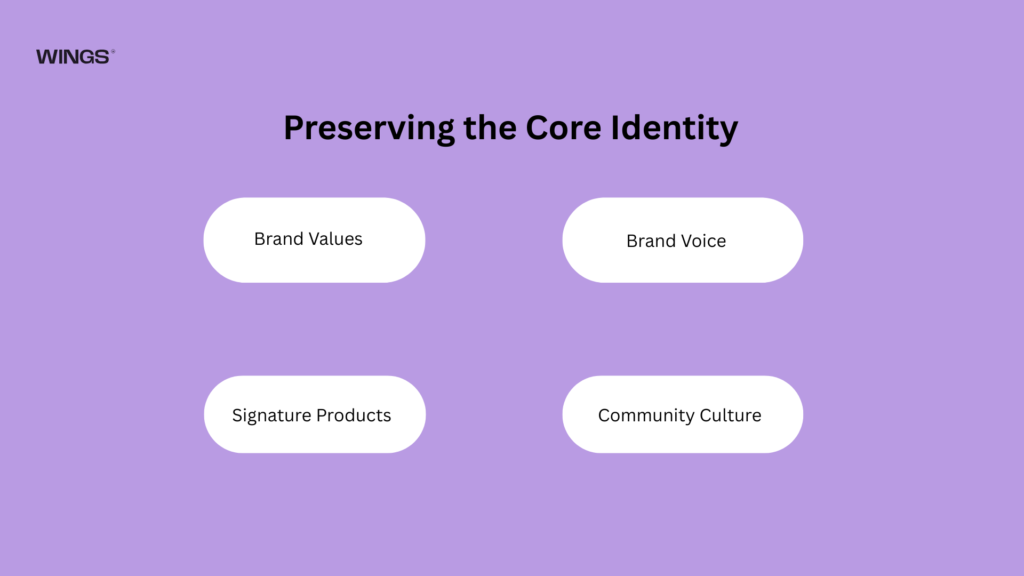
One of the most effective strategies for a successful rebrand is preserving the core elements that customers already recognize, value, and trust. While logos, color palettes, messaging, and marketing campaigns may evolve, the fundamental identity of a brand should remain intact.
Brand Values
Brand values are the core principles that define a company’s identity and should remain consistent throughout a rebrand. Customers often choose brands because they align with values such as quality, innovation, sustainability, affordability, or excellent customer service. By continuing to reflect these values through products, services, messaging, and customer experiences, organisations maintain trust, reassure existing customers, and increase the likelihood that the rebrand will be accepted and supported.
Brand Voice
A brand’s voice represents its personality and shapes how customers perceive and connect with it. Whether the tone is professional, friendly, authoritative, or inspirational, maintaining consistency during a rebrand helps preserve familiarity and trust. While minor adjustments may be made to appeal to new audiences or reflect changing market trends, the brand’s core personality should remain recognisable to reassure customers that its values and identity remain unchanged.
Community Culture
Successful brands build strong communities through shared values, experiences, and customer engagement. During a rebrand, preserving this sense of community is essential to maintaining trust and loyalty. By continuing to engage customers through events, social media, loyalty programmes, and open communication, organisations can make customers feel valued and included, helping them view the rebrand as a natural evolution rather than a complete change.
Maintaining Trust Through Familiarity
Rebranding does not require abandoning everything that made a brand successful in the first place. In fact, the most successful rebrands balance innovation with continuity. By preserving core values, maintaining a recognizable brand voice, protecting signature products, and nurturing community culture, companies can create a sense of stability during times of change.

Explore the Branding behind the Crypto bean.
Measuring Success Beyond Visibility
Many organizations evaluate rebranding success through metrics such as website traffic, social media impressions, media mentions, and brand awareness. While these metrics are important, they tell only part of the story. A truly successful rebrand should also improve customer relationships.
Companies should monitor:
- Customer retention rates
- Repeat purchase behavior
- Customer satisfaction scores
- Brand sentiment
- Online discussions
- Referral rates
- Community engagement
A rebrand that attracts attention but weakens loyalty may ultimately create more problems than it solves. Growth should not come at the expense of trust.
Common Rebranding Mistakes to Avoid
Ignoring Customer Feedback
One of the biggest rebranding mistakes is failing to understand how customers perceive the brand before making changes. Loyal customers often have valuable insights into what they appreciate most about a company. Ignoring their feedback can result in a rebrand that feels disconnected from customer expectations, leading to confusion, dissatisfaction, and unnecessary backlash.
Changing Too Much
While modernization is important, changing every aspect of a brand at once can be risky. A complete overhaul of logos, colors, messaging, and brand personality may eliminate the familiarity that customers associate with the company. Successful rebrands typically preserve key elements of brand recognition while introducing updates gradually.
Poor Communication
Customers should never be left wondering why a brand has changed. A lack of communication can create uncertainty and fuel negative assumptions about the company’s intentions. Clearly explaining the reasons behind the rebrand, the benefits it brings, and what will remain unchanged helps build trust and encourages customer acceptance.
Focusing Only on Visuals
Many organizations mistakenly believe that rebranding is simply about designing a new logo or updating visual elements. However, a brand is defined by much more than its appearance. Customer experience, company values, reputation, and the promises made to customers play a much larger role in shaping brand perception than visual identity alone.
Neglecting Existing Customers
In the pursuit of attracting new audiences, some companies overlook the customers who have supported them for years. This can make loyal users feel unappreciated and disconnected from the brand. A successful rebrand should balance the goal of reaching new markets while continuing to meet the needs and expectations of existing customers.
Rushing the Process
Rebranding is a strategic process that requires careful planning, research, testing, and execution. Companies that rush implementation often fail to identify potential issues or customer concerns before launch. Taking the time to gather feedback, refine strategies, and communicate changes effectively can significantly increase the chances of a successful transition.

Explore the Branding behind the Shivam.
The Future of Rebranding
- Rebranding will become more common as consumer expectations continue to evolve.
- Modern consumers are highly informed and quickly notice inconsistencies between brand promises and actions.
- Customers expect brands to be authentic, transparent, and trustworthy.
- Social media enables customers to share their opinions instantly, increasing the impact of rebranding decisions.
- Successful rebrands will focus on more than visual changes, ensuring alignment between brand identity and business values.
- Companies should actively engage customers throughout the rebranding process to build trust and acceptance.
- The most successful rebrands are those that make customers feel included in the brand’s evolution, rather than surprised by dramatic changes.
Questions for Discussion
The topic of rebranding generates strong opinions across industries. Consider the following questions:
- Have you ever felt disconnected from a brand after it changed its identity?
- Should companies prioritize existing customers or future audiences during a rebrand?
- Can a business remain relevant without updating its branding?
- Are customers too resistant to change, or are companies changing too aggressively?
- What role should social media communities play in branding decisions?
- Is a logo change enough to qualify as a rebrand, or should rebranding involve deeper transformation?
- Which famous rebrand do you consider successful, and what made it work?
Conclusion

Akshita Shivani Sundar
Senior Graphic Designer