



What is Website Development?
Website development is the process of creating, building, and maintaining websites and web applications that run on the internet. It involves both the technical and creative aspects of building a digital platform, including designing user interfaces, writing code for functionality, managing databases, and ensuring smooth performance across different devices and browsers. The goal of website development is to deliver a fully functional, user-friendly, and reliable online experience that allows users to access information, services, and features efficiently.
It involves multiple stages:
- Planning the website structure
- Designing the user interface
- Writing code for functionality
- Managing databases and servers
- Testing and deployment
- Maintenance and updates
A website is not just a design, it is a combination of code, logic, design, and data systems working together. Each part plays an important role in making the website functional and interactive. The code builds the structure and behavior of the site, logic controls how features work, design ensures a visually appealing and user-friendly experience, and data systems manage and store information securely. When all these components work together seamlessly, they create a complete and efficient digital platform that delivers a smooth experience for users.

Explore the Web development process behind the Evos.
How Websites Work (Basic Understanding)
When a user opens a website, a series of steps happen in the background to display the content correctly. First, the user types a URL (for example, www.example.com) into a web browser. The browser then sends a request to a web server asking for the required website data. The server processes this request, locates the necessary files, and prepares a response.
Key Components:
- Client (Browser): The application used by users to access websites, such as Chrome, Firefox, or Safari, which sends requests and displays web pages.
- Server: A powerful computer that stores website files and handles user requests by delivering the correct data.
- Database: A system used to store and manage information such as user accounts, posts, products, and other dynamic content.
- Hosting: A service that keeps the website online and accessible on the internet 24/7 by storing its files on servers.
Types of Website Development
Website development is broadly divided into three main categories based on how different layers of a website are built and function together. Each category has a specific role in creating a complete digital product, from what users see to how data is processed in the background.
Front-End Development (Client Side)
Front-end development focuses on everything users see, experience, and interact with directly in a website. It is responsible for the visual structure, layout, responsiveness, and overall user experience. A well-developed front-end ensures that a website is not only attractive but also easy to navigate, fast-loading, and compatible across different devices such as mobile phones, tablets, laptops, and desktops. It bridges the gap between design and functionality by converting design concepts into interactive web pages that run in the browser.
Core Technologies:
HTML (HyperText Markup Language)
HTML is the backbone of every website and provides the basic structure of web pages. It defines how content is organized and displayed in the browser. HTML acts like the skeleton of a website, where every element such as text, images, and links is placed in a structured format.
Examples of HTML Elements:
- Headings used to define titles and sections of a webpage
- Paragraphs used to display written content and descriptions
- Images used to add visual content and improve engagement
- Links used to connect pages or external websites
- Forms used to collect user input such as login, signup, or feedback
CSS (Cascading Style Sheets)
CSS is responsible for the design, layout, and visual presentation of a website. It transforms a simple HTML structure into a visually appealing and professional-looking webpage. CSS allows developers to control how elements look and are arranged on the screen.
It handles:
- Colors, themes, and background styling
- Fonts, typography, and text styling
- Spacing, padding, and alignment of elements
- Animations, transitions, and hover effects
- Responsive design to ensure websites adapt to different screen sizes
JavaScript
JavaScript is a powerful programming language used to make websites interactive and dynamic. It allows developers to create real-time functionality and improve user engagement by responding to user actions without reloading the page.
Examples of JavaScript features:
- Interactive dropdown menus and navigation bars
- Image sliders and dynamic galleries
- Form validation to check user input before submission
- Live updates such as notifications or content changes without page refresh
Advanced Front-End Tools:
Modern web development goes beyond basic technologies by using advanced frameworks and libraries that make development faster, more scalable, and efficient.
- React.js – A component-based library that allows developers to build reusable UI components and manage complex user interfaces efficiently. It is widely used in modern web applications.
- Angular – A full-featured front-end framework developed by Google, used for building large-scale and enterprise-level applications with structured architecture.
- Vue.js – A lightweight and flexible framework that is easy to learn and is used for building fast and interactive user interfaces.
Back-End Development
Back-end development refers to the server-side part of website development that works behind the scenes to make a website function properly. While users interact with the front-end, the back-end is responsible for processing requests, managing data, and ensuring that everything works smoothly and securely. It acts as the brain of the website, handling all the logic and operations that are not visible to users but are essential for functionality.
Core Responsibilities:
- Data Storage: Saving and organizing user information, posts, orders, and other dynamic content securely in databases
- Authentication (Login/Signup): Verifying user identity and controlling access to protected content
- Business Logic: Handling rules and processes that determine how data is created, updated, and managed
- Server Communication: Managing requests and responses between client (browser), server, and database
Programming Languages:
Back-end development uses powerful programming languages and frameworks to build server-side applications:
- Python (Django, Flask): Known for simplicity and speed, widely used in web applications and APIs
- JavaScript (Node.js): Allows developers to use JavaScript on the server side for fast and scalable applications
- PHP (Laravel): A popular language for building dynamic websites and content management systems
- Java (Spring Boot): Used for large-scale enterprise applications requiring high performance and security
- Ruby (Ruby on Rails): Focuses on rapid development and clean, efficient coding practices
Databases:
Databases are used to store and manage all website data efficiently and securely.
SQL Databases (Structured Data):
These databases use structured tables and are best for organized data management.
- MySQL – widely used for web applications
- PostgreSQL – known for advanced features and reliability
- Oracle – enterprise-level database system used in large organizations
NoSQL Databases (Flexible Data):
These databases store unstructured or semi-structured data, offering flexibility and scalability.
- MongoDB – document-based database used in modern applications
- Firebase – real-time database commonly used in mobile and web apps
- Cassandra – designed for handling large amounts of distributed data
Example Back-End Process:
A simple login process works like this: When a user tries to log in, they enter their email and password on the website. This information is sent to the server, where the back-end checks it against the database. If the credentials match the stored data, the server grants access and logs the user in successfully. If the details are incorrect, the server returns an error message and denies access. This entire process happens within seconds, ensuring both security and smooth user experience.

Explore the Web development process behind the Kind Energy.
Full-Stack Development
Full-stack development refers to the practice of working on both the front-end and back-end parts of a website or web application. A full-stack developer has the ability to build an entire application from start to finish, handling everything from user interface design to server-side logic and database management. This makes full-stack development one of the most complete and in-demand skill sets in modern web development.
Key Skills of Full-Stack Developers:
- UI Design: Creating user-friendly and responsive interfaces for better user experience
- API Development: Building communication bridges between front-end and back-end systems
- Database Management: Storing, organizing, and retrieving data efficiently
- Server Configuration: Deploying and maintaining applications on servers
Popular Full-Stack Combinations:
Full-stack development often uses specific technology stacks, which are combinations of tools and frameworks used together to build applications:
- MERN Stack: MongoDB, Express.js, React.js, Node.js
A JavaScript-based stack used for building fast and modern web applications with a single language across the stack. - MEAN Stack: MongoDB, Express.js, Angular, Node.js
Similar to MERN but uses Angular instead of React, making it suitable for structured and large-scale applications. - LAMP Stack: Linux, Apache, MySQL, PHP One of the oldest and most reliable stacks used for building traditional dynamic websites and web hosting environments.
Web Development Architecture
Modern websites are built using structured architecture, which defines how different parts of a web application interact with each other. This architecture ensures that websites are scalable, efficient, secure, and easy to maintain.
Client–Server Model
The client–server model is the foundation of how most websites work. It divides the system into two main parts: the client (user side) and the server (data side).
In this model, the client (usually a web browser like Chrome, Firefox, or Safari) sends a request when a user opens a website or performs an action. The server then processes this request, retrieves the required data, and sends a response back to the client. Finally, the browser displays the content to the user in a readable format.
APIs (Application Programming Interface)
APIs act as bridges that allow communication between the front-end and back-end systems. They define how different software components interact and exchange data in a structured way.
APIs are widely used in modern web development to fetch, send, and update data without reloading the entire page. For example, weather applications use APIs to retrieve real-time weather data from external services, while e-commerce websites use payment APIs to securely process transactions during checkout.
MVC Pattern (Model–View–Controller)
The MVC architecture is a design pattern that helps organize code in a structured and scalable way by dividing an application into three main components:
- Model: Manages the data and database logic. It is responsible for storing, retrieving, and updating information.
- View: Represents the user interface that users see and interact with on the screen.
- Controller: Acts as a middle layer that handles user input, processes requests, and connects the Model and View together.
This separation improves code organization, makes development easier, and allows multiple developers to work on different parts of a project without conflicts.
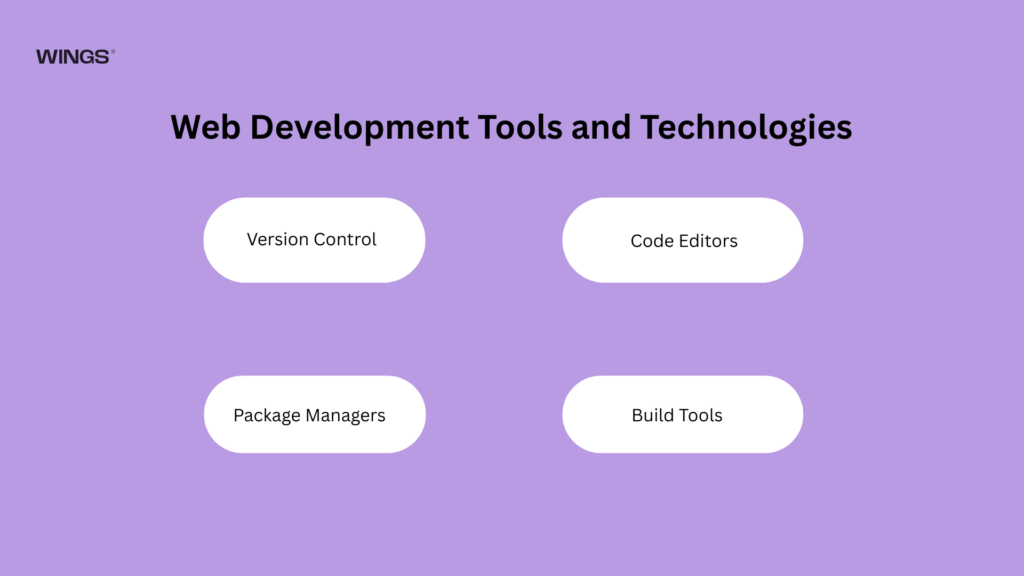
Web Development Tools and Technologies
Modern web development relies on a wide range of tools and technologies that help developers write better code, improve productivity, manage projects efficiently, and build scalable applications. These tools simplify complex development tasks and make collaboration between developers easier and faster.
Version Control
Version control systems are essential for tracking changes in code over time. They allow developers to save different versions of a project, collaborate with teams, and roll back to previous states if something goes wrong.
Git is the most widely used version control system. It helps developers track every change made in the codebase, ensuring better organization and error control.
GitHub is a cloud-based platform built on Git that allows developers to store code repositories online, collaborate with team members, manage projects, and contribute to open-source software development.
Code Editors
Code editors are software tools used to write and edit source code efficiently. They provide features like syntax highlighting, auto-completion, error detection, and extensions that improve coding speed and accuracy.
Popular code editors include:
- Visual Studio Code (VS Code): A powerful and widely used editor with rich extensions and built-in Git support
- Sublime Text: A lightweight and fast editor known for simplicity and performance
- WebStorm: A professional IDE designed specifically for JavaScript and modern web development
Package Managers
Package managers are tools used to install, update, and manage libraries or dependencies required in a project. They help developers reuse existing code instead of writing everything from scratch.
- npm (Node Package Manager): The default package manager for Node.js, used to install JavaScript libraries and frameworks
- pip (Python Package Installer): Used to install and manage Python packages and libraries
These tools simplify dependency management and ensure projects run consistently across different environments.
Build Tools
Build tools are used to automate tasks in web development such as bundling code, optimizing performance, converting modern JavaScript into browser-compatible versions, and improving load speed.
- Webpack: A powerful module bundler that combines multiple files into optimized bundles for production
- Vite: A modern build tool that offers extremely fast development and hot module replacement
- Babel: A JavaScript compiler that converts modern JavaScript code into older versions for better browser compatibility

Explore the Web development process behind the Bluewhale.
Responsive Web Design
Responsive web design is an essential approach in modern web development that ensures websites automatically adjust and function properly on all screen sizes and devices. It improves user experience by making websites look and perform well on mobile phones, tablets, laptops, and large desktop screens without requiring separate versions of the site.
A responsive website dynamically adapts its layout, images, and content based on the screen resolution and device type. This ensures that users can easily read content, navigate pages, and interact with features regardless of the device they are using.
Techniques Used:
- Flexible Grids: Layouts built using relative units like percentages instead of fixed sizes, allowing elements to resize smoothly based on screen width
- Media Queries: CSS techniques that apply different styles depending on device characteristics such as screen size, resolution, or orientation
- Responsive Images: Images that automatically scale or change resolution to fit different screen sizes without losing quality
- Mobile-First Design: A development approach where websites are first designed for mobile devices and then expanded for larger screens
Example:
A responsive website automatically adjusts its layout and content depending on the device being used, such as:
- Mobile phones: Simplified layout with stacked content for easy scrolling
- Tablets: Balanced layout with moderate spacing and navigation
- Laptops: Full layout with sidebars and expanded menus
- Large desktops: Wide layout with multiple columns and enhanced visuals
Web Hosting and Deployment
Once a website is developed, it needs to be made accessible to users on the internet. This process is known as web hosting and deployment. Hosting involves storing website files on a server, while deployment refers to the process of uploading and launching the website so it becomes live and accessible through a domain name.
A hosting service ensures that a website remains available 24/7, performs well under traffic, and delivers content quickly to users across different locations.
Hosting Types:
- Shared Hosting (Basic Websites):
In shared hosting, multiple websites share the same server resources such as CPU, RAM, and storage. It is a cost-effective option and is commonly used for small websites, blogs, and personal projects, but it may have limited performance during high traffic. - VPS Hosting (Virtual Private Server):
VPS hosting provides a dedicated portion of a physical server to each user. It offers better performance, flexibility, and control compared to shared hosting, making it suitable for medium-sized projects and growing applications. - Cloud Hosting (Scalable Apps):
Cloud hosting uses multiple interconnected servers to host websites. It is highly scalable, reliable, and efficient, as resources can be increased or decreased based on demand. It is widely used for large applications and modern web platforms.
Popular Hosting Platforms:
- AWS (Amazon Web Services): A powerful cloud computing platform offering scalable hosting, storage, and computing services used by large enterprises and startups
- Google Cloud: A flexible cloud platform that provides fast, secure, and scalable infrastructure for modern applications
- Microsoft Azure: A cloud service offering hosting, databases, and development tools integrated with Microsoft technologies
- Netlify: A popular platform for deploying static websites and front-end projects with continuous deployment features
- Vercel: A developer-friendly platform optimized for modern JavaScript frameworks like React and Next.js, offering fast deployment and global performance
Website Security Basics
Website security is one of the most important aspects of web development because it protects websites, users, and sensitive data from unauthorized access, attacks, and vulnerabilities. A secure website builds trust with users and ensures safe communication between the client (browser) and the server.
Modern web applications handle large amounts of personal and financial data, so developers must implement strong security practices to prevent hacking, data leaks, and system failures.
Key Practices:
- HTTPS Encryption:
HTTPS (HyperText Transfer Protocol Secure) encrypts data exchanged between the user and the website using SSL/TLS certificates. This ensures that sensitive information like passwords, payment details, and personal data cannot be easily intercepted. - Secure Authentication:
Authentication systems verify user identity through secure login methods such as encrypted passwords, multi-factor authentication (MFA), and token-based systems, reducing the risk of unauthorized access. - Input Validation:
Input validation ensures that all user inputs are checked and sanitized before being processed. This prevents malicious code or harmful data from being injected into the system. - Firewalls:
Firewalls act as security barriers between trusted internal networks and external threats. They monitor and filter incoming and outgoing traffic to block suspicious activities. - Regular Updates:
Keeping software, frameworks, and libraries updated helps fix security vulnerabilities and protects websites from newly discovered threats.
Common Threats:
- SQL Injection:
A type of attack where hackers insert malicious SQL queries into input fields to gain unauthorized access to databases or manipulate stored data. - Cross-Site Scripting (XSS):
An attack where malicious scripts are injected into websites and executed in users’ browsers, often used to steal cookies or session data. - Data Breaches:
Unauthorized access to sensitive data such as user credentials, personal information, or financial records, often due to weak security systems.
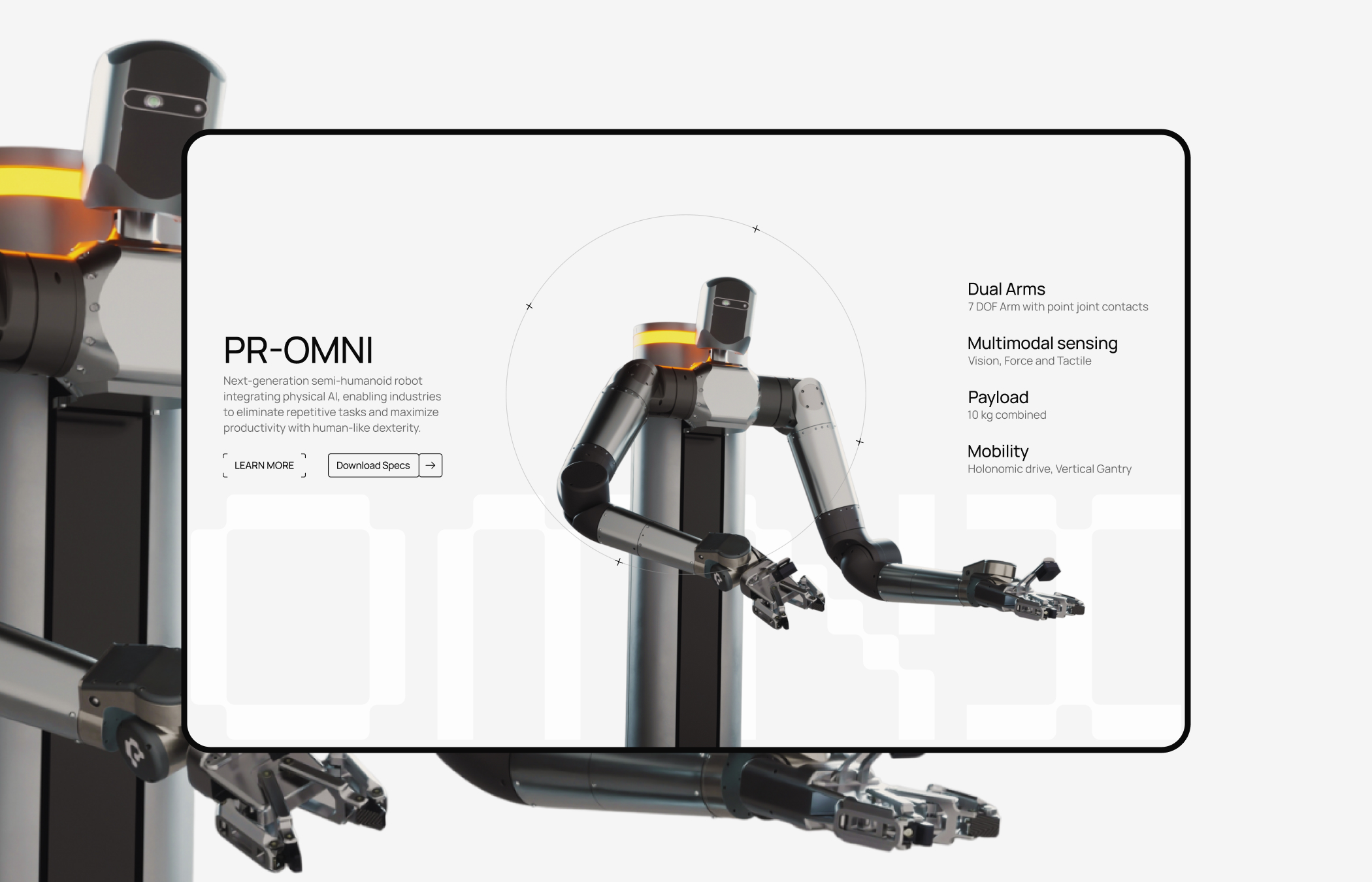
Explore the Web development process behind the perceptyne.
Importance of Website Development
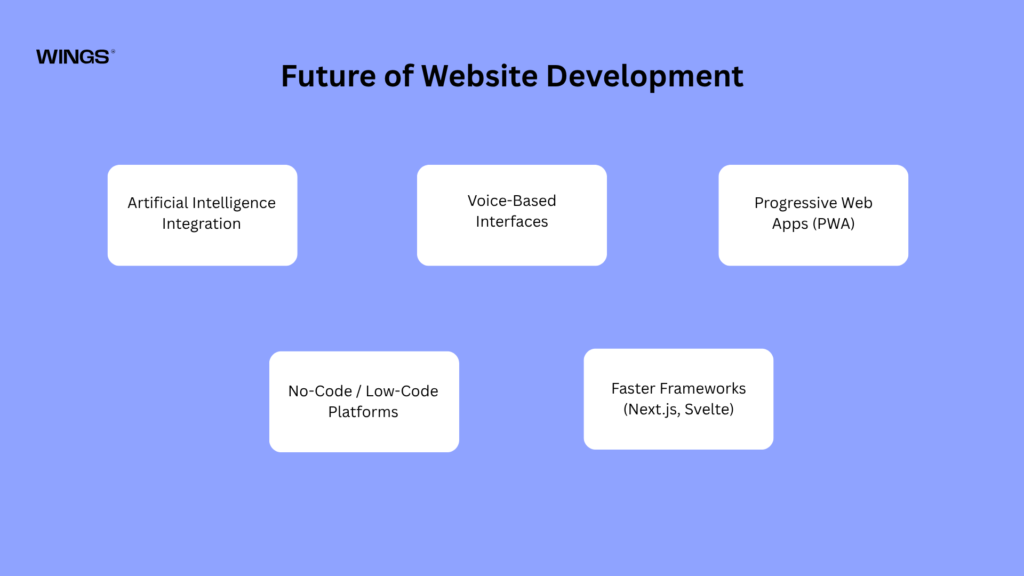
Future of Website Development
Web development is continuously evolving as new technologies, user expectations, and digital trends emerge. The future of website development is focused on making websites more intelligent, faster, and highly interactive. Developers are now combining advanced tools, automation, and AI-driven systems to create more efficient and user-friendly web experiences.
Emerging Trends:
- Artificial Intelligence Integration:
AI is being widely used in modern websites to improve user experience through chatbots, recommendation systems, automated customer support, and personalized content delivery based on user behavior. - Voice-Based Interfaces:
Voice technology allows users to interact with websites using voice commands instead of typing, making navigation faster and more accessible, especially for mobile and hands-free usage. - Progressive Web Apps (PWA):
PWAs combine the best features of websites and mobile apps. They can work offline, load quickly, and provide an app-like experience directly through a browser without installation. - No-Code / Low-Code Platforms:
These platforms allow users to build websites and applications with minimal or no coding knowledge, making web development more accessible to non-developers and businesses. - Faster Frameworks (Next.js, Svelte):
Modern frameworks like Next.js and Svelte improve performance, reduce load times, and enhance developer productivity by simplifying complex development processes.
Future Vision:
In the future, websites will become significantly more advanced and user-centric. They will be:
- Faster: Optimized for instant loading and smooth performance
- Smarter: Powered by AI and data-driven personalization
- More Interactive: Offering real-time engagement and dynamic content
- More Personalized: Adapting content and features based on individual user preferences and behavior

Explore the Web development process behind the franck muller.
Conclusion
Website development is an essential skill in the digital world. It helps create responsive and interactive websites for businesses and individuals. It combines design, programming, and creativity to build user-friendly web applications. It provides career opportunities in software development, freelancing, and e-commerce. Learning web development improves technical and problem-solving skills. With regular practice, developers can build professional websites that meet industry standards.

Prasanna M
WordPress Developer