


For business leaders, social media is no longer just a marketing channel, it is a distribution system driven by algorithms. Whether you are investing in brand awareness, lead generation, or customer engagement, understanding how these algorithms work is critical to making informed decisions about content, budget, and team strategy.
This guide explains the mechanics behind social media algorithms and how to align them with business outcomes. It breaks down the key factors that influence content visibility, engagement, and reach across platforms. More importantly, it provides a strategic lens to help you evaluate where to invest, how to optimize performance, and how to ensure your social media efforts contribute to measurable business growth.
What Is a Social Media Algorithm?
A social media algorithm is a system that determines how content is distributed across a platform. Instead of displaying content chronologically, platforms such as Instagram, Facebook, Pinterest, and LinkedIn prioritize content based on predicted user engagement. These systems evaluate user behavior, content relevance, and interaction patterns to surface content that is most likely to capture attention and drive engagement. For decision-makers, this shifts the focus from volume to performance, where visibility is earned through results rather than just publishing frequency.
How Algorithms Influence Business Outcomes
Algorithms directly impact three key business metrics. They determine how content is distributed, who sees it, and how often it appears in user feeds. As a result, they play a critical role in shaping reach, engagement, and overall business outcomes.
| Platform | Key Focus | Ranking Factors | Best Content Type | Business Use Case |
| Engagement & user relationships | Comments, shares, saves, watch time (Reels) | Visual content, Reels, storytelling | Brand building, audience engagement, visual identity | |
| Professional relevance | Thoughtful comments, dwell time, meaningful dialogue | Informative posts, insights | B2B marketing, thought leadership, industry positioning | |
| YouTube | Viewer retention & session time | Click-through rate, watch time | Long-form videos, storytelling | Authority building, education, long-term trust |
| Visual discovery & search | Keywords, search intent, long-term relevance | Pins, visuals, evergreen content | Traffic generation, e-commerce, niche marketing |
The implication is clear for modern businesses operating on social platforms. Content strategy is no longer just about publishing consistently. It must be designed as a performance-driven system that delivers measurable results. Every piece of content should serve a defined purpose within the funnel. Success depends on aligning algorithmic behavior with business goals.
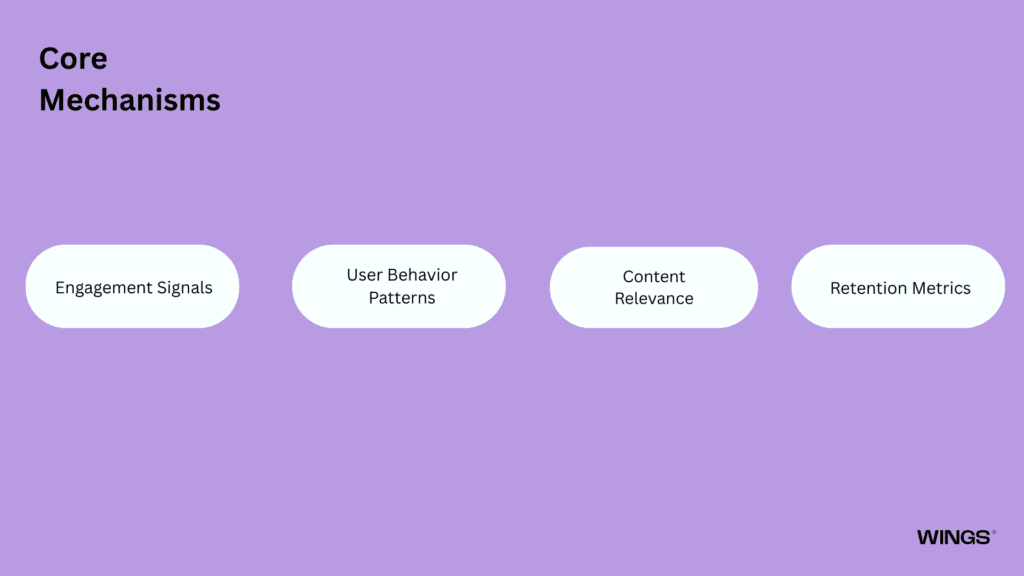
Core Mechanisms Behind Social Media Algorithms
While each platform differs, most rely on a common set of foundational signals to determine how content is ranked and distributed. These signals form the backbone of algorithmic decision-making and directly influence visibility, engagement, and performance. Understanding these factors allows businesses to design content that aligns with platform priorities. Rather than relying on assumptions, decision-makers can use these signals to guide strategy. The result is a more predictable and performance-driven approach to social media.
Engagement Signals
Algorithms prioritize content that generates meaningful interaction from users. Actions such as comments, shares, and saves are considered stronger indicators of value than simple likes. Higher engagement signals suggest that the content resonates with the audience. As a result, such content is more likely to be amplified to a wider audience. For businesses, this means designing content that encourages active participation rather than passive consumption.
User Behavior Patterns
Platforms continuously analyze individual user behavior to understand preferences and interests. This includes tracking what users watch, interact with, and ignore over time. Based on this data, algorithms predict what content a user is most likely to engage with next. This creates highly personalized content feeds for each user. For decision-makers, this highlights the importance of targeting specific audience segments with relevant content.
Content Relevance
Relevance is determined by how closely content aligns with a user’s interests and past interactions. Algorithms assess factors such as topic consistency, content format, and engagement history. Content that matches user preferences is more likely to be surfaced in their feed. This makes consistency in messaging and positioning critical for brands. A clear and focused content strategy improves long-term visibility.
Retention Metrics
Retention metrics are particularly important for video-based platforms. These include watch time, completion rate, and repeat views. Content that keeps users engaged for longer durations signals higher value to the algorithm. As a result, such content is promoted more aggressively across the platform. Platforms like YouTube and TikTok heavily prioritize retention as a key ranking factor, making it essential for businesses to focus on content quality and structure.

Explore how social media relates to the concept of dimension.
Platform-Level Strategic Differences
Instagram places a strong emphasis on engagement and user relationships. Content that drives interactions such as comments, shares, and saves is prioritized in the feed. Reels are given additional visibility, especially when they achieve high watch time and share rates. The platform is well-suited for brand storytelling and visual positioning. For businesses, it works best for building brand affinity and consistent audience engagement.
LinkedIn prioritizes professional relevance and meaningful conversations. Content that generates thoughtful comments and sustained attention performs better. Dwell time, or how long users spend engaging with a post, is a key ranking factor. The platform is ideal for B2B marketing, industry positioning, and thought leadership. It supports deeper engagement rather than mass reach.
YouTube
YouTube focuses on maximizing viewer retention and overall session duration. Content performance is driven by click-through rate combined with watch time. Videos that keep users engaged for longer periods are promoted more widely. This makes it suitable for long-form content and in-depth storytelling. Businesses can use it to build authority and long-term audience trust.
Pinterest functions more as a visual discovery and search engine than a traditional social media platform. Content is driven by keywords, search intent, and long-term relevance rather than immediate engagement. Pins can continue to generate traffic and visibility over an extended period. The platform is particularly effective for niches like lifestyle, design, fashion, and e-commerce. For businesses, it offers strong potential for consistent referral traffic and evergreen content performance.
Strategic Implications for Decision-Makers
01. Shift from Volume to Performance
Publishing a high volume of content no longer guarantees visibility or reach. Algorithms prioritize how content performs rather than how often it is posted. This means businesses must focus on quality, relevance, and engagement design. Content should be created with a clear purpose and measurable outcome in mind. A performance-driven approach ensures better returns on time and investment.
02. Align Content with Business Goals
Content strategy must be directly tied to specific business objectives. Different platforms serve different purposes, and each should be leveraged accordingly. For example, TikTok is effective for reach and awareness, LinkedIn for lead generation and credibility, and YouTube for long-term authority building. Aligning platform strategy with business goals ensures more efficient use of resources. This approach also improves overall marketing effectiveness.
03. Invest in Creative Strategy
Algorithms reward content that captures attention quickly and maintains it throughout. This requires a strong creative foundation, not just frequent posting. Elements such as compelling hooks, clear messaging, and structured storytelling play a critical role. Well-crafted content increases retention and engagement rates. Businesses that invest in creative strategy are more likely to achieve consistent performance.
04. Optimize for Attention and Retention
Beyond creativity, content must be designed to hold user attention over time. Retention signals such as watch time and completion rate significantly influence algorithmic reach. Content that keeps users engaged is more likely to be amplified. This requires thoughtful structuring and pacing of content. A focus on retention directly improves visibility and performance.
05. Measure the Right Metrics
Relying on vanity metrics such as likes provides limited insight into actual performance. Decision-makers should prioritize metrics that reflect meaningful engagement and outcomes. These include watch time, shares, comments, and conversion rates. Tracking the right metrics allows for more accurate evaluation of content effectiveness. It also supports better strategic decision-making.
06. Build Feedback Loops
High-performing organizations treat content as an iterative process. They continuously test, measure, and refine their approach based on data and algorithmic response. Insights from performance metrics should inform future content decisions. This creates a feedback loop that improves efficiency over time. Consistent optimization is key to long-term success in algorithm-driven environments.
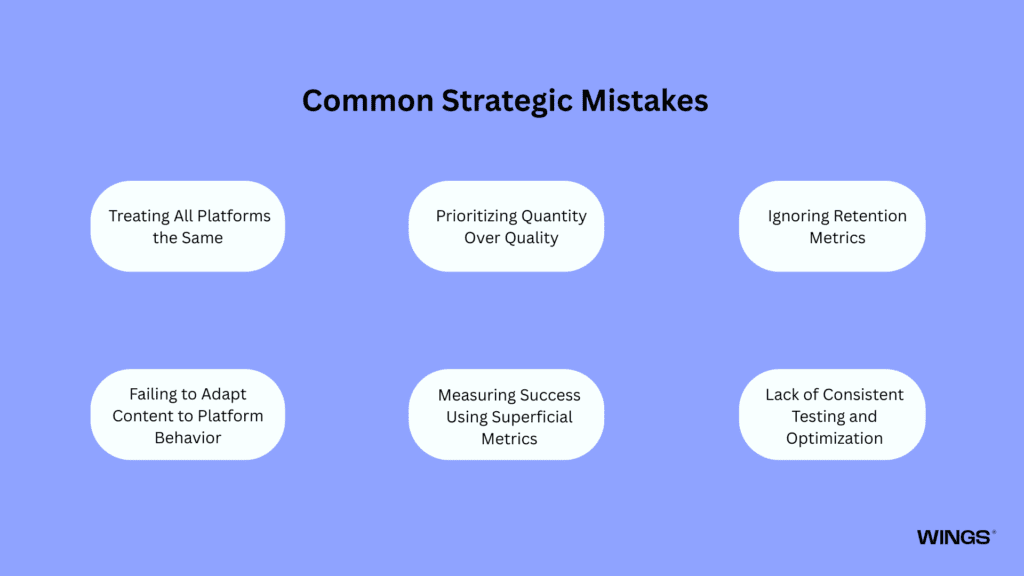
Common Strategic Mistakes
01. Treating All Platforms the Same
Each platform operates on different algorithmic principles and user behaviors. Applying a single content strategy across all platforms reduces effectiveness and limits reach. What works on TikTok may not perform on LinkedIn or YouTube. Businesses must tailor content formats, tone, and objectives to each platform. A platform-specific approach leads to better engagement and outcomes.
02. Prioritizing Quantity Over Quality
Publishing a high volume of content without a clear strategy often results in low engagement. Algorithms favor content that performs well rather than content that is posted frequently. Poor-quality content can negatively impact overall account performance. Businesses should focus on creating fewer, high-impact pieces of content. A quality-first approach ensures stronger and more sustainable results.
03. Ignoring Retention Metrics
Retention metrics such as watch time and completion rate are critical for algorithmic visibility. Many businesses focus only on surface-level engagement and overlook these deeper indicators. Content that fails to hold attention is less likely to be promoted by the algorithm. This directly affects reach and growth potential. Prioritizing retention helps improve both visibility and audience connection.
04. Failing to Adapt Content to Platform Behavior
Each platform has unique formats, user expectations, and consumption patterns. Content that is not optimized for these behaviors often underperforms. For example, short-form videos work well on TikTok, while professional insights perform better on LinkedIn. Adapting content to platform norms increases relevance and engagement. This alignment improves overall performance.
05. Measuring Success Using Superficial Metrics
Relying only on metrics such as likes and impressions provides limited insight into performance. These indicators do not necessarily reflect meaningful engagement or business impact. Decision-makers should prioritize metrics like conversions, shares, and watch time. Without this shift, it becomes difficult to assess return on investment. Accurate measurement is essential for informed decision-making.
06. Lack of Consistent Testing and Optimization
Many organizations fail to continuously test and refine their content strategy. Algorithms change frequently, and audience preferences evolve over time. Without regular experimentation, businesses risk stagnation and declining performance. High-performing teams use data to iterate and improve content consistently. A strong feedback loop is essential for long-term success in algorithm-driven environments.
The Future of Social Media Algorithms
Social media algorithms are rapidly evolving, driven by advances in artificial intelligence and changing user behavior. Platforms are moving beyond basic engagement signals toward more sophisticated systems that prioritize relevance, intent, and user experience. This shift is reshaping how content is discovered, consumed, and monetized. For businesses, staying aligned with these changes is critical to maintaining visibility and competitiveness. The future will favor organizations that understand and adapt to these evolving dynamics.
Increased Personalization Through AI
Algorithms are becoming more advanced in delivering highly personalized content experiences. They analyze user behavior, preferences, and interactions in real time to curate individual feeds. This reduces reliance on broad targeting and increases the importance of relevance. Businesses must focus on creating content tailored to specific audience segments. Personalization will be a key driver of engagement and performance.
Greater Emphasis on Content Quality Over Follower Count
Follower count is becoming less important as algorithms prioritize content performance. High-quality content can achieve significant reach regardless of the size of the account. This creates a more level playing field for businesses and creators. The focus shifts to value, relevance, and engagement rather than scale alone. Organizations that invest in quality will outperform those relying solely on audience size.
Integration of Commerce and Content
Social platforms are increasingly integrating shopping and transactional features directly into content. This allows users to move from discovery to purchase within the same ecosystem. As a result, content is no longer just for engagement but also for conversion. Businesses need to align content strategies with sales objectives. This convergence of content and commerce is redefining digital marketing.
Strategic Implication for Businesses
For businesses, these changes signal a shift from presence-driven to strategy-driven execution. Simply being active on social media is no longer sufficient. Competitive advantage will come from how effectively organizations align content, data, and platform behavior. Decision-makers must adopt a more structured and performance-oriented approach. Those who do will be better positioned to achieve sustainable growth.
Conclusion
Social media algorithms are not just technical systems, they are gatekeepers of digital visibility. They determine which content reaches audiences and which goes unnoticed, directly influencing business outcomes. Organizations that understand and align with these systems can significantly improve marketing efficiency. They are able to reduce wasted spend by focusing on what performs and increase return on investment from content efforts.
Businesses that fail to adapt risk losing visibility, regardless of how much content they produce. In an algorithm-driven environment, effort alone does not guarantee results. Success depends on aligning strategy, content, and performance metrics with how platforms actually operate.

Aakash
Digital Marketing Manager