

In the luxury jewelry industry, branding is far more than a logo or a beautiful product catalog. It is the foundation of trust, exclusivity, and long-term business value. Decision-makers, whether investors, retail partners, luxury consumers, or distributors, evaluate jewelry brands based on perception, consistency, credibility, and emotional positioning.
A strong luxury brand identity allows jewelry companies to command premium pricing, build customer loyalty, and compete in a highly saturated market. Without a defined brand strategy, even exceptional craftsmanship can struggle to gain recognition.
Today’s luxury buyers are not simply purchasing diamonds, gemstones, or precious metals. They are investing in stories, heritage, emotion, and status. For this reason, jewelry branding has become one of the most important strategic investments for companies aiming to scale in the premium market. This article explores how jewelry brands can build a luxury identity that earns trust from modern decision-makers and strengthens long-term brand equity.
Why Branding Matters in Luxury Jewelry
In the luxury jewelry industry, branding plays a critical role in shaping how customers perceive value. Often, perception matters just as much as the quality of the product itself. Two brands may offer similar craftsmanship and materials, yet the stronger brand can command higher prices because it creates a deeper sense of prestige, exclusivity, and emotional connection.
Luxury jewelry is more than an accessory, it represents identity, achievement, legacy, and personal expression. Customers invest in the story and status associated with the brand, not just the jewelry piece itself.
Strong branding helps luxury jewelry companies:
- Increase perceived value
- Attract affluent customers
- Build long-term loyalty
- Improve customer retention
- Expand into global luxury markets
- Strengthen investor confidence
For decision-makers, a well-positioned brand signals professionalism, consistency, and long-term market potential. In contrast, weak branding can lead to commoditization, where products compete mainly on price rather than prestige.
Ultimately, successful luxury jewelry branding transforms jewelry from a product into an experience, one that customers trust, admire, and aspire to own.
Defining Luxury Brand Positioning
Before creating logos, packaging, or marketing campaigns, jewelry brands must first define their brand positioning clearly. Positioning determines how the brand is perceived in the luxury market and why customers should choose it over competitors.
At its core, brand positioning answers one important question:
Why should customers choose your jewelry brand instead of another?
A strong luxury jewelry positioning strategy should define:
- Target audience
- Emotional value
- Design philosophy
- Market segment
- Price category
- Brand personality
For example, some jewelry brands position themselves around timeless heritage and craftsmanship, while others focus on modern minimalism, sustainability, or artistic exclusivity.
Clear positioning helps maintain consistency across every aspect of the brand, including visual identity, storytelling, customer experience, and pricing strategy. Without a defined position, branding can become inconsistent, making it difficult to build trust and recognition in the luxury market.
In luxury jewelry, strong positioning is essential because customers are not only buying products, they are buying identity, prestige, and emotional connection.
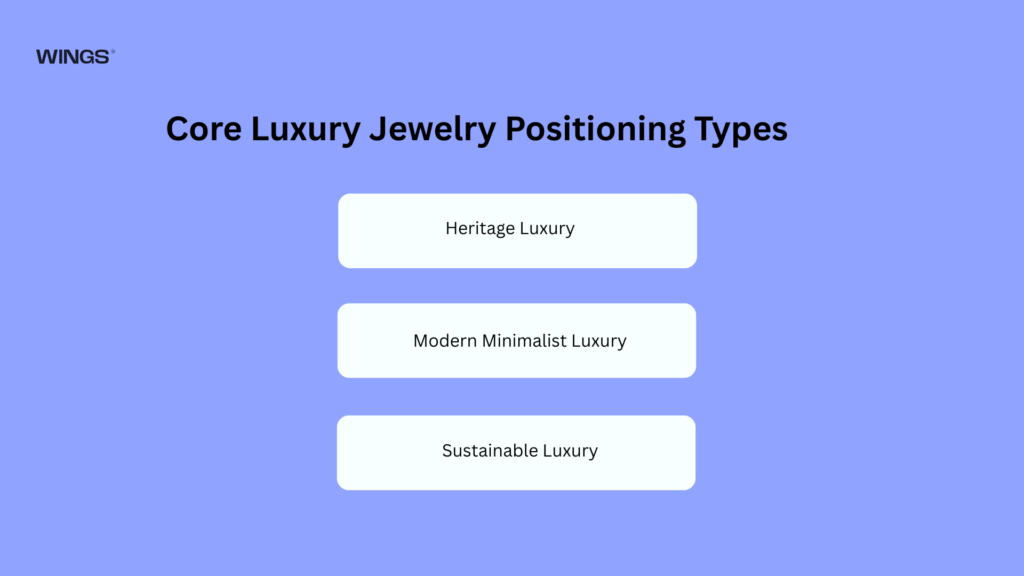
Core Luxury Jewelry Positioning Types
Heritage Luxury
Heritage luxury brands focus on timeless craftsmanship, tradition, and prestige. These brands often emphasize artisan techniques, family legacy, long-standing expertise, and classic design aesthetics. Their identity is built around authenticity and enduring value, making them highly appealing to high-net-worth consumers seeking investment pieces, heirloom jewelry, and legacy purchases.
Modern Minimalist Luxury
Modern minimalist luxury brands prioritize clean aesthetics and contemporary sophistication. This positioning typically includes minimalist designs, refined packaging, digital-first branding, and strong appeal to younger affluent audiences. The approach resonates particularly well with Millennials and Gen Z consumers who value understated elegance, modern lifestyles, and premium yet wearable jewelry.
Sustainable Luxury
Sustainable luxury is becoming increasingly important in the jewelry industry as consumers pay closer attention to ethical and environmental practices. Brands that focus on ethical sourcing, recycled metals, lab-grown diamonds, and transparent supply chains can stand out in a competitive market. Today, many decision-makers and luxury buyers view sustainability as a sign of responsible, future-focused business practices and long-term brand credibility.
Building a Strong Visual Identity
Visual identity creates the first impression of a jewelry brand and plays a major role in shaping customer perception. In the luxury market, presentation directly influences perceived value, credibility, and exclusivity. A refined visual identity helps a jewelry brand stand out while reinforcing its premium positioning.
A strong luxury jewelry identity should communicate:
- Elegance
- Precision
- Exclusivity
- Sophistication
- Timelessness
Every visual element, from the logo and typography to packaging and photography, should reflect consistency and attention to detail. Luxury consumers are highly influenced by aesthetics, and a polished visual identity helps build trust, recognition, and emotional connection with the brand.
Essential Elements of Jewelry Branding
Logo Design
A luxury jewelry logo should feel refined, timeless, and sophisticated. Unlike mass-market brands, luxury logos are typically minimal rather than overly decorative. Strong jewelry logos often feature elegant typography, balanced spacing, timeless design elements, and minimal visual clutter. The goal is to create a visual identity that feels enduring and premium rather than trend-driven.
Typography
Typography plays a major role in shaping brand perception. Luxury jewelry brands commonly use serif fonts to communicate heritage, craftsmanship, and tradition, while clean sans-serif fonts are often chosen for modern luxury positioning. Some premium brands also develop custom typography to enhance exclusivity and uniqueness. Consistency in typography across websites, packaging, advertising, and social media is essential for building a cohesive luxury identity.
Color Palette
Luxury jewelry brands usually rely on restrained and sophisticated color palettes that reflect elegance and exclusivity. Popular luxury tones include:
- Black
- Gold
- White
- Emerald green
- Champagne tones
- Deep burgundy
A controlled and consistent color palette strengthens brand recognition while reinforcing premium perception.
Photography and Visual Content
High-quality photography is essential in luxury jewelry branding because visuals strongly influence trust and desirability. Luxury imagery should highlight detail, texture, craftsmanship, lighting quality, and emotional storytelling. Editorial-style photography, close-up product shots, and elegant compositions help communicate sophistication and exclusivity. In contrast, low-quality visuals can quickly damage brand credibility and reduce perceived value.
The Power of Storytelling in Jewelry Branding
Storytelling is one of the most powerful elements of luxury jewelry branding. While craftsmanship and design attract attention, stories create emotional connection and long-term brand loyalty. Consumers remember how a brand makes them feel, and a compelling narrative can transform jewelry from a simple accessory into a meaningful experience.
Luxury buyers are often drawn to brands with authenticity, heritage, and emotional depth. A strong brand story helps customers connect with the values, inspiration, and identity behind the jewelry, making the purchase feel more personal and memorable.
Your jewelry brand story should clearly communicate:
- Why the company was founded
- What inspires the designs
- What values define the brand
- What emotional experience customers receive
Whether the story is built around family tradition, artisan craftsmanship, cultural inspiration, or modern innovation, it should feel genuine and consistent across all branding touchpoints. In luxury markets, storytelling helps build trust, exclusivity, and emotional value, qualities that significantly influence purchasing decisions.
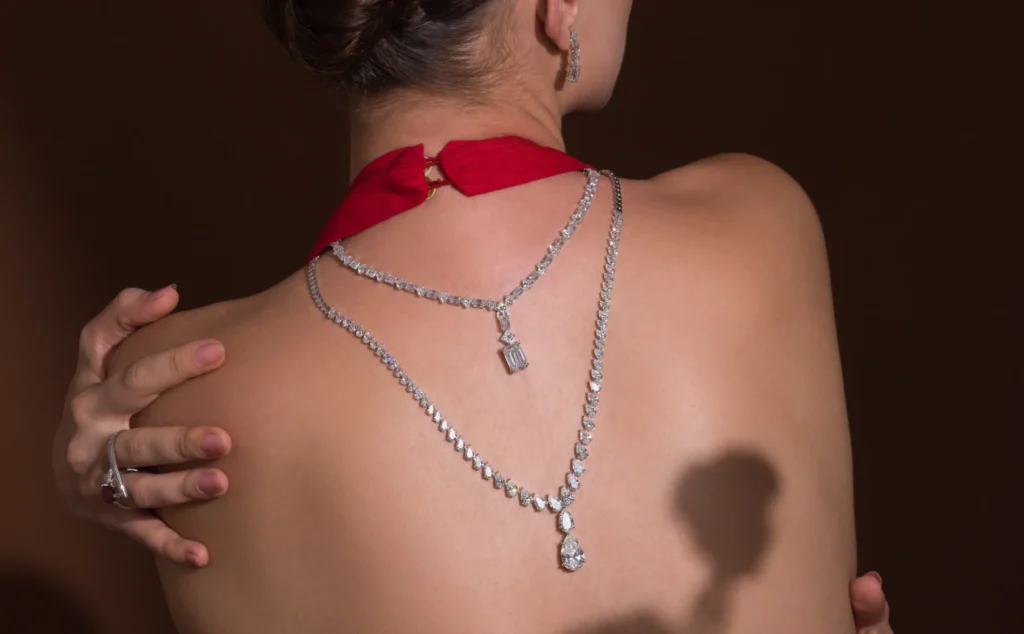
Explore the Branding behind the Diamensions.
Key Elements of Luxury Storytelling
Founder Vision
Founder-driven storytelling adds authenticity and emotional depth to a luxury jewelry brand. Consumers are often interested in the story behind the designer, including their inspiration, creative philosophy, cultural influences, and passion for craftsmanship. Sharing the founder’s vision helps humanize the brand and creates a stronger emotional connection with customers. In luxury markets, authenticity is a key factor in building long-term trust and loyalty.
Craftsmanship Narrative
Luxury buyers value transparency and artistry, especially when investing in premium jewelry. Brands should highlight the craftsmanship behind each piece, including hand-finishing techniques, material sourcing, artisan expertise, and design processes. Showcasing the skill and attention to detail involved in production reinforces exclusivity, quality, and perceived value.
Emotional Relevance
Jewelry is closely connected to important life moments and personal emotions. Luxury branding becomes more powerful when it connects with experiences such as:
- Engagements
- Anniversaries
- Milestones
- Celebrations
- Personal achievements
By aligning the brand with meaningful occasions, jewelry becomes more than a product, it becomes part of a customer’s personal story and emotional journey.
Building Trust Through Transparency
Trust is essential in the luxury jewelry industry because purchases are often both high-value and emotionally significant. Modern consumers, investors, and retail partners expect brands to be transparent about their business practices, sourcing methods, and product authenticity. A transparent approach strengthens credibility and helps build long-term customer confidence.
Luxury jewelry brands should provide clarity regarding:
- Material sourcing
- Ethical practices
- Certifications
- Pricing integrity
Brands that communicate openly about their operations are more likely to earn customer loyalty and maintain a strong reputation in the luxury market.
Ethical Sourcing and Sustainability
Ethical sourcing has become a major factor influencing luxury purchasing decisions. Today’s consumers increasingly prefer brands that demonstrate social and environmental responsibility. Jewelry companies that support conflict-free diamonds, responsible mining, fair labor practices, and sustainable production methods can strengthen their positioning and stand out in a competitive market.
Transparency around sustainability efforts not only builds trust but also enhances long-term brand reputation and credibility.
Certifications and Authenticity
Certifications play an important role in reassuring buyers about product quality and legitimacy. Luxury jewelry brands often provide:
- Diamond grading certificates
- Authenticity guarantees
- Responsible sourcing certifications
These trust signals help customers feel more confident about their purchase decisions, especially when investing in premium or high-value jewelry pieces. Certifications also reinforce the brand’s commitment to quality, transparency, and ethical standards.
Digital Branding in the Luxury Market
Luxury branding now extends far beyond physical stores and product design. Digital experiences have become a major part of how customers perceive luxury jewelry brands. A poorly designed website, weak visuals, or inconsistent social media presence can quickly damage premium perception and reduce customer trust.
Website Experience
A luxury jewelry website should reflect the same sophistication and exclusivity as the products themselves. Brands should prioritize:
- Elegant design
- Fast performance
- Mobile optimization
- High-quality visuals
- Minimalist layouts
Decision-makers and luxury consumers often judge a brand’s professionalism based on its digital presentation. A refined online experience helps build credibility, trust, and premium positioning.
Social Media Strategy
Luxury social media branding should focus on aspiration, storytelling, and emotional connection rather than aggressive selling. Effective content often includes:
- Editorial photography
- Behind-the-scenes craftsmanship
- Lifestyle storytelling
- Founder narratives
- Collection launches
Consistency in visual style, tone, and messaging is essential for maintaining a cohesive luxury identity across all platforms.
Packaging as a Luxury Experience
Packaging is an important part of the luxury jewelry experience because it extends the emotional value of the product beyond the purchase itself. Premium packaging communicates:
- Attention to detail
- Exclusivity
- Prestige
- Quality
Luxury customers expect packaging that feels elegant, memorable, and refined. High-quality materials, minimalist presentation, and personalized touches can significantly enhance perceived value and strengthen the overall brand experience.
Features of Luxury Packaging
Luxury packaging plays a key role in shaping the customer experience and reinforcing premium brand perception. In the jewelry industry, packaging is often viewed as an extension of the product itself, adding emotional value and enhancing the sense of exclusivity.
High-end jewelry packaging commonly includes:
- Velvet interiors
- Magnetic closures
- Premium materials
- Minimalist branding
- Personalized elements
Luxury buyers expect packaging that feels elegant, memorable, and refined. Every detail, from texture and color to presentation and finishing, should reflect quality and sophistication. Well-designed packaging not only protects the jewelry but also creates a lasting impression that strengthens brand identity and customer loyalty.
Experiential Branding and Customer Service
Luxury jewelry brands must deliver experiences, not just products. In the premium market, customer experience plays a major role in shaping brand perception and long-term loyalty. Every interaction should feel personalized, exclusive, and emotionally engaging.
Affluent customers often expect:
- Personalized consultations
- Exclusive appointments
- VIP treatment
- Exceptional customer support
From private showroom visits to customized recommendations and after-sales care, the experience should reflect the brand’s luxury positioning. High-end customer service helps build trust, emotional connection, and a sense of exclusivity.
In luxury jewelry, the customer experience becomes part of the brand identity itself. Brands that consistently provide refined and memorable experiences are more likely to build strong relationships and lasting customer loyalty.
Retail Environment and Brand Perception
The retail environment plays a major role in shaping how customers perceive a luxury jewelry brand. Physical spaces, whether boutiques, showrooms, or digital storefronts, directly influence feelings of trust, exclusivity, and prestige.
Luxury environments should consistently communicate:
- Sophistication
- Comfort
- Privacy
- Attention to detail
From lighting and interior design to customer interactions and product presentation, every element should reflect the brand’s premium identity. A refined retail experience helps customers feel valued and emotionally connected to the brand.
In luxury jewelry, every interaction matters. Whether online or in-store, a polished and personalized environment strengthens credibility, enhances customer confidence, and reinforces the overall perception of exclusivity and quality.
Influencer and Celebrity Partnerships
Strategic influencer and celebrity partnerships can strengthen a luxury jewelry brand’s visibility and prestige when carefully aligned with the brand identity. In the luxury market, partnerships should feel authentic, refined, and exclusive rather than overly commercial.
Luxury branding requires selectivity because overexposure can weaken exclusivity and reduce perceived value. Instead of focusing only on large audiences, successful luxury brands often collaborate with individuals who genuinely reflect the brand’s:
- Values
- Aesthetic
- Lifestyle positioning
The most effective partnerships create emotional alignment between the brand and its target audience. Luxury consumers are highly influenced by authenticity and are more likely to trust endorsements that feel natural and credible rather than heavily promotional.
Pricing and Luxury Perception
Pricing plays a major role in shaping brand perception in the luxury jewelry industry. In premium markets, higher pricing often signals exclusivity, craftsmanship, prestige, and superior quality. For this reason, luxury brands should avoid excessive discounts or constant promotions, as they can weaken exclusivity and reduce perceived value.
Premium pricing is most effective when it is supported by:
- Strong storytelling
- Exceptional craftsmanship
- High-end experiences
- Consistent branding
Customers are more willing to invest in luxury jewelry when they feel the emotional, artistic, and experiential value justifies the price. Beyond the product itself, buyers are paying for trust, heritage, exclusivity, and the overall brand experience.
A well-positioned luxury jewelry brand uses pricing not only as a sales strategy but also as a reflection of prestige and long-term brand value.
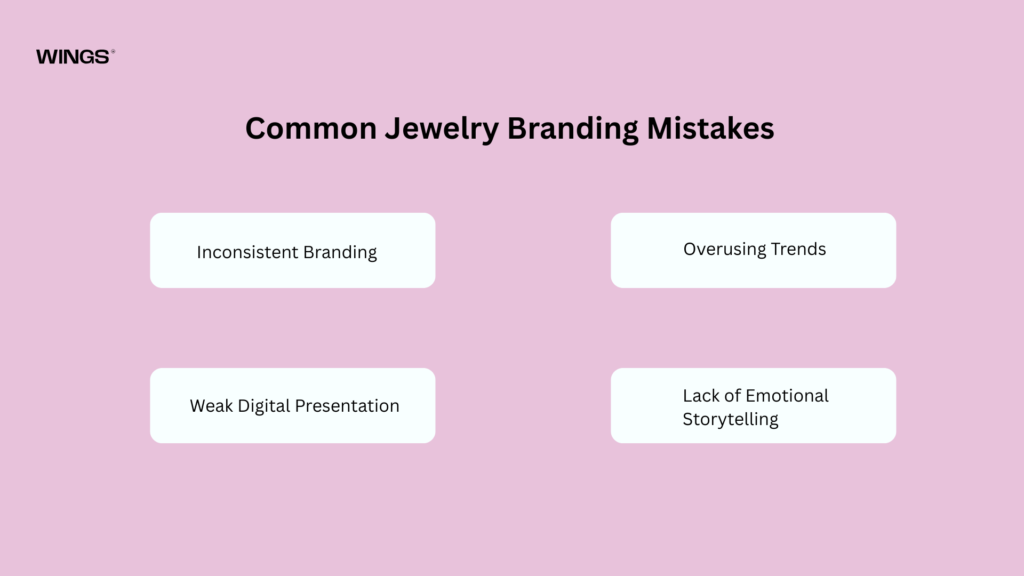
Common Jewelry Branding Mistakes
Many jewelry brands struggle to build a strong luxury identity because of avoidable branding mistakes. In the luxury market, consistency, emotional connection, and presentation are essential for maintaining trust and exclusivity.
Inconsistent Branding
Frequently changing visual identity, messaging, or brand style can weaken recognition and customer trust. Luxury branding relies on long-term consistency across logos, packaging, photography, website design, and communication. A consistent identity helps customers associate the brand with reliability, prestige, and professionalism.
Overusing Trends
Trend-focused branding may create short-term attention, but it can reduce timeless appeal. Luxury jewelry brands should aim for an enduring identity rather than constantly following fast-changing design or marketing trends. Timeless branding helps maintain long-term value and exclusivity.
Weak Digital Presentation
Poor photography, outdated websites, slow user experience, and inconsistent social media content can quickly damage credibility. In today’s market, digital presentation strongly influences how consumers perceive luxury brands. High-quality visuals and polished online experiences are essential for building trust and premium perception.
Lack of Emotional Storytelling
Without emotional storytelling, jewelry can become easier to commoditize and compete mainly on price. Strong storytelling helps luxury brands create deeper emotional connections with customers by highlighting heritage, craftsmanship, inspiration, and meaningful life moments. This emotional value is what separates luxury jewelry brands from lower-priced competitors.
The Future of Luxury Jewelry Branding
Luxury jewelry branding is evolving rapidly as consumer expectations, technology, and digital experiences continue to reshape the market. Modern luxury buyers now expect more than beautiful products, they seek authenticity, personalization, transparency, and meaningful brand experiences.
Future-focused luxury jewelry brands are likely to place greater emphasis on:
- Sustainability
- Personalization
- Digital luxury experiences
- Transparency
- Experiential retail
- Authentic storytelling
Technologies such as virtual try-ons, blockchain authentication, and AI-driven personalization are expected to play a growing role in how customers discover, experience, and purchase luxury jewelry. These innovations can enhance convenience, trust, and exclusivity while creating more immersive brand experiences.
Despite these changes, one factor will remain constant: trust. Luxury jewelry brands that consistently build trust through quality craftsmanship, authenticity, transparency, and emotional connection will continue to lead the market and maintain long-term customer loyalty.

Explore the Branding behind the Shivam.
Conclusion
Building a trusted luxury jewelry brand identity requires far more than attractive products. It demands strategic positioning, emotional storytelling, operational consistency, and premium customer experiences.
Decision-makers trust jewelry brands that demonstrate:
- Authentic craftsmanship
- Clear positioning
- Ethical responsibility
- Strong visual identity
- Consistent communication
- Emotional relevance
In today’s luxury market, branding is not optional, it is a critical business asset.
The most successful jewelry brands understand that every touchpoint, from packaging and photography to storytelling and customer service, contributes to perception. When executed effectively, luxury branding transforms jewelry from a product into a symbol of identity, prestige, and legacy.
Akshita Shivani Sundar
Senior Graphic Designer