



Social media has become an essential part of everyday life. People use social platforms to connect with friends, discover new products, follow brands, consume content, and make purchasing decisions. For businesses, this presents a massive opportunity to engage directly with their target audience and build meaningful relationships.
Social Media Marketing (SMM) is the process of using social media platforms to promote products, services, and brands while engaging with customers and achieving business objectives. It involves creating and sharing content, interacting with audiences, running paid advertising campaigns, collaborating with influencers, and analyzing performance metrics to improve results.
What makes social media marketing unique is its ability to facilitate two-way communication. Unlike traditional advertising, where businesses simply broadcast messages, social media allows brands to interact directly with customers, answer questions, gather feedback, and create communities around their products and services.
As consumer behavior continues to evolve, social media marketing has become one of the most powerful and cost-effective digital marketing channels available. Whether you’re a startup, local business, eCommerce store, or multinational company, having a strong social media presence is critical for long-term growth and success.
What Is Social Media Marketing?
Social media marketing refers to the use of social networking platforms to connect with audiences, build brand awareness, generate leads, increase website traffic, and drive business growth. It combines content creation, audience engagement, advertising, analytics, and relationship-building to achieve marketing goals.
Businesses use social media marketing to:
- Increase brand visibility
- Build customer relationships
- Generate qualified leads
- Drive website traffic
- Improve customer support
- Promote products and services
- Increase sales and revenue
- Establish industry authority
Social media marketing is not limited to posting content. It involves strategic planning, audience targeting, content optimization, community management, and continuous performance analysis.
Today, successful brands understand that social media is more than a promotional channel, it’s a platform for storytelling, customer engagement, and community building.
Types of Social Media Marketing
Organic Social Media Marketing
Organic social media marketing focuses on non-paid activities designed to build an audience naturally over time.
Examples include:
- Posting educational content
- Sharing videos and images
- Responding to comments
- Running polls and quizzes
- Hosting live sessions
- Building online communities
Organic strategies help establish trust, improve engagement, and strengthen brand loyalty.
Paid Social Media Marketing
Paid social media marketing involves investing in advertising to reach specific audiences.
Examples include:
- Sponsored posts
- Video advertisements
- Lead generation campaigns
- Retargeting ads
- Influencer collaborations
- Conversion-focused campaigns
Paid advertising helps businesses accelerate growth, increase visibility, and generate faster results.
Most successful companies use a combination of organic and paid strategies to maximize their reach and effectiveness.
Why Social Media Marketing Matters in 2026
The role of social media has evolved dramatically over the past decade. What once served primarily as a communication tool has become a central hub for discovery, entertainment, customer service, education, and commerce.
Today, billions of people use social media daily, making it one of the most effective ways for businesses to connect with customers. Brands that actively engage on social platforms can reach highly targeted audiences, build trust, and influence purchasing decisions at every stage of the customer journey.
As competition increases across industries, businesses that fail to establish a strong social media presence risk losing visibility, relevance, and revenue opportunities.
Consumers Discover Brands Through Social Media
Modern consumers increasingly use social media as a search engine. Before purchasing a product or service, they often explore reviews, watch demonstrations, compare options, and seek recommendations from creators and communities.
For example, someone interested in buying a fitness product may first watch reviews on YouTube, explore Instagram content, and check TikTok recommendations before making a final decision.
This shift in consumer behavior means businesses must create valuable and searchable content that helps potential customers discover their brand during the research phase.
Companies that consistently provide educational and engaging content position themselves as trusted resources and increase their chances of converting viewers into customers.
Social Commerce Is Growing Rapidly
Social commerce is transforming the way people shop online. Features such as in-app stores, product tagging, and seamless checkout experiences allow consumers to purchase products directly through social media platforms.
This reduces friction in the buying process and creates a smoother customer journey. Instead of navigating multiple websites, users can discover and purchase products within a few clicks.
Businesses that embrace social commerce can increase conversions, improve customer convenience, and generate additional revenue streams through their social channels.
Trust and Authenticity Influence Buying Decisions
Today’s consumers value authenticity more than ever. They prefer brands that are transparent, relatable, and responsive.
Social media provides businesses with opportunities to showcase:
- Customer success stories
- Behind-the-scenes content
- Employee experiences
- Product demonstrations
- User-generated content
When brands engage authentically with their audience and demonstrate genuine interest in customer needs, they build trust and strengthen long-term relationships.
Trust often becomes the deciding factor when consumers choose between competing brands.
Benefits of Social Media Marketing
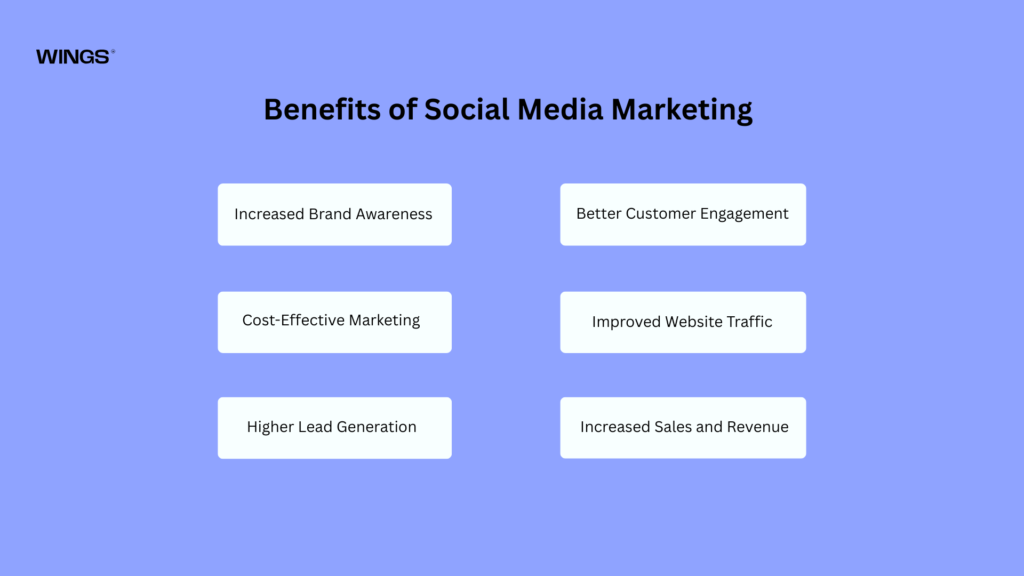
Social media marketing offers numerous benefits that contribute directly to business growth and customer acquisition.
01. Increased Brand Awareness
Brand awareness is one of the primary advantages of social media marketing. Every piece of content shared online creates an opportunity for new audiences to discover your business.
Consistent posting helps:
- Increase visibility
- Improve brand recognition
- Expand audience reach
- Strengthen market presence
Over time, repeated exposure helps consumers remember your brand when they need products or services in your industry.
02. Better Customer Engagement
Social media creates direct communication channels between businesses and customers.
Through comments, messages, polls, and interactive content, brands can engage with audiences in real time.
Strong engagement leads to:
- Higher customer satisfaction
- Increased loyalty
- Better customer retention
- More meaningful relationships
Customers who feel heard and valued are more likely to remain loyal and recommend a business to others.
03. Cost-Effective Marketing
Compared to traditional marketing methods, social media marketing is highly affordable.
Businesses can:
- Create free business profiles
- Publish content without advertising costs
- Run campaigns with flexible budgets
- Target highly specific audiences
Even small businesses with limited marketing budgets can compete effectively by creating valuable content and engaging consistently with their audience.
04. Improved Website Traffic
Social media serves as a powerful source of website traffic.
By sharing blog articles, landing pages, product pages, and educational resources, businesses can encourage users to visit their websites and learn more about their offerings.
Quality content that solves problems or provides valuable insights often drives significant traffic and supports broader digital marketing efforts.
05. Higher Lead Generation
Many businesses use social media to generate qualified leads.
Lead generation strategies may include:
- Downloadable resources
- Free consultations
- Webinar registrations
- Newsletter subscriptions
- Lead generation forms
By targeting the right audience and providing valuable incentives, businesses can attract prospects who are genuinely interested in their products or services.
06. Increased Sales and Revenue
Ultimately, the goal of most marketing activities is revenue growth.
Social media contributes to sales by:
- Promoting products
- Building trust
- Nurturing leads
- Encouraging repeat purchases
- Supporting customer decision-making
Businesses that effectively combine content marketing, advertising, and audience engagement often see substantial returns from their social media efforts.
Popular Social Media Platforms for Marketing
Different social media platforms serve different audiences and business objectives. Choosing the right platform depends on your target audience, industry, content strategy, and marketing goals. Understanding the strengths of each platform can help businesses maximize their reach and engagement.
Instagram is one of the most popular social media platforms for visual storytelling and brand building. Its highly visual nature makes it ideal for businesses that rely on attractive imagery, videos, and creative content to connect with their audience.
Best suited for:
- Fashion brands
- Beauty companies
- Travel businesses
- Food and hospitality brands
- Lifestyle products
Popular content formats include Reels, Stories, carousels, posts, and user-generated content. By leveraging these features, businesses can showcase products, share brand stories, engage with followers, and build a strong online presence.
Facebook remains one of the most powerful social media platforms for businesses due to its extensive user base and advanced advertising capabilities. It provides brands with opportunities to reach diverse audiences, build communities, and promote products or services through both organic and paid strategies.
It is particularly effective for:
- Local businesses
- Community engagement
- Event promotion
- Lead generation campaigns
With features such as Facebook Pages, Groups, Events, and targeted advertising, businesses can connect with potential customers, encourage meaningful interactions, and drive measurable marketing results. Its robust targeting options also make it a valuable platform for reaching
LinkedIn is the leading social media platform for professional networking, career development, and B2B marketing. It enables businesses to connect with industry professionals, decision-makers, and potential clients while building credibility within their respective industries.
Businesses use LinkedIn to:
- Generate business leads
- Share industry insights
- Recruit talent
- Establish thought leadership
By publishing valuable content, participating in professional discussions, and showcasing expertise, companies can strengthen their brand authority and expand their professional network. LinkedIn is particularly beneficial for service providers, consultants, technology companies, and organizations targeting business audiences.
YouTube
YouTube remains one of the most powerful platforms for video marketing, offering businesses an opportunity to educate, inform, and engage audiences through long-form content. As the world’s largest video-sharing platform and a major search engine, YouTube helps brands reach users who are actively looking for information, solutions, and product recommendations.
Businesses use YouTube for:
- Tutorials
- Product reviews
- Educational content
- Demonstrations
- Brand storytelling
High-quality video content can help businesses build authority, increase audience trust, and drive traffic to their websites. Additionally, YouTube videos often appear in search engine results, making the platform valuable for SEO and long-term content visibility.
Pinterest functions as both a social media platform and a visual search engine, allowing users to discover ideas, products, and inspiration through images and videos. Unlike many other platforms, Pinterest users often search with a specific goal in mind, making it highly effective for driving traffic and influencing purchasing decisions.
It is particularly effective for:
- Home decor
- DIY projects
- Fashion
- Recipes
- eCommerce brands
Businesses can use Pinterest to showcase products, share creative ideas, and attract users who are actively looking for solutions or inspiration. Since many Pinterest users have strong purchase intent, the platform can be a valuable channel for product discovery, website traffic, and online sales.
Social Media Marketing by the Numbers (2026 Statistics)
The growth of social media marketing is backed by compelling data that highlights its importance for businesses worldwide.
Key Social Media Statistics for 2026
- More than 5.6 billion people worldwide use social media, representing over two-thirds of the global population.
- The average social media user spends approximately 2 hours and 20 minutes per day on social platforms.
- Users actively engage with an average of 6 to 7 different social media platforms each month.
- Global social media advertising spending exceeded $275 billion and continues to grow rapidly.
- Social media has become one of the leading channels for product discovery, customer engagement, and online shopping.
These numbers demonstrate why businesses are investing heavily in social media marketing as a primary channel for customer acquisition and brand growth.
Real-World Example: How Nike Uses Social Media Marketing
One of the best examples of successful social media marketing is Nike.
Rather than simply promoting products, Nike focuses on storytelling. Through inspirational athlete stories, user-generated content, and community-driven campaigns, the brand creates emotional connections with its audience.
For example, Nike frequently uses Instagram Reels, YouTube videos, and athlete partnerships to showcase real stories of perseverance and achievement. This approach helps Nike maintain a strong brand identity while generating millions of engagements across platforms.
Marketing Lesson: People connect with stories more than products.
Real-World Example: Duolingo’s TikTok Success
Duolingo has become one of the most talked-about brand success stories on TikTok.
Instead of creating traditional educational content, Duolingo’s social media team embraced humor, trends, and entertainment. Their mascot became a recurring character in short-form videos that regularly generated millions of views.
The result was:
- Massive organic reach
- Increased brand awareness
- Strong audience engagement
- Significant growth among younger users
Marketing Lesson: Authentic and entertaining content often outperforms highly polished advertisements.
Real-World Example: Airbnb’s User-Generated Content Strategy
Airbnb leverages user-generated content (UGC) as a key component of its social media strategy.
Instead of relying solely on professional photography, Airbnb regularly features content created by hosts and travelers. This approach increases authenticity and encourages community participation.
Benefits include:
- Higher trust levels
- Increased engagement
- Lower content production costs
- Stronger customer loyalty
Marketing Lesson: Customers often trust real experiences more than traditional advertising.
Key Components of a Successful Social Media Strategy
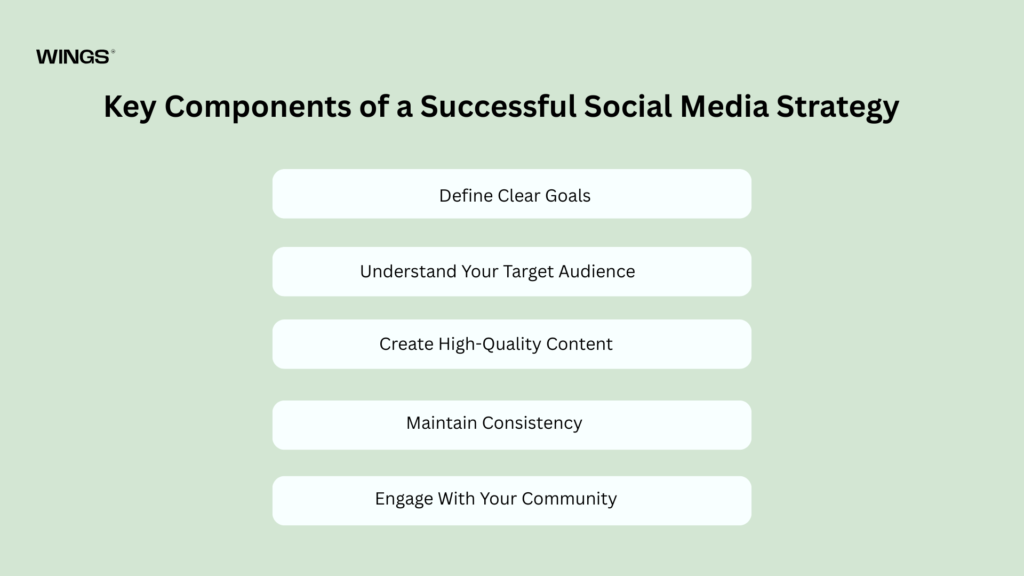
A successful social media strategy requires planning, consistency, and continuous improvement. By establishing a clear framework and focusing on the right activities, businesses can create meaningful connections with their audience, achieve marketing objectives, and maximize the impact of their social media efforts.
Define Clear Goals
Every social media campaign should begin with clear and measurable objectives. Setting specific goals provides direction, helps prioritize efforts, and makes it easier to evaluate success. Without defined goals, it can be difficult to determine whether your social media strategy is delivering the desired results.
Examples include:
- Increasing followers
- Generating leads
- Driving website traffic
- Improving engagement
- Boosting sales
Clear goals help guide decision-making, shape content strategies, and provide benchmarks for measuring performance. By aligning social media objectives with overall business goals, brands can create more focused and effective marketing campaigns.
Understand Your Target Audience
Understanding your target audience is essential for creating content that resonates and drives meaningful engagement. The more you know about your audience, the better you can tailor your messaging, content formats, and marketing strategies to meet their needs and preferences.
Businesses should analyze:
- Demographics
- Interests
- Online behavior
- Pain points
- Preferred platforms
Audience insights help marketers create more relevant content, improve engagement rates, and build stronger connections with potential customers. By understanding who your audience is and what they are looking for, businesses can deliver the right message to the right people at the right time.
Create High-Quality Content
Content is the foundation of social media success. High-quality content helps attract attention, build trust, increase engagement, and establish your brand as a valuable resource for your audience.
Effective content should:
- Educate
- Entertain
- Inspire
- Solve problems
A balanced mix of content types keeps your audience engaged and interested while addressing different stages of the customer journey. By consistently providing value through relevant and engaging content, businesses can strengthen their online presence and improve overall social media performance.
Maintain Consistency
Consistency is essential for building trust, strengthening brand recognition, and maintaining audience engagement. A consistent social media presence helps keep your brand visible and ensures that followers know what to expect from your content.
Businesses should maintain:
- Regular posting schedules
- Consistent visual branding
- Unified messaging
- Reliable audience engagement
A content calendar can help organize posts, streamline content planning, and ensure long-term consistency across all social media platforms. Consistent efforts not only improve brand recall but also contribute to stronger audience relationships and better marketing results.
Engage With Your Community
Social media is about building relationships, not just promoting products or services. Actively engaging with your audience helps create trust, strengthen customer relationships, and foster a loyal community around your brand.
Successful brands actively:
- Respond to comments
- Answer customer questions
- Encourage conversations
- Share user-generated content
Community engagement shows that your brand values its audience and is willing to listen and interact. By creating meaningful connections with followers, businesses can increase customer loyalty, improve brand reputation, and turn satisfied customers into passionate brand advocates.
Social Media Marketing Trends in 2026
The social media landscape continues to evolve rapidly, and businesses must stay updated with emerging trends to remain competitive. In 2026, brands are focusing on authenticity, personalization, and engagement-driven strategies to connect with their audiences more effectively.
AI-Powered Content Creation
Artificial intelligence is transforming how marketers create and manage content. AI tools help generate content ideas, write captions, analyze audience behavior, and optimize campaigns, allowing businesses to improve efficiency while delivering more personalized experiences.
Short-Form Video Dominance
Short-form videos remain one of the most effective content formats across social media platforms. Features like Reels, Shorts, and TikTok videos continue to drive high engagement, making video content an essential part of any successful social media strategy.
Social Search Optimization
More users are turning to social media platforms to search for products, services, and information. As a result, businesses are optimizing captions, hashtags, profiles, and content with relevant keywords to improve visibility and reach within platform search results.
Employee-Generated Content
Businesses are increasingly encouraging employees to create and share content about their work experiences, company culture, and expertise. This approach helps humanize brands, increase authenticity, and build stronger trust with audiences.
Community-Driven Marketing
Rather than focusing solely on follower growth, brands are investing in building active and engaged communities. Creating meaningful conversations, encouraging user participation, and fostering customer relationships can lead to higher loyalty, stronger advocacy, and long-term business growth.
Common Social Media Marketing Mistakes to Avoid
While social media marketing offers significant opportunities for growth, many businesses fail to achieve desired results because of avoidable mistakes. Understanding and addressing these common pitfalls can help improve engagement, strengthen brand presence, and maximize marketing performance.
Posting Without a Strategy
One of the biggest mistakes businesses make is posting content without a clear plan or objective. A well-defined social media strategy ensures that every post aligns with business goals, targets the right audience, and delivers measurable results.
Ignoring Audience Engagement
Social media is a two-way communication channel. Failing to respond to comments, messages, and customer inquiries can damage relationships and reduce trust. Active engagement helps build stronger connections and improves customer satisfaction.
Overly Promotional Content
Constantly pushing products or sales messages can cause audiences to lose interest. Instead, businesses should focus on providing value through educational, entertaining, and informative content while maintaining a balanced mix of promotional posts.
Inconsistent Branding
Using different tones, visuals, or messaging across platforms can confuse audiences and weaken brand identity. Consistent branding helps create recognition, trust, and a professional image across all social media channels.
Buying Fake Followers
Purchasing followers may increase numbers temporarily, but it does not improve engagement or generate real business results. Fake followers can harm credibility and make it difficult to accurately measure campaign performance.
Neglecting Analytics
Many businesses overlook performance data and miss valuable insights. Regularly reviewing analytics helps identify successful content, understand audience behavior, and optimize future marketing efforts.
Ignoring Video Content
Video has become one of the most engaging content formats on social media. Businesses that fail to incorporate short-form videos, live streams, or visual storytelling may miss opportunities to increase reach and audience engagement.
Chasing Every Trend
While trends can boost visibility, not every trend aligns with a brand’s identity or audience. Following every viral trend without a clear purpose can dilute brand messaging and create inconsistent content.
How to Measure Social Media Marketing Success
Measuring social media performance is essential for understanding what works, identifying areas for improvement, and maximizing your marketing efforts. By tracking key metrics, businesses can make data-driven decisions, optimize content strategies, and achieve better results over time.
Reach
Reach measures the number of unique users who see your content. A higher reach indicates that your content is being exposed to a larger audience, helping increase brand awareness and visibility.
Engagement Rate
Engagement rate tracks how users interact with your content through likes, comments, shares, saves, and clicks. High engagement often indicates that your content resonates with your audience and encourages meaningful interactions.
Follower Growth
Follower growth measures how your audience size changes over time. Consistent growth suggests that your content strategy is attracting new users and expanding your brand’s online presence.
Website Traffic
Website traffic shows how many visitors come to your website through social media channels. This metric helps determine how effectively your social media efforts drive users to learn more about your products, services, or content.
Conversion Rate
Conversion rate measures the percentage of users who complete desired actions, such as making a purchase, signing up for a newsletter, downloading a resource, or filling out a contact form. It is one of the most important indicators of campaign effectiveness.
Return on Investment (ROI)
ROI evaluates the revenue or value generated from your social media activities compared to the amount spent on content creation, advertising, and campaign management. A positive ROI indicates that your social media strategy is contributing to business growth.

Explore how social media relates to the concept of dimension.
The Future of Social Media Marketing
The future of social media marketing will be shaped by emerging technologies, changing consumer behavior, and evolving platform features. Businesses that adapt to these changes and embrace innovation will be better positioned to build stronger customer relationships, increase engagement, and drive long-term growth.
AI-Driven Personalization
Artificial intelligence is making social media marketing more personalized than ever. By analyzing user behavior and preferences, AI helps brands deliver relevant content, recommendations, and advertisements that improve engagement and increase conversion rates.
Enhanced Social Commerce Experiences
Social commerce is transforming how consumers shop online. Features like in-app purchases, product tagging, and live shopping events allow users to discover and buy products directly through social media platforms, creating a seamless shopping experience.
Greater Emphasis on Community Building
Brands are shifting their focus from gaining followers to building engaged communities. Creating meaningful interactions and fostering customer relationships helps improve loyalty, encourage user-generated content, and strengthen brand advocacy.
Increased Creator Partnerships
Influencer and creator collaborations will continue to grow as consumers trust recommendations from people they follow. Long-term partnerships with creators help brands increase credibility, reach niche audiences, and create authentic content.
Augmented Reality Shopping
Augmented reality (AR) is enhancing online shopping by allowing users to virtually try products before purchasing. This technology improves customer confidence, creates interactive experiences, and helps reduce product return rates.
Voice and Visual Search Integration
As voice assistants and image recognition technologies become more popular, social media platforms will increasingly support voice and visual search. Businesses that optimize content for these search methods can improve visibility and reach more potential customers.
More Sophisticated Audience Targeting
Advanced targeting tools and predictive analytics will help marketers reach highly relevant audiences. By understanding user interests and behaviors, businesses can deliver more effective campaigns and maximize advertising performance.
Video-First Content Strategies
Video will remain the most engaging content format across social platforms. Short-form videos, live streams, and interactive video content will continue to dominate user feeds and play a key role in successful marketing strategies.
Privacy-First Marketing
As data privacy becomes a growing concern, businesses will need to focus on transparent and ethical marketing practices. Building trust through responsible data usage will become increasingly important for maintaining strong customer relationships.
Conclusion
Social media marketing has become one of the most important components of modern business growth. It enables brands to connect directly with their audience, build trust, generate leads, increase website traffic, and drive sales.
As social platforms continue to evolve, businesses that invest in strategic, customer-focused social media marketing will gain a significant competitive advantage. Success requires more than simply posting content, it demands a clear strategy, consistent execution, meaningful engagement, and ongoing optimization.
In 2026 and beyond, social media marketing will remain a vital tool for businesses seeking sustainable growth, stronger customer relationships, and increased profitability. Organizations that embrace innovation, authenticity, and audience-centric strategies will be best positioned to thrive in the ever-changing digital landscape.

Aakash
Digital Marketing Manager