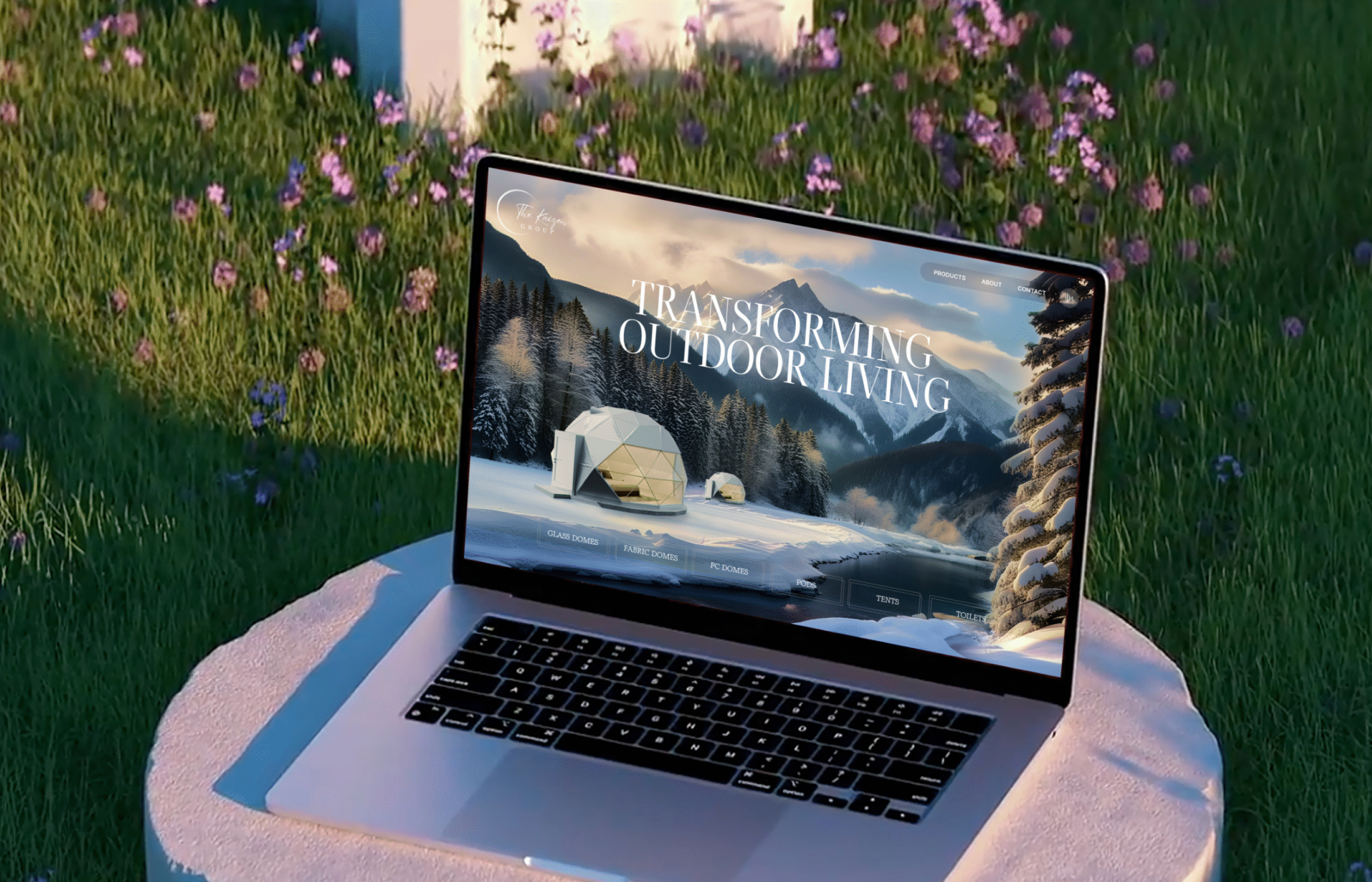
A website that balances immersive landscapes with the technical clarity needed for real-world deployment.
Year
2025
Industry
Manufacturing
Location
Dehradun, India
Services
UX Research
Website Strategy
AI Image Generation
Information Architecture
Interface Design
Website Development
Project Overview
The Kaizen Group set out to introduce a new way of thinking about outdoor hospitality in India. Not hotels in the conventional sense, but modular, install-anywhere structures, primarily domes and glass-led setups, designed to place guests closer to landscape and light. Forests, hills, valleys, beaches: the idea was to let the setting remain the experience.
While similar concepts existed in a few international markets, this was new in the local context. The business had explored references abroad, but in India there were no established case studies to point to, and no finished installations to photograph. The website, therefore, wasn’t just a brochure – it had to make the category legible. The audience was broad and serious: tourism bodies, government initiatives, large hospitality groups, and operators looking for a new kind of offering. The platform had to speak to imagination and intent, while also answering practical questions of manufacturing and deployment.
Challenge
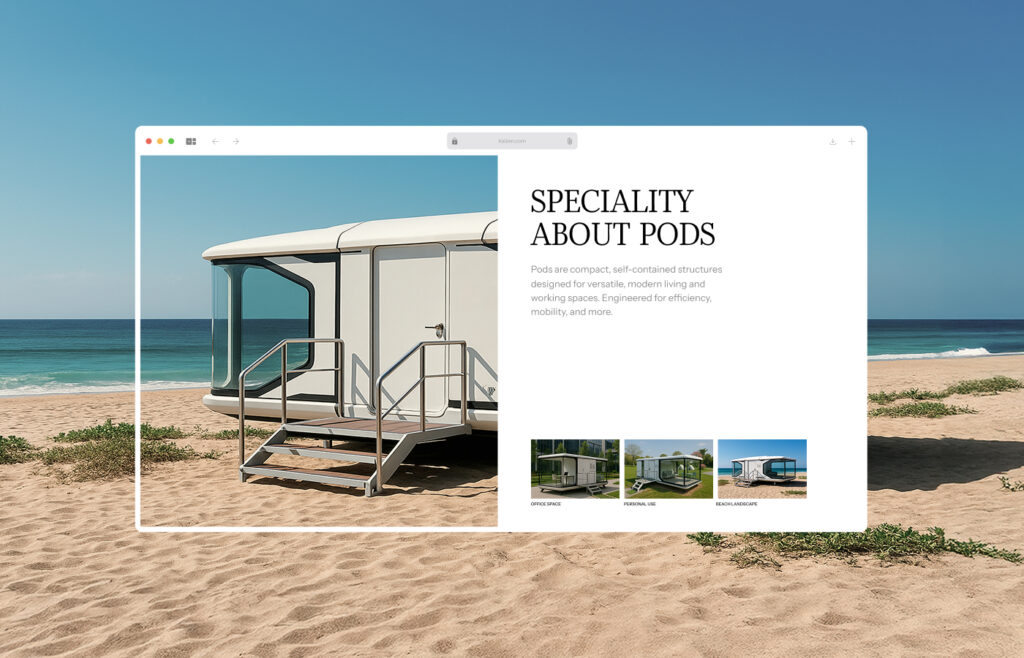
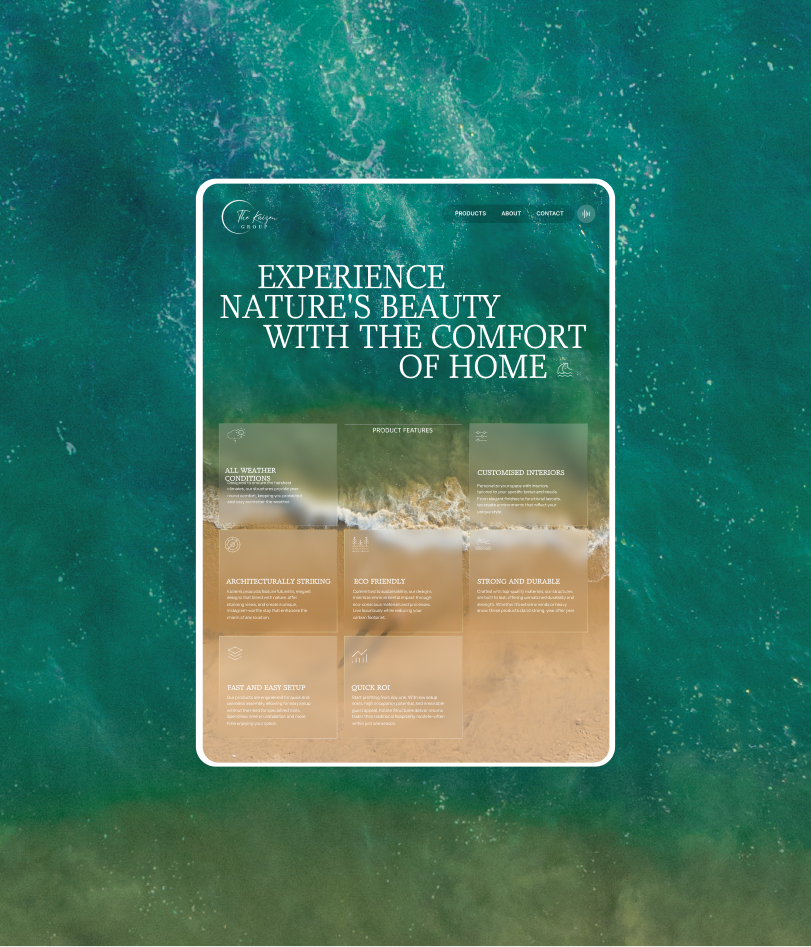
Two problems sat side by side. First, the product had to be understood as an experience – what it feels like to stay in a structure like this, and how it changes the relationship between guest and landscape. Second, it had to be understood as a manufactured system – with specifications, categories, and technical clarity for buyers.
There was little material to start with. No finished projects, no extensive photography, and no existing narrative. The website needed to create the picture before it could present the proof, without compromising on credibility or craft. The balance had to be exact: not a mood piece without substance, and not a datasheet without desire.
Approach
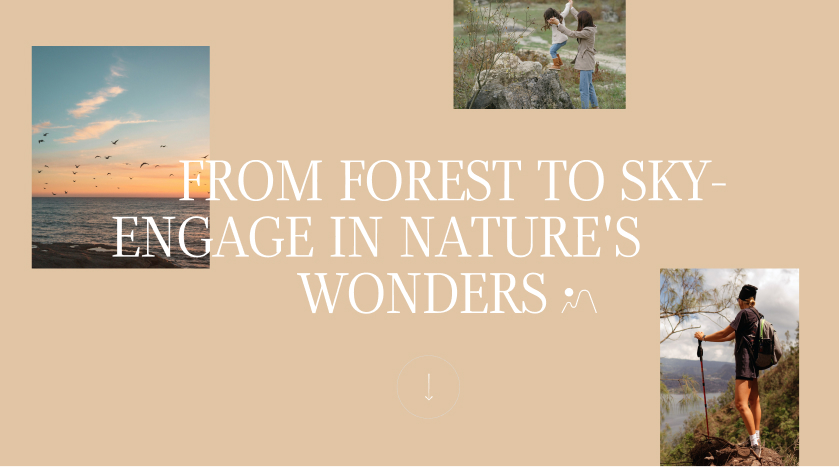
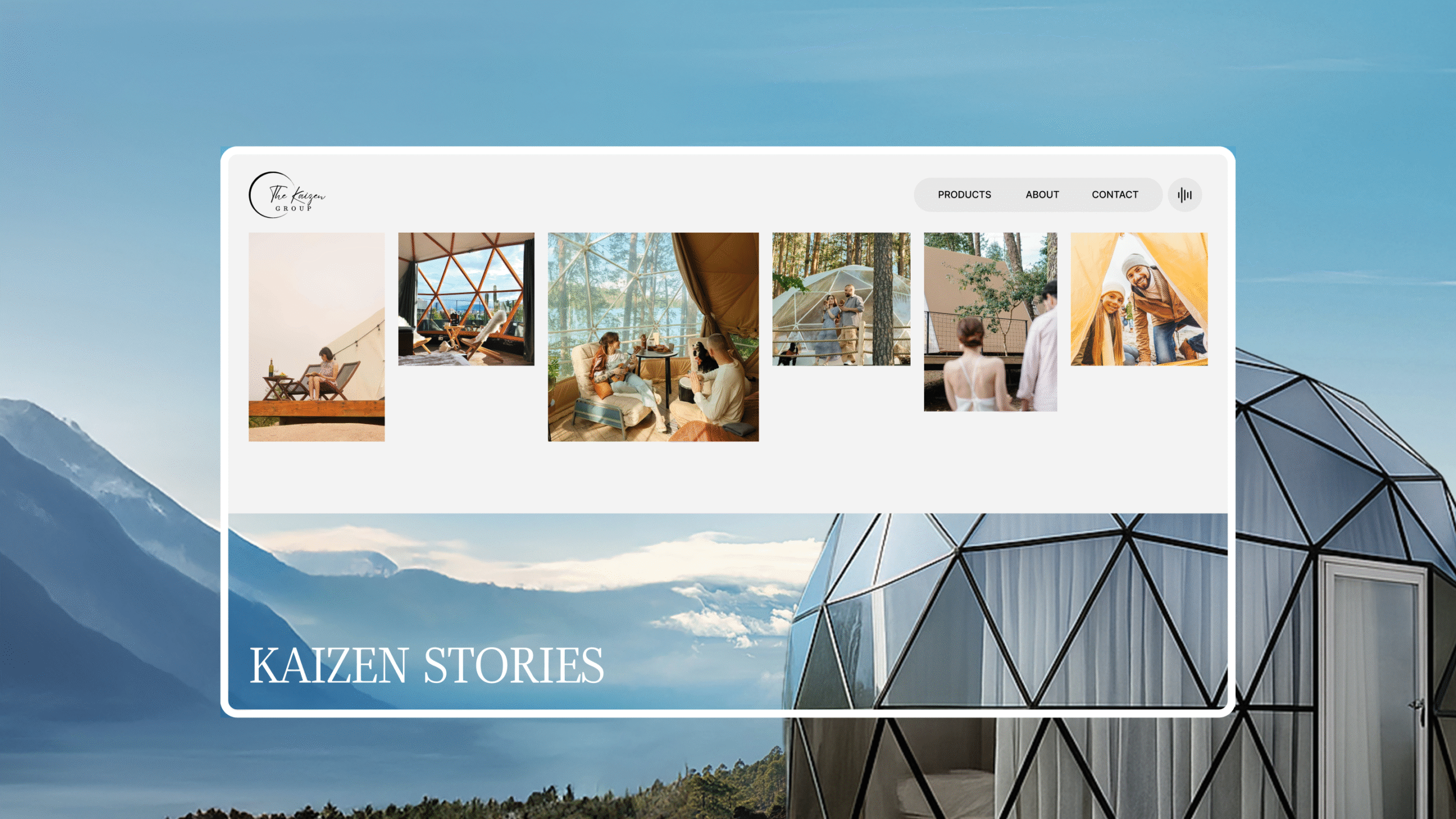
We designed the website as a dual narrative. One half is devoted to experience – visualising how these structures sit in nature, how light, terrain, and setting shape the stay. The other half is devoted to information – clear categories, specifications, and product understanding for a B2B audience.
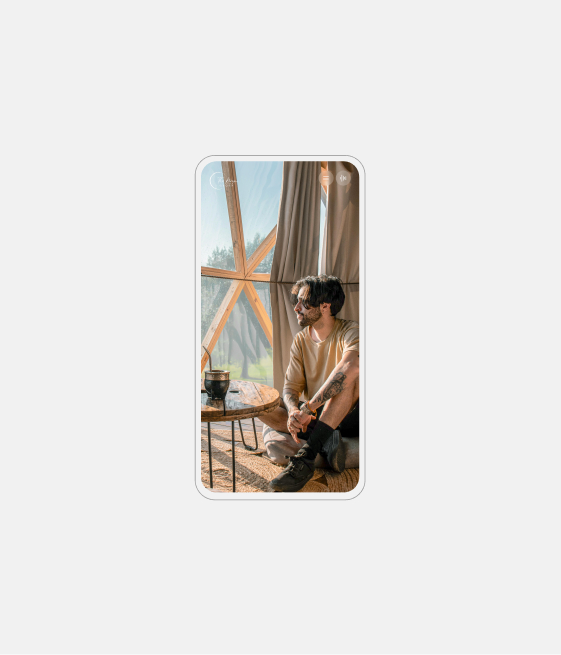
Because there were no built references to lean on, the experience side relies on carefully directed AI-generated imagery. They show how the product could be deployed across landscapes, and what kind of atmosphere it creates. The aim was to make the unfamiliar feel plausible and specific, not abstract.
At the same time, the information architecture remains straightforward. The site doesn’t hide the fact that this is a manufactured system that needs to be specified, compared, and procured. The structure keeps these two tracks – experience and specification, in dialogue rather than in conflict.
Execution
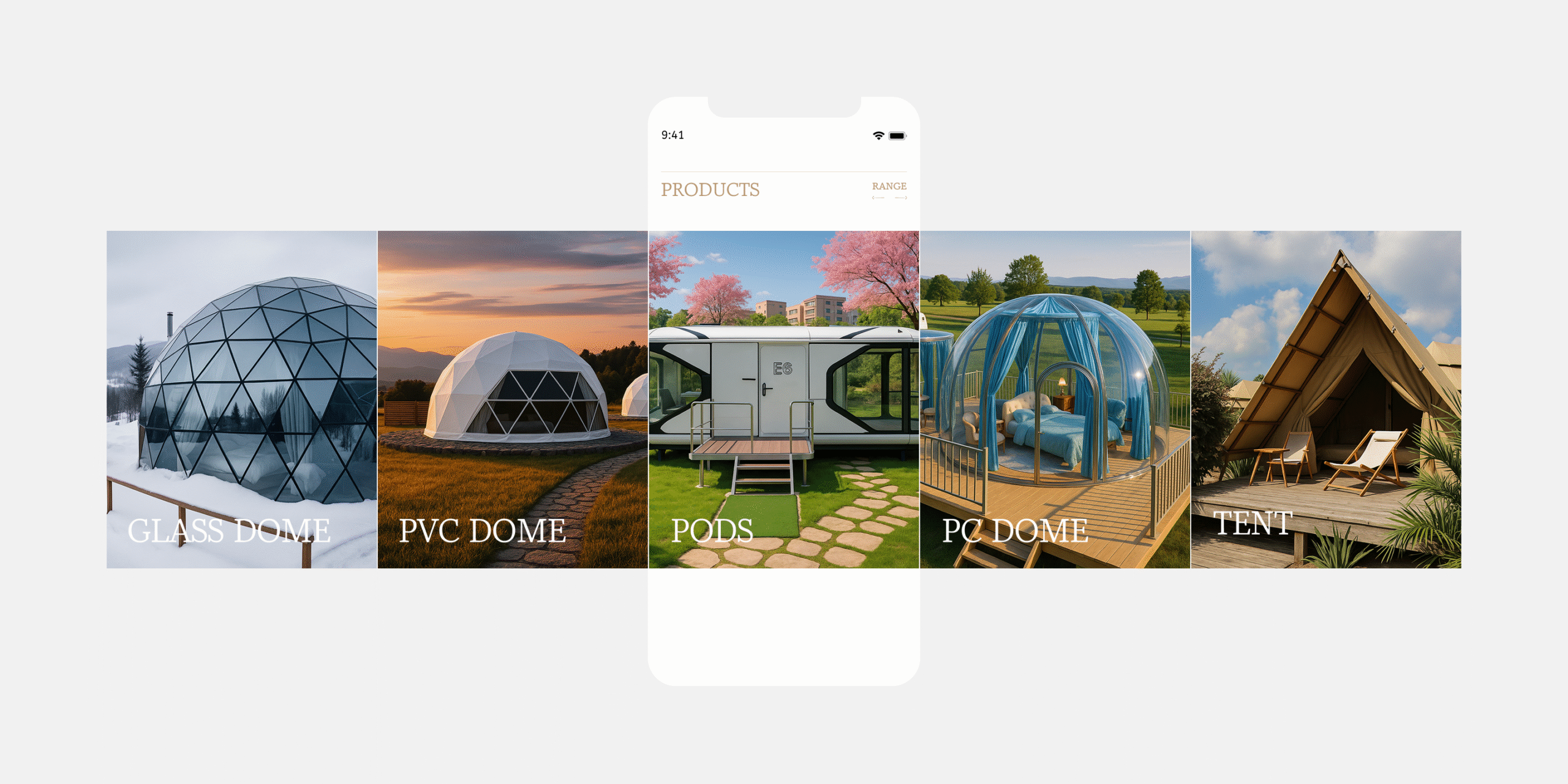
The experience opens by establishing place before product. Landscapes come first, then structures, then use. From there, the site moves into categories and technical detail, giving the audience a clear path from imagination to understanding.
The reliance on generated imagery was handled with restraint. The goal wasn’t to oversell, but to demonstrate possibility – how these units could live on a hill, in a forest, by the sea – while keeping the overall tone grounded and practical.
The result is a platform that is simple in structure but deliberate in pacing. It treats visualisation as a tool for clarity, and information as a tool for confidence.
Outcome
The website became a category-defining surface for the business. It gave The Kaizen Group a way to explain something new before it had a portfolio to show, and a way to speak to both imagination and procurement in the same place. For a business entering the market without precedent, the platform provided credibility, clarity, and momentum. It helped the team communicate the idea, convince partners, and change how conversations around outdoor hospitality could begin – turning a concept into something concrete enough to buy, plan, and build.
“Wings didn’t just redesign our website; they reshaped how global buyers perceive us. Their team deeply understood our business and delivered a platform that’s both elegant and effective. We’ve seen stronger engagement, better feedback from partners, and now have a digital presence that truly reflects who we are.”
“Redesigning Shivam Jewels’ digital presence was a deep learning curve. We explored how to distill decades of trust and craftsmanship into a seamless, modern experience.
It taught us to strike the right balance between legacy and innovation; sharpening our B2B storytelling and design thinking in the process.”


WINGS Team
India – Dubai – Singapore – USA – Australia


India – Dubai – Singapore – USA – Australia